


Quick info:
- IATA code: LHR
- ICAO code: EGLL
- Location: Approximately 23 km west of central London (Charing Cross)
- Number of active terminals: 4 (Terminals 2, 3, 4 and 5; Terminal 1 is permanently closed)
- Home airlines: British Airways and Virgin Atlantic
- Fastest transport to city centre: Heathrow Express (15 minutes to Paddington Station)
- Cheapest transport to city centre: Underground (Piccadilly Line, 50–60 minutes)
- Wi-Fi: Free and unlimited throughout the airport (network „_Heathrow Wi-Fi“)
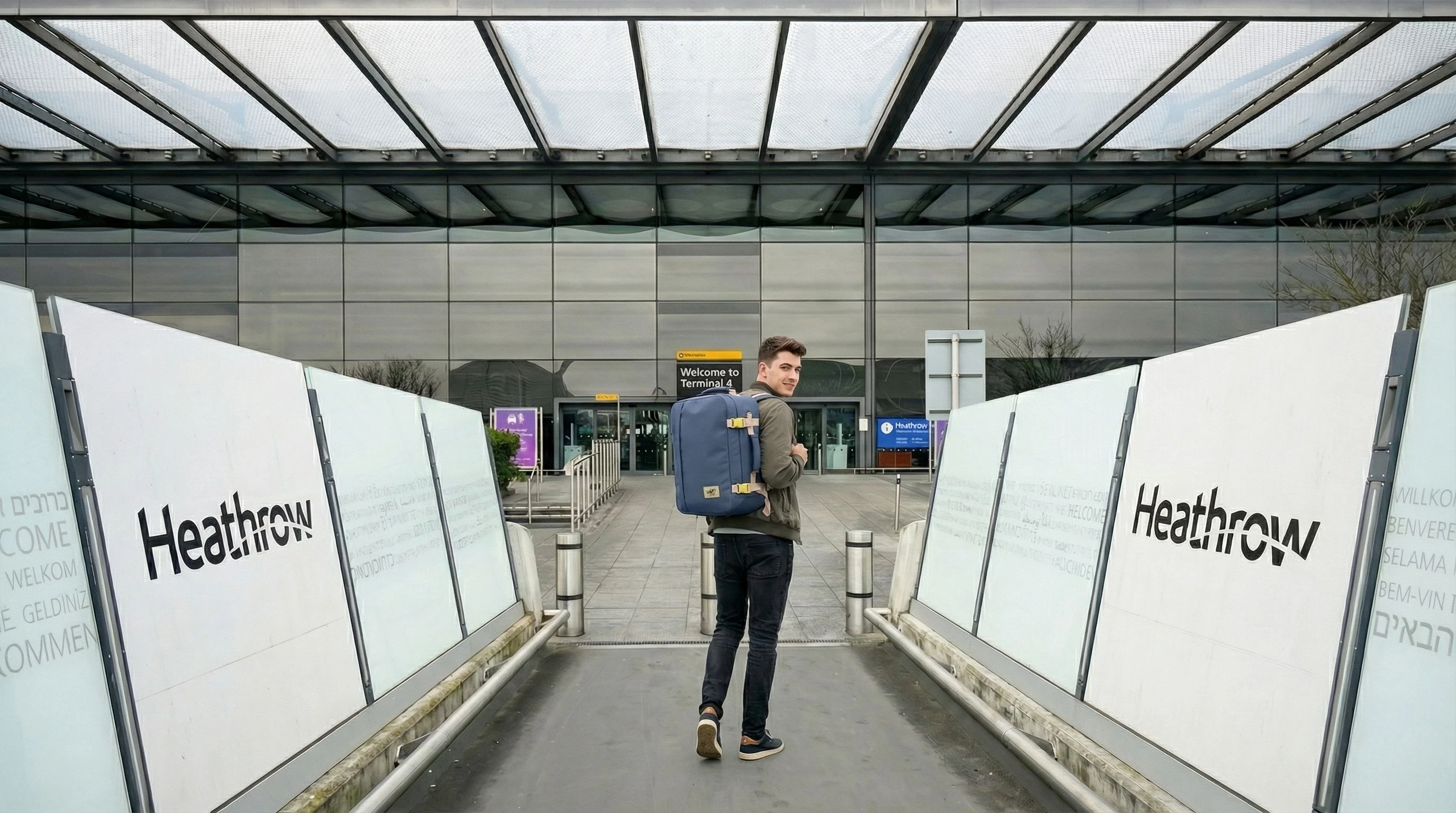
Imagine a place where the destinies of hundreds of people from all over the world intersect every minute. London Heathrow Airport is not just a transport hub; it's the beating heart of international travel and for many travellers, the first contact with British soil. Whether you're on a business trip, a family holiday, or just a quick layover overseas, London Heathrow International Airport will impress you with its size and organisation. At Bagalio, we know that navigating such a giant can be daunting at first, so we've prepared a detailed guide to help you glide through the terminals like seasoned globetrotters.
Article content:
- London Heathrow Airport (LHR) in numbers and context
- Key carriers and air traffic
- Geographical data, history and sustainability of London Heathrow Airport
- Transport: How to get to central London
- Individual transport to the airport and parking
- Services and waiting for your flight
- Comfort for passengers with children and specific needs
- Accommodation near Heathrow Airport
- Final tips
- Frequently Asked Questions (FAQ)
London Heathrow Airport (LHR) in numbers and context
This London airport is a true giant. Located west of the city centre, it has long held the title of the busiest airport in Europe and one of the busiest in the world. Its importance for the region and global tourism is absolutely crucial – it serves as a major base for flag carriers and connects the old continent with the rest of the planet. Despite the enormous traffic, the airport constantly invests in modernisation to handle the influx of millions of passengers annually.
- Runways: It has two parallel east-west runways.
- Home airlines (Hub): The airport is the main base for British Airways and Virgin Atlantic.
- Alliances represented: All major players operate here – Oneworld, Star Alliance and SkyTeam.
- Statistics: It handles over 80 million passengers annually and provides flights to more than 230 destinations.
Did you know... at huge airports like Heathrow, there's a higher risk of digital theft? In a crowd of thousands, thieves can use special readers to scan data from your contactless cards or passports without touching you. An effective defence is RFID protection (Radio Frequency Identification). This technology blocks unwanted signals and keeps your data safe. Browse our wide range of wallets, many of which feature RFID protection.
Key carriers and air traffic
The entire aviation world meets at London Heathrow Airport. Thanks to its strategic location, it is a popular transfer point for flights between Europe and North America. If you're flying with major international carriers, it's very likely you'll land here. The allocation of airlines to terminals is quite strict, which helps organise arrivals and departures.
- British Airways: They dominate Terminal 5, but some flights also operate from Terminal 3.
- Virgin Atlantic: Primarily based at Terminal 3 along with Delta Air Lines partners.
- Star Alliance: Most members of this alliance (e.g., Lufthansa, Air Canada, Scandinavian Airlines, Air New Zealand, TAP Air Portugal, United Airlines) use the modern Terminal 2, often called „The Queen's Terminal“.
- Oneworld: In addition to BA, you'll find Qantas, American Airlines or Cathay Pacific here (usually Terminal 3).
- SkyTeam: Most SkyTeam alliance airlines (e.g., Air France, KLM) use Terminal 4.
- Other major carriers: For example, Malaysia Airlines and Qatar Airways fly from T4. Emirates uses Terminal 3 for its giant Airbus A380s.
- Overall scope: Around 90 airlines operate at the airport.
Tip: If you're looking for practical carry-on luggage that meets the limits of most airlines at Heathrow, check out our range of cabin suitcases and travel backpacks.
Geographical data, history and sustainability of London Heathrow Airport
The airport's history dates back to 1929, when the small Great West Aerodrome was established here. However, its real expansion began after World War II, when Heathrow became a civil airport for London. Today, it's a complex that is constantly evolving. Architectural gems include Terminal 5, designed by Richard Rogers, and the newly renovated Terminal 2. The airport also strives to be a leader in sustainability, which is a major challenge in aviation.
- Location: It is located in the borough of Hillingdon, surrounded by the M4 and M25 motorways, which provides access to the road network but also brings challenges in the form of heavy traffic.
- Historical milestone: Official opening for civil flights took place in 1946 (then with canvas tents instead of terminals).
- Architecture: Terminal 5 is known for its enormous glass roof and open space, which minimises passenger stress.
- Sustainability: Heathrow 2.0 is a sustainable growth strategy that aims to reduce carbon footprint, increase the use of Sustainable Aviation Fuels (SAF) and electrify ground operations.
- Innovation: The airport is testing autonomous vehicles for baggage transport and biometric check-in to speed up security clearance.
Transport: How to get to central London
Getting from London Heathrow Airport to the city centre is very easy thanks to the sophisticated public transport network, although options vary in price and speed. The distance to the centre is approximately 23 kilometres, but travel time strongly depends on the chosen mode of transport.
- Heathrow Express: Fastest connection to the city centre. Trains run every 15 minutes and the journey to Paddington Station takes just 15 minutes (from Terminals 2 and 3). Tickets are more expensive, but significant savings can be made by purchasing online well in advance.
- Elizabeth Line: A modern train line that offers a great compromise between price and speed. It connects the airport directly with the city centre (Bond Street, Liverpool Street) in approximately 35–45 minutes. Contactless cards and Oyster card are valid here.
- Underground (Piccadilly Line): Cheapest option. The dark blue Underground line serves all terminals. The journey to the city centre (e.g., Piccadilly Circus) takes about 50–60 minutes. Ideal for low-cost travel, less comfortable with large luggage during peak hours.
- Buses: National Express operates direct services to Victoria Coach Station. The journey takes 40–90 minutes depending on traffic.
- Taxi and Uber: Official black taxi ("Black Cabs") ranks are located outside each arrivals terminal. The journey to the city centre is expensive (£60–90) and takes 45–75 minutes. Apps like Uber can be a cheaper alternative.
Individual transport to the airport and parking
If you prefer to use your own car or rent one, London Heathrow Airport is easily accessible from the M4 motorway (junction 4) and the M25 orbital motorway. Parking here is divided into several zones according to the length of stay and distance from the terminals.
- Short Stay: Multi-storey car parks directly at the terminals. This option is ideal if you need to park and accompany passengers to the hall or pick them up personally in the arrivals area.
- Long Stay: Car parks on the outskirts of the airport with free shuttle bus service (every 10–12 minutes). Significantly cheaper, suitable for holidays.
- Business Parking: Located closer to the airport than Long Stay, with more frequent transfers.
- Valet Parking: You hand over your keys directly at the terminal and staff will park the car for you.
- Drop-off zones: Zones designated only for quick passenger drop-off directly in front of the terminal (so-called kiss & fly). The driver must not leave the vehicle. Entry is subject to a £7 charge (paid online).
Services and waiting for your flight
Waiting for your flight at LHR doesn't have to be boring. On the contrary, the range of services resembles a luxury shopping centre. Whether you need food or relaxation, the options are almost endless. The terminals are equipped to satisfy even the most demanding clients.
- Transfer potential: Heathrow is designed for transfers. You can walk between Terminals 2 and 3 via an underground tunnel. For transfers between terminals, you can use the Heathrow Express, Elizabeth Line or Piccadilly Line. Travel between airport stations is free – just take a free transfer ticket from a machine or use an Oyster/contactless card (the fare will not be charged).
- Lounges: Every alliance and major airline has its luxury lounges here (e.g., British Airways Galleries, Virgin Atlantic Clubhouse). There are also paid lounges accessible to everyone (Plaza Premium, Club Aspire) regardless of ticket class.
- Gastronomy: From fast food (Pret A Manger, Costa) to high-end restaurants. Gordon Ramsay's restaurant at T5, for example, is popular.
- Shopping: Huge Duty-Free zones. You'll find a Harrods department store branch, an official Harry Potter Shop, and boutiques from brands like Burberry, Gucci, and Rolex.
- Basic amenities: Unlimited free Wi-Fi, currency exchange offices (rates are usually less favourable than in the city), Boots pharmacies, luggage storage (operated by Excess Baggage Company) and showers (in lounges).
- Culture: In some parts of the airport (especially T5), you can see art installations and sculptures by British artists.
Comfort for passengers with children and specific needs
The airport caters for everyone. Travelling with children or with a health limitation is much less stressful here thanks to sophisticated services. If you're travelling with family, look for the purple "Family" signage.
- Children's play areas: All terminals have "Stay & Play" zones with slides and climbing frames (free, for children up to 9 years old). You'll also find the character Mr. Adventure here.
- Family facilities: Breastfeeding and changing rooms are available at every turn. Many restaurants offer children's menus and "kids eat free" promotions during certain periods.
- Persons with reduced mobility (PRM): Assistance must be booked with your airline at least 48 hours in advance. The airport has special waiting areas, accessible toilets, and buggies for transfers between boarding gates.
- Hidden Disabilities: Heathrow supports the "Sunflower Lanyard" programme for people with hidden disabilities, to whom staff provide increased attention and patience.
Accommodation near Heathrow Airport
If you have an early morning departure or a late arrival, accommodation directly at the airport or in its immediate vicinity is invaluable. The area around the airport offers dozens of hotels in various price categories. Some hotels are directly connected to the terminals, while others are served by shuttle buses.
Directly at the terminals:
- Sofitel London Heathrow: Luxury hotel directly connected by a walkway to Terminal 5.
- Hilton London Heathrow Airport: Connected by a covered walkway to Terminal 4.
- Hilton Garden Inn London Heathrow: Offers great runway views from its rooftop bar.
- Aerotel London Heathrow: Transit hotel directly in the T3 arrivals hall.
- Holiday Inn Express London Heathrow T4: Accessible via a walkway from T4, great value for money.
In the immediate vicinity (with transport):
- Holiday Inn Express London Heathrow: Various locations around Bath Road.
- Renaissance London Heathrow: Known for its runway views.
- Thistle London Heathrow Terminal 5: The hotel is accessible via the automated Heathrow Pod capsules from the Terminal 5 car park.
Final tips
Whether you're flying for a holiday or a business trip, Heathrow Airport London requires a bit of planning. Here are some "Bagalio tips" to make your life easier:
- Time buffer: Heathrow is huge. For departures, be at the airport at least 3 hours in advance, especially for long-haul flights. Security checks can be thorough.
- Liquids: Heathrow is gradually introducing new CT scanners, but the rule of 100 ml bottles in hand luggage still applies for now. Always check the current conditions on the airport's or your airline's website before travelling.
Tip: Read about what you can take with you on board a plane and what belongs in checked luggage instead. - App: Download the official Heathrow app. It offers up-to-date terminal maps and flight notifications.
- Water bottle: Beyond security, you'll find "Water refill stations" where you can refill your empty bottle for free. You'll save money and stay hydrated.
Tip: Choose a stylish water bottle from our range and save not only your wallet but also the environment. - Transfer: If you have two flights on one ticket, your luggage will be transferred automatically. If you are self-transferring, allow at least 4 hours for the transfer – you'll need to go through passport control, collect your bags, and check in again.
- Hand luggage: Check with your airline for the maximum dimensions of hand luggage to avoid any inconvenience. For clarity, we have prepared a table with permitted cabin luggage dimensions for individual airlines.
Frequently Asked Questions (FAQ)
Which terminal do British Airways use?
Most British Airways flights operate from Terminal 5, but some destinations are handled from Terminal 3. Always check your ticket.
What's the fastest way to get to central London?
The fastest option is the Heathrow Express, which takes you to Paddington Station in 15 minutes.
Is Wi-Fi free at Heathrow Airport?
Yes, London Heathrow Airport provides free and unlimited Wi-Fi connectivity throughout the airport. Select the "_Heathrow Wi-Fi" network.
Can I walk between all terminals?
You can only walk between Terminals 2 and 3 (approx. 10 minutes walk through an underground tunnel). To transfer to Terminals 4 and 5, you must use trains (Heathrow Express or Elizabeth Line), which are free for transfers.
Where can I smoke at the airport?
There are no smoking areas inside the terminals. Smoking is only permitted in designated zones outside the terminal buildings before security control. If you have a layover, you cannot smoke without leaving the transit area (which requires entering the UK).
How far is the airport from the Tower of London?
The Tower of London is located at the opposite end of the city centre, approximately 30 km away. The Elizabeth Line will take you to Liverpool Street station, from where it's a short walk to the Tower.
We hope this guide makes your journey through London's largest airport easier. Happy travels from the Bagalio team!


