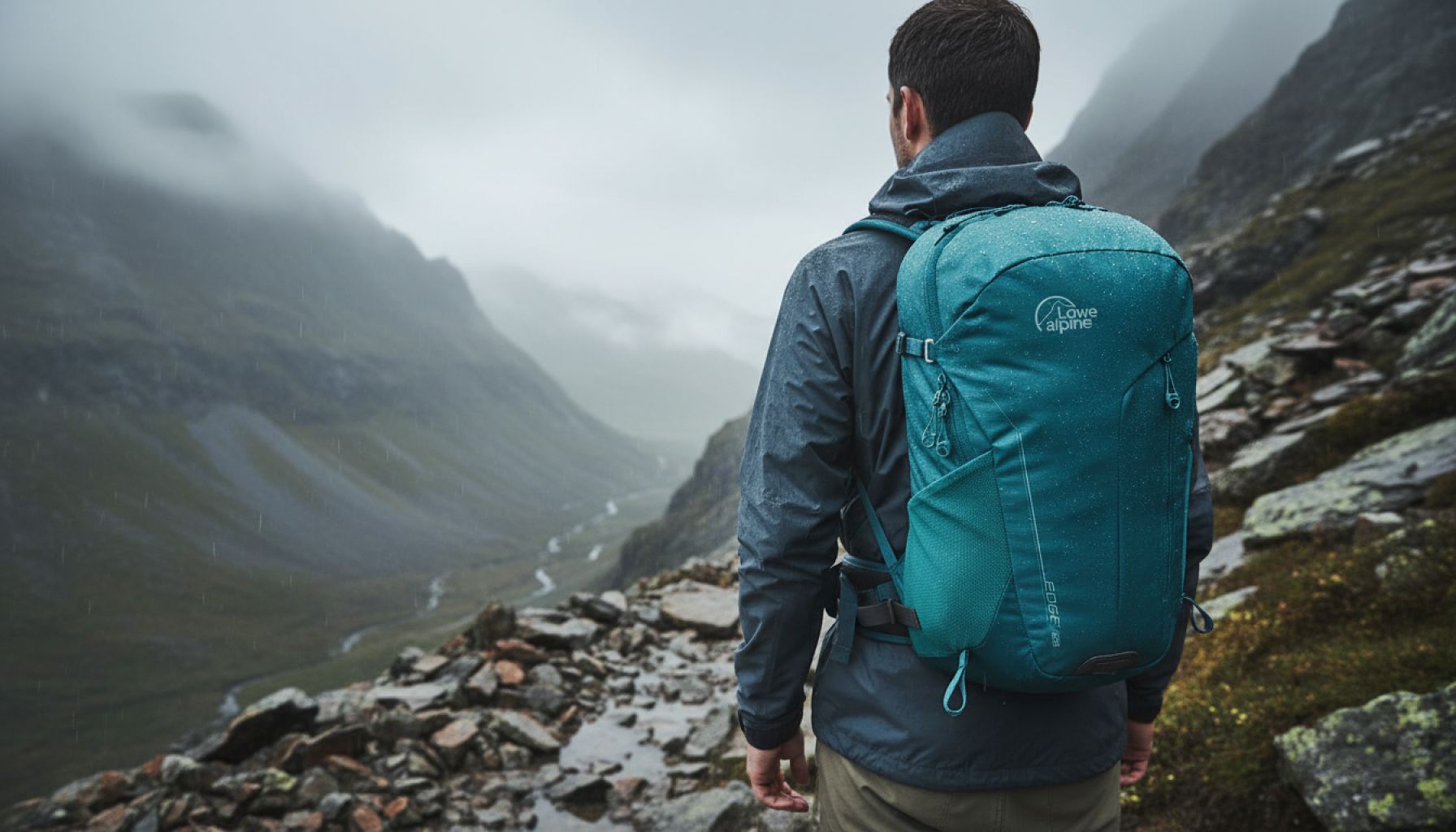
Picture this: you're running to an important meeting, rain is drumming on the streets, and you have a laptop worth thousands in your backpack. Or: you're halfway through a mountain trek, the heavens open up, and you know that the sleeping bag at the bottom of your pack simply must stay dry. It's in these moments that the quality of your luggage choice truly shows.
However, navigating terms like waterproof, water-resistant, water column, or membrane can be a puzzle. Manufacturers often compete with numbers and technologies, but what does it all mean for you? Our goal is simple: after reading this article, you will know exactly what kind of backpack, suitcase, or bag you need to keep your belongings safe and dry.
Contents:
- Waterproof vs. Water-Resistant: They're Not the Same!
- The Mystery Known as Water Column
- How Waterproofing is Made: Materials and Technologies
- Critical Details That Are Often Overlooked
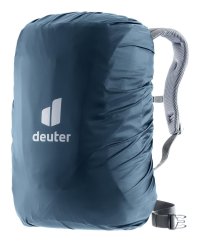
- The Alternative: Backpack Rain Cover
- How to Care for Water-Resistant Luggage to Make It Last?
- Staying Dry for Work and Mountains: How to Choose Correctly?
- A Material's Ability to Resist Water – FAQ
Waterproof vs. Water-Resistant: They're Not the Same!
First and foremost: waterproof and water-resistant are not synonyms. If you're confused, you're not alone. These terms denote different levels of protection. To clear things up, let's divide water protection into three basic categories.
Water-Repellent
This is the most basic form of protection. You'll find it on many urban backpacks.
- What it is: A surface treatment on the fabric, often referred to as DWR (Durable Water Repellency).
- How it works: It prevents water from soaking into the outer layer of the material. Instead, water droplets bead up and roll off the surface.
- When it's enough: For light rain, drizzle, or when you need to make a quick dash from the car to the office.
- Disadvantage: The treatment wears off over time (due to mechanical abrasion, washing) and needs to be renewed with an impregnation spray. In heavier or prolonged rain, the material will eventually get wet.
Water-Resistant
Here we are talking about a property of the material itself.
- What it is: The ability of a material to resist the penetration of water into its structure. This is achieved by the density of the weave (e.g., dense polyester or nylon).
- How it works: The fabric is so dense that it prevents easy water penetration. It can withstand normal rain for a limited time.
- When it's enough: For most city backpacks and regular daily use, this is sufficient protection. It can handle a normal shower on the way to work.
- Disadvantage: The material is not designed for continuous rain or water pressure. Water will eventually seep through – typically through seams and zippers, or it gets "pushed" through in areas where straps or your back press against the pack.
Waterproof
This is the highest level. A waterproof product must keep you and your gear dry even in a downpour.
- What it is: A comprehensive property of the entire product, not just the material.
- How it works: To achieve true waterproofness, a waterproof material alone is not enough. It must also have taped or welded seams (because needle holes are weak points) and water-resistant zippers.
- When it's necessary: For longer outdoor activities, cycling, multi-day hikes, or if you're carrying extremely sensitive electronics in any weather.
The Mystery Known as Water Column
With water-resistant and waterproof materials, you will almost always see a rating in millimeters, for example, 5,000 mm. This is the value of the so-called water column, and it is a key parameter for comparison.
The water column indicates how much water pressure the material can withstand before water begins to seep through. It is measured in a lab by placing a cylinder on the fabric and filling it with water. The height of the water in the cylinder (in millimeters) at the moment the first drops of water penetrate is the water column rating.
How Waterproofing is Made: Materials and Technologies
The fabric itself (polyester, nylon) would eventually let water through. To make it waterproof, two main technologies are used: coatings and membranes.
Coatings
This is by far the most common way to make a backpack waterproof.
- How they work: One or more layers of a waterproof material, most often polyurethane (PU), are applied to the inner side of the fabric. A more advanced and durable option is TPU (Thermoplastic Polyurethane), which is more flexible (even in cold weather) and more environmentally friendly. The coating physically clogs the pores in the fabric and does not let water pass through.
- Advantages: It is a cheaper technology, so backpacks with coatings have a great price-to-performance ratio. They are more resistant to mechanical damage and dirt.
- Disadvantages: The coating slightly reduces breathability and can degrade over time (age, crack, or "crumble"), especially if the backpack is stored in a damp environment.
Membranes
You are surely familiar with materials with a membrane from high-end outdoor apparel (e.g., Gore-Tex). They are less common in backpacks but are starting to appear.
- How they work: A membrane is an extremely thin layer (often made of ePTFE material) that is laminated to the inner side of the fabric. It is porous – it has billions of pores per square centimeter. These pores are smaller than a drop of water (water cannot get in) but larger than a molecule of water vapor (sweat can get out).
- Advantages: The main advantage is excellent vapor permeability (also known as breathability). You'll appreciate this in clothing; it's less critical for a backpack, but still pleasant.
- Disadvantages: They are significantly more expensive and more prone to damage (e.g., punctures).
Did you know... Vapor permeability (breathability) is a figure that indicates how many grams of water vapor (sweat) the material can let pass from the inside out in 24 hours. For a backpack, this is mainly a concern for the back system to prevent your back from getting sweaty. The material of the main compartment doesn't need to be very breathable.
Special Materials (Tarpaulin and PVC)
In addition to coatings and membranes, there are also materials that are inherently waterproof. A typical example is Tarpaulin (sometimes referred to as "tarp" or PVC).
- How it works: It is a polyester fabric coated on both sides with a thick layer of PVC or more modern TPU. The material is thus 100% impermeable.
- Where it's used: For dry bags, durable travel bags (duffel bags), and some cycling or messenger backpacks. They often use a roll-top closure and welded seams, achieving near-total waterproofness.
- Disadvantages: The material is heavier and completely non-breathable (which usually doesn't matter for bags).

Critical Details That Are Often Overlooked
You can have a material with a high water column rating, but if the manufacturer overlooks the details, the backpack will still get wet. When choosing, focus on two things:
Zippers: A standard zipper is the weakest link. Water will leak through it almost immediately. Look for backpacks with water-resistant zippers (you can recognize them; they are rubberized and often harder to close) or at least with zippers covered by a storm flap (a piece of fabric).
Seams: Every needle stitch leaves holes in the material. This is where water penetrates. A truly waterproof product must have seams treated with one of two methods:
- Taped Seams: The standard solution for jackets and most backpacks. A waterproof tape is ironed over the seam from the inside.
- Welded Seams: A more advanced method used for materials with a TPU coating or for Tarpaulin. The pieces of material are joined by heat (welded) without a single needle stitch. This is the most reliable 100% waterproof connection.
The Alternative: Backpack Rain Cover
Many manufacturers offer an elegant solution: a water-resistant backpack (which can handle normal rain) equipped with an integrated rain cover in a separate pocket.
- Advantages: It provides 100% protection even in the heaviest downpour. It protects the entire backpack, including zippers and seams. When you don't need it, it doesn't take up space.
- Disadvantages: You have to put it on. It can get caught or torn when pushing through a forest.
Tip: If your backpack doesn't have an integrated one, you can buy a rain cover for it separately!
How to Care for Water-Resistant Luggage to Make It Last?
The purchase is not the end. To ensure your water-resistant features last as long as possible, you need to take care of your luggage.
- Cleaning: Never put your backpack in the washing machine! Aggressive detergents and mechanical movement can damage coatings and membranes. Remove coarse dirt with a brush, and wash the rest by hand in lukewarm water with mild soap.
- Drying: Let the backpack air dry at room temperature. Never put it on a heater or in a dryer – high heat destroys coatings and taped seams.
- Impregnation: If you notice that the surface DWR treatment is no longer working (water soaks in instead of beading off), it's time for a renewal. Use a special impregnation spray designed for textiles and outdoor equipment.
Staying Dry for Work and Mountains: How to Choose Correctly?
Finally, the most important thing – what luggage should you choose? It depends on what you will use it for.
For the city and work: You carry a laptop, documents, and a change of clothes for the gym. You mainly move between public transport, your car, and the office.
- Our recommendation: A water-resistant backpack made of quality polyester or nylon will be perfectly sufficient. Focus on models that have water-resistant zippers (at least for the laptop pocket) or an integrated rain cover.
For hiking and sports (cycling): You need reliability. You might get caught in several hours of rain, and your gear must stay dry.
- Our recommendation: Here, you should look for a waterproof backpack. Taped seams and high-quality water-resistant zippers are an absolute must. An alternative is a top-of-the-line water-resistant backpack with a quality rain cover.
Tip: We offer a wide selection of sports backpacks. Find the right partner for you among running backpacks, durable cycling backpacks, or hiking backpacks!
Travel suitcases and bags: With suitcases and large travel bags, waterproofness is less common. They are usually only water-resistant – they can withstand rain when being transferred from the airport to a taxi.
- With textile suitcases, the weak point is the fabric itself, which can (despite a DWR treatment) eventually soak up water.
- With hardshell suitcases, the material (polycarbonate, polypropylene, ABS) is naturally waterproof, but the critical point is the zipper. It is through the zipper that water can penetrate during heavy rain.
- The solution for 100% protection with hardshell suitcases is a frame closure structure (without a zipper), which uses a rubber seal.
Tip: We discuss travel suitcase materials in detail in a separate article. Find out whether flexible polycarbonate, durable polypropylene, or premium aluminum is better for you.
A Material's Ability to Resist Water – FAQ
- What is the main difference between waterproof and water-resistant?
Water-resistant means the material can only withstand rain for a certain amount of time. Waterproof is a higher level of protection that keeps things dry even in a heavy downpour and, in addition to the material, must have water-resistant zippers and sealed seams (taped or welded). - What does a 5,000 mm water column mean? Is that a lot or a little?
It's a value that indicates how much water pressure the material can withstand. 5,000 mm is a very good value for hiking and city use – it will reliably protect the contents of the backpack even in heavy and prolonged rain. A normal shower has a pressure corresponding to about 1,500 mm. - Why does my backpack get wet even though it has "waterproof material"?
The weakest points are almost always the zippers and seams (needle holes). If the zippers are not water-resistant (rubberized) and the seams are not taped or welded on the inside, water will find its way through there first. - How do I know when to reapply the impregnation (DWR) on my backpack?
As soon as you notice that water is no longer beading off the surface in drops but is starting to soak into the fabric (dark spots), it's time for a renewal. After gently cleaning the backpack, use a special impregnation spray. - Is a water-resistant backpack enough for my laptop in the city?
Yes, for most situations (running for public transport, the commute to the office), a quality water-resistant backpack is sufficient. For 100% certainty, look for a model with water-resistant zippers (at least for the laptop pocket) or with an integrated rain cover. - Can I wash a waterproof backpack in the washing machine?
Definitely not! Washing in a machine, as well as drying on a heater, can permanently damage the coatings (PU/TPU) and peel off the seam tapes. Clean the backpack only by hand, with lukewarm water, mild soap, and a brush.
Armed with Knowledge: Find Your Outdoor Rain Partner
Congratulations! You have just successfully navigated the world of waterproofness. You now know that the difference between waterproof and water-resistant is fundamental. You know that the water column is not just a marketing number and that the real devil is in the details, like taped seams and water-resistant zippers. You know the strength of TPU coatings and the durability of Tarpaulin.
No one can fool you anymore. Whether you're looking for a reliable backpack for work to protect your laptop, or a suitcase that will survive a monsoon, you now have all the information to choose correctly. You are ready to get a partner that is guaranteed not to let you (and your things) down.