Prices of travel suitcases can vary manifold, even if two pieces side by side on a store shelf look nearly identical. The difference becomes apparent only when the luggage goes through airport check-in, drops into the cargo hold, and you wheel it across an uneven pavement. Let us look at what is really behind the price tag, what you get in individual price categories, and what signs reveal a low-quality suitcase before you pay for it.
Contents:
- What actually determines the price of a suitcase
- The cheapest suitcases from marketplaces and supermarkets: where savings end
- Entry-level: where you can reasonably save money
- Mid-range: the best value for money
- Premium tier: what you are paying extra for
- How to choose a suitcase by price and travel frequency
- Frequently asked questions
- How much to spend on a suitcase so that it makes sense
What actually determines the price of a suitcase
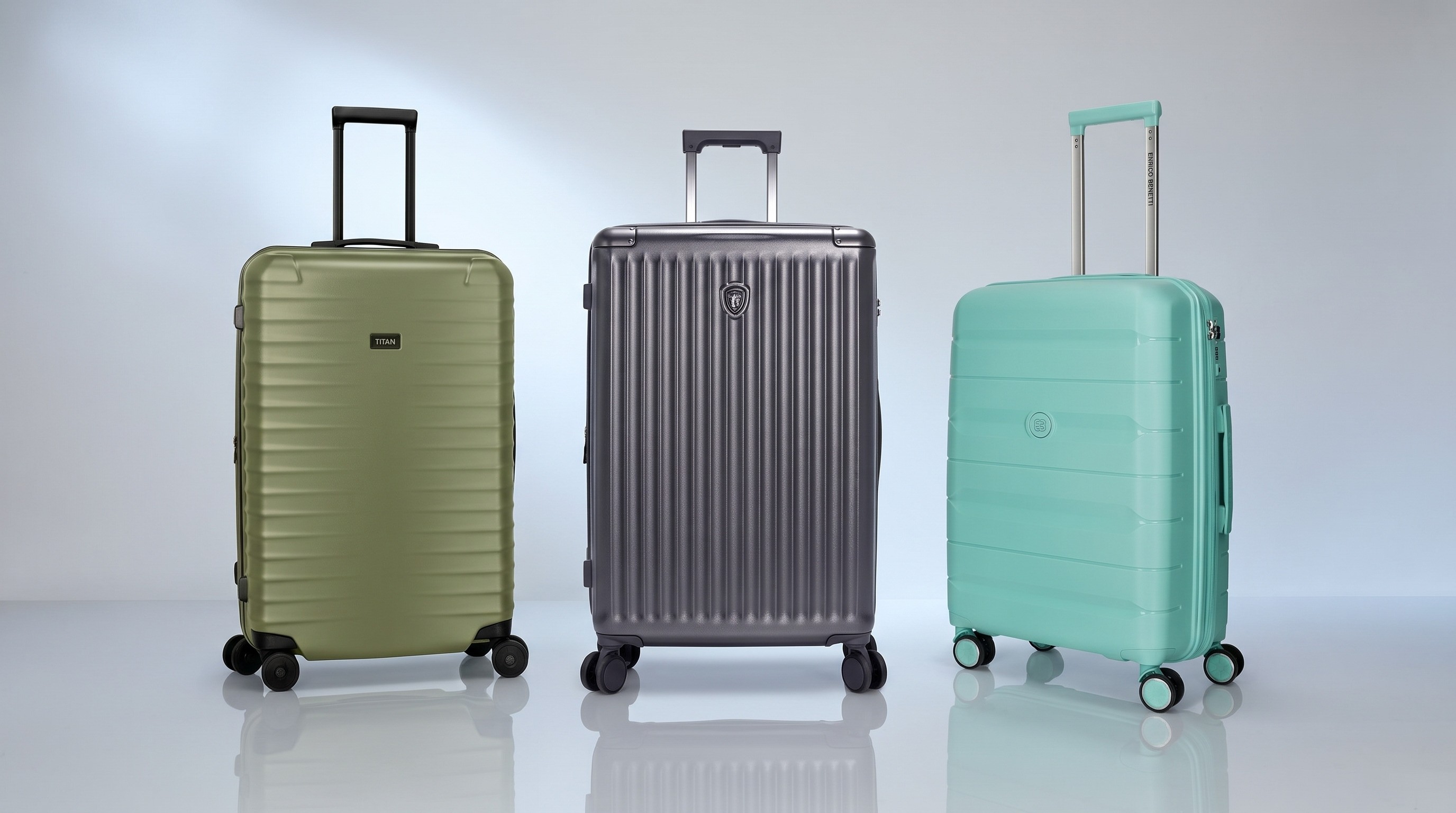
The price of a suitcase is most heavily influenced by the shell material and the quality of its components—namely the wheels, zippers, handle, and lock. On top of that come overall build quality, seam finishing, and internal organisation. The price does not rise smoothly. Much more crucial than a difference of a few euros is whether the suitcase comes from an established brand or an anonymous workshop.
| Material | Durability | Weight | Typical Tier |
|---|---|---|---|
| ABS | Lower, cracks under impact and scratches easily | Medium | Entry-level |
| Polypropylene | Good, more flexible than ABS | Low | Entry-level to mid-range |
| Polycarbonate | Very high, flexes back into shape | Low | Mid-range to premium |
| Aluminium | Very high, but prone to denting | High | Premium |
| Fabric (nylon, polyester) | Flexible, forgiving when overpacked | Low | Across all tiers |
The mere label "hardshell suitcase" tells you virtually nothing. Always check what material the shell is made of. A thin wall made of cheap, rigid plastic cracks under impact and normal airport handling, whereas high-quality polycarbonate bounces back into shape after impact and reliably protects the contents, including fragile items.
The cheapest suitcases from marketplaces and supermarkets: where savings end
The real issue is not affordable luggage in general, but unbranded suitcases from supermarket promotions and multinational online marketplaces. With these, you have no way to verify the shell material, who is responsible for the product in the European Union, or where to get spare parts. Fortunately, most weaknesses can be spotted right from product photos and descriptions—you just need to know what to look out for.
- Missing information about the manufacturer and the responsible entity in the European Union, which is required by EU regulations for products sold on the market.
- Material is not stated at all, or only vaguely described as durable plastic.
- A thin shell that visibly flexes under thumb pressure.
- Two wheels instead of four, or four spinner wheels mounted on a single plastic axle.
- An unbranded zipper with tiny teeth and no protective lining.
- A loose telescopic handle that wobbles sideways when extended and rattles over uneven surfaces.
- Missing TSA lock.
- Missing weight specifications and dimensions including wheels.
The worst part comes later. When a wheel breaks on such a suitcase, you will not find a replacement part, and filing a warranty claim with a foreign seller is often a lengthy hassle. Instead of saving money, you end up paying twice—the second time in a rush the day before departure.
Entry-level: where you can reasonably save money
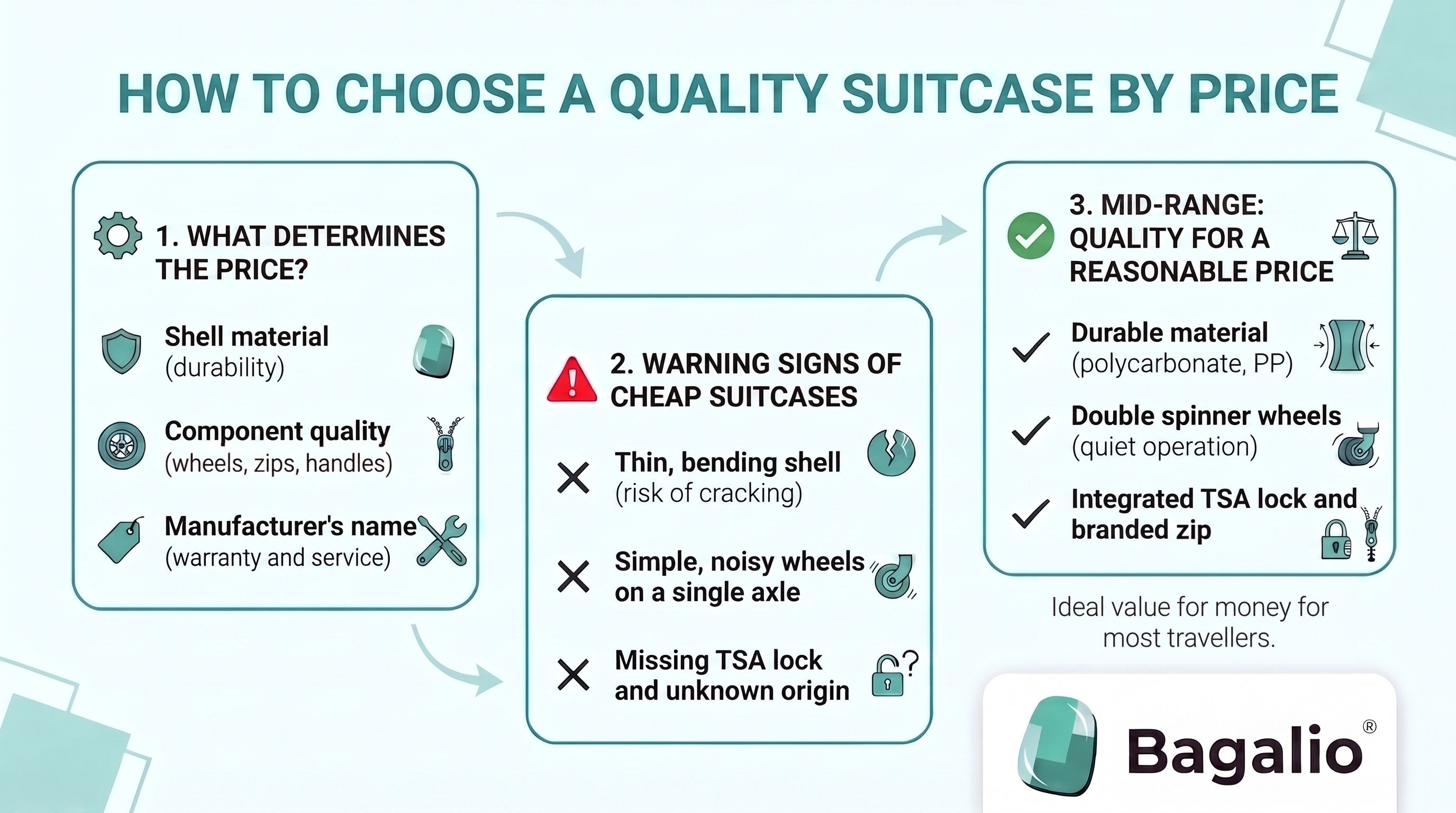
Entry-level luggage from established brands is completely different. Cost cuts here apply to materials and extra features, not to core structural integrity. You get a suitcase with properly finished seams, a functional zipper, and an identifiable manufacturer, perhaps made of a simpler shell material or with a plainer interior layout. From our range, this category includes Zebra Trends and Enrico Benetti.
For a lower price, you generally accept a simpler shell material, a less elaborate interior, basic wheels, and shorter longevity under frequent travel. In return, you get warranty assurance and a clear origin of goods. If you travel once or twice a year and simply transfer your luggage from the car boot to your holiday apartment, it is a thoroughly sensible choice.
Mid-range: the best value for money
For most travellers, the mid-range tier represents the ideal sweet spot. For a slightly higher budget, you step up from thin ABS to polypropylene or polycarbonate and get components built to withstand dozens of journeys instead of just a few. You can recognise a quality travel suitcase in this tier by several features:
- A shell made of polypropylene or polycarbonate, or an ABS/polycarbonate composite—materials that handle impact much better.
- Four spinner wheels with independent axles, ideally double wheels.
- A branded zipper with a protective storm flap that will not burst when overpacked.
- A sturdy telescopic handle along with side and top carry handles.
- An integrated TSA lock.
- A thoughtful interior layout featuring dividers, compression straps, and organiser pockets.
From our catalogue, this category mainly includes Travelite and Heys. Travelite focuses on lightweight construction and a great balance of price and features, while Heys leans towards durable shells with eye-catching designs. Both are established manufacturers where warranty support and replacement parts are readily accessible.
Tip: You can compare models across all price ranges in our suitcases category.
Premium tier: what you are paying extra for
In the highest bracket, you no longer pay for basic functionality—that is a given. You pay for longevity, customer service, and refined details that prove their worth after years of heavy use. An investment in top-tier luggage is measured in decades, not seasons.
- Premium materials, such as thick-walled polycarbonate or aluminium.
- Extended warranties and readily available spare parts, from wheels to handles.
- Precision shell fitting, superior seam finishing, and whisper-quiet wheel glide.
- Higher resistance to pressure and crushing impacts during airline baggage handling.
From our range, this category includes Titan, Victorinox, and Thule. These manufacturers build products designed for exceptional longevity with dependable service networks—qualities that matter far more for a ten-year piece of luggage than a short-term discount.
How to choose a suitcase by price and travel frequency
You cannot test how long a suitcase will last at the moment of purchase. Turn the calculation around and base your decision on what you know for sure: how many trips you plan to take. If you fly three times a year and want to use the suitcase for five years, that means fifteen journeys and at least thirty airport baggage check-ins. Only then should you assess whether a specific model can handle that workload, checking key components outlined above: the shell material, wheels, zipper, and trolley handle. Dividing the purchase price by the planned number of trips reveals whether the price difference between tiers is truly significant.
Tip: An indirect indicator of durability is the warranty length. It reflects the manufacturer's own confidence in the suitcase's service life.
| Travel Frequency | Recommended Tier | Luggage Type |
|---|---|---|
| Once a year, mainly by car | Entry-level | Medium size, fabric or polypropylene |
| 2 to 4 times a year, including flights | Mid-range | Cabin trolley plus medium suitcase |
| Multiple times a year or for business | Premium | Polycarbonate cabin trolley, plus a larger check-in suitcase |
Alongside price, remember to choose the right size. A cabin bag must meet airline carry-on allowances—particularly strict with low-cost carriers. A medium suitcase is usually sufficient for a one-week holiday, while larger suitcases shine on extended journeys. Keep in mind that dimensions must include wheels and handles.
Tip: Comprehensive information on cabin luggage, differences between models, and sizing guides can be found in our article on Cabin luggage and its dimensions.
Frequently asked questions
Is a cheap suitcase always a bad choice?
Not necessarily. An entry-level model from an established brand does a perfectly fine job for occasional holidays. The real risk lies in unbranded products with unverified materials and no identifiable manufacturer.
Which is better: a softshell or a hardshell suitcase?
A hardshell suitcase better protects fragile items and withstands compression, while a fabric suitcase is more flexible, more forgiving when overpacked, and frequently features exterior pockets. Read our detailed comparison in the article on suitcase materials.
Is polycarbonate always better than ABS?
At comparable wall thicknesses, yes, because it is more flexible than ABS and absorbs impacts much better. However, wall thickness also matters, meaning a solid, thick ABS shell may perform better than an ultra-thin polycarbonate one.
What is a TSA lock and why is it important?
It is a lock that airport security personnel in the USA and other countries can open with a master key, allowing them to inspect your luggage without cutting the lock or damaging the bag. Learn more in our article about TSA locks.
How much should an empty suitcase weigh?
For a cabin suitcase, standard weights today range between two and three kilograms, while large suitcases hover around four kilograms. Every extra kilogram reduces your usable airline baggage allowance.
What suitcase is best for flying and what are the allowed hand luggage dimensions?
For the cabin, you need a carry-on suitcase that fits within your airline's specific allowances, measured including wheels and handles. Because specific limits vary by carrier, we have outlined them in our overview of cabin luggage dimensions.
Can I spot a low-quality suitcase from an online store photo?
To a large extent, yes. Pay close attention to the stated material, wheel construction and count, lock type, listed weight, and photos of the interior layout.
Is it worth buying a suitcase on sale?
Definitely, provided it is a model from the mid-range or premium tier. A price discount will not turn a poorly built suitcase into a quality product.
How much to spend on a suitcase so that it makes sense
Price alone tells you very little, but when combined with the material, hardware components, and brand reputation, it serves as a reliable guide. Approach your choice in three steps: first determine your category based on travel frequency, then inspect the shell material, wheels, zipper, and lock, and only then compare prices between specific models. For most travellers, the mid-range tier is the best choice, while for occasional trips, an entry-level piece from a trusted brand will serve you exceptionally well.