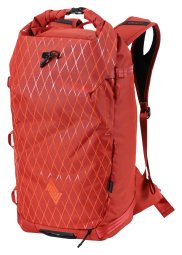
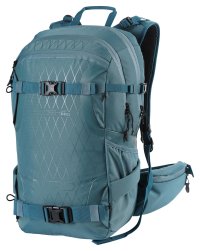
A winter sports backpack is a tool specifically designed for movement in snowy mountains. Its design and durable construction are intended to store everything you need, protect the contents from snow and frost, and facilitate your sports activities in the field. But how do you simply choose a backpack that can handle quick ascents or all-day skiing with you? We have several useful tips and advice to make your choice easier.
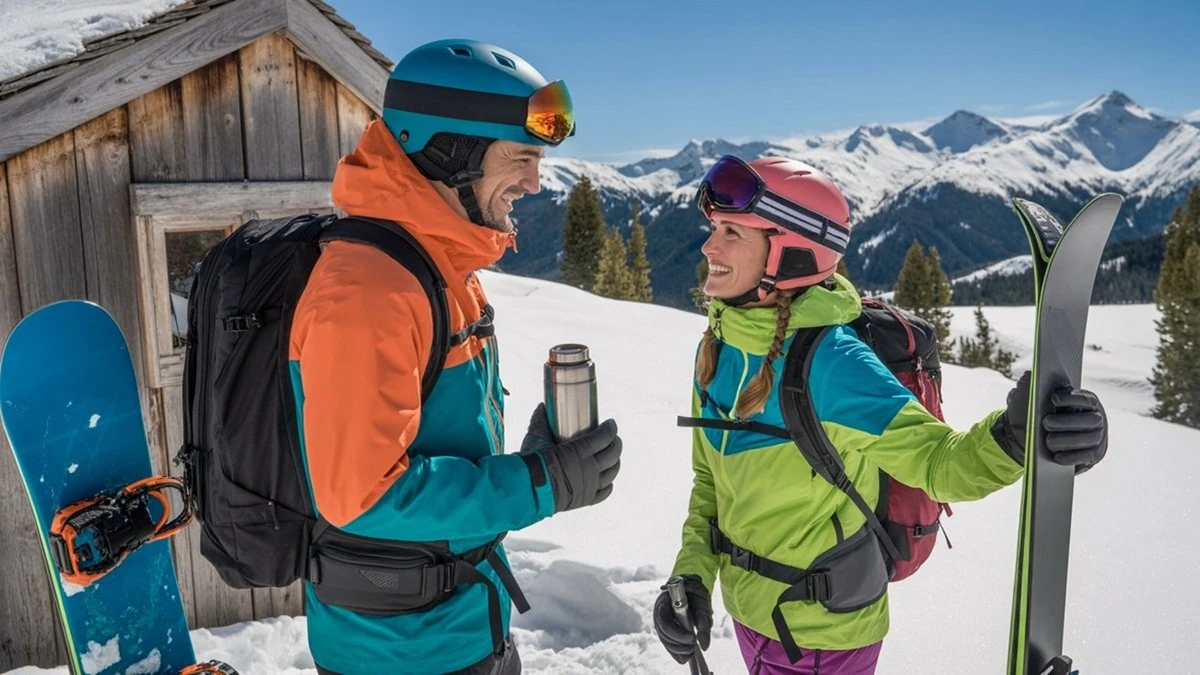
Table of Contents
- Backpacks by activity
- Parameters of a good winter backpack
- Backpacks for cross-country skiing and winter hiking
- Backpacks for downhill skiing and snowboarding
- Ski touring and freeride backpacks
- TOP 10 winter backpack features
- Frequently Asked Questions (FAQ)
- Summary: Which winter backpack is the right one?
Women's and men's winter sports backpacks have their specifics:
- Material: Winter models are made of extremely durable fabrics (often Cordura or nylon) that can withstand sharp ski edges, ice axe tips, and the rough anti-slip grip of a snowboard. They also have higher water resistance.
- Back system: While summer backpacks rely on mesh for maximum ventilation, a winter backpack has a smooth back panel made of molded foam so that snow does not stick to it.
- Handling: Buckles, clips, and zipper pulls are larger on winter backpacks so you can easily operate them even while wearing ski gloves.
- Safety: Skiing and ski touring backpacks have adapted equipment in terms of safety, for example, they have a pocket for avalanche gear.
Backpacks by activity
There is no single universal compact backpack for everything. Your choice should start with answering the question: What do you do most often in the mountains?
- Cross-country skiing and winter hiking – emphasis on low weight and simple design, hydration, and comfort during movement.
- Downhill skiing and snowboarding at a resort – alternating between riding and sitting, transitions between slopes, emphasis on stability and the ability to carry a drink in a thermos, an extra layer of clothing, or hang a helmet on the backpack.
- Ski touring, freeride, backcountry – all-day ascents, descents in unmaintained terrain, the need to carry avalanche gear, crampons, sometimes even a rope, and above all safety equipment, which includes a beacon, shovel, and probe.
Tip: Try to write down what you will carry in your backpack most often – and choose the volume and functional features accordingly.
Parameters of a good winter backpack
Whether you spend the winter cross-country skiing on a track or downhill skiing in powder on a slope, most quality winter backpacks have several common features.
Volume and dimensions
- 10–20 liters – shorter cross-country skiing, slopes, snowpark, afternoon skiing
- 20–30 liters – all-day skiing, resort + short ascents, basic ski touring trips
- 30–40 liters and more – all-day ski touring, freeride with extra gear, multi-day crossings
A winter sports mountain backpack should also have a narrow shape so it does not restrict movement and does not get in the way when riding a ski lift.
Back system
A well-crafted back section is key for comfortable backpack carrying. The back system should be made of materials that do not catch snow and provide at least some ventilation. Focus on the following parameters:
- A firm but comfortable back panel maintains the backpack's shape.
- A hip belt transfers most of the carried weight to the hips and keeps the backpack in a stable position so it doesn't "bounce" on your back while riding.
- A chest strap – stabilizes the shoulder straps so they don't slip.
- For more sophisticated models, compatibility with a back protector is crucial, or the protector is directly part of the backpack, which increases safety in case of a fall.
Materials and water resistance
A winter sports backpack will be in constant contact with snow, ice, sharp ski edges, or snowboard edges, so its construction needs to be truly durable and high-quality.
- Materials should be sufficiently strong and at the same time resistant to water and abrasion. Many manufacturers care about ecology. bluesign® certification confirms the absence of harmful substances and environmental friendliness.
- A water-repellent finish (DWR) and possibly an integrated backpack rain cover will prevent moisture from penetrating in wet snow or rain.
- Zippers and seams are often covered with fabric, so snow does not get inside as easily.
Tip: You can read about how important water resistance is and everything you need to know before buying in the article Waterproofing and water resistance.
Internal organization and access to the backpack
Try to imagine standing in -10 °C on a slope or ridge, it's snowing and windy, and you have frozen fingers, yet you need to quickly find and pull out what is necessary. At this moment, you will most appreciate a simple design offering quick access to the backpack and intuitive use.
Key features are:
- a separate large main compartment for clothing and larger items with access through the back
- a smaller pocket for goggles, a compartment for a thermos, a first aid kit, etc., with a zipper closure
- large zipper pulls and sufficiently robust buckles that can be unzipped with gloves on
- for ski touring and freeride backpacks, a separate pocket for avalanche gear (shovel, probe)
Ergonomics
- Hip belt: On winter backpacks, it is usually wider to ensure greater stability, distribute the weight of the load, and fix the backpack in the desired position to facilitate movement.
- Back length: If you have a shorter back, a standard backpack may press on you either in the lumbar area or in the neck area when tilting your head back. Many brands offer "Short" versions that solve this problem.
Tip: Women's versions (Women/SL) have shorter backs and shoulder straps shaped into an "S" so they don't cut into the chest and fit better on narrower shoulders.
How to test the backpack
Fill the backpack with a load corresponding to the weight of the gear you will carry in reality.
Adjust the length of the shoulder straps, hip belt, and chest strap so that the backpack follows your back, does not protrude significantly above your head, and most of the weight sits on your hips.
Try to "ski" – simulate movements associated with skiing (bending, squats).
If you already feel that the backpack does not fit while testing, it is advisable to try other sizes or models from other brands for comparison.
Caring for your winter backpack
To ensure your backpack lasts as long as possible:
- Regularly remove dirt from it.
- Check the condition of seams, buckles, and zippers.
- After returning home, dry it at room temperature (not on a radiator).
- According to the manufacturer's instructions or the condition of the material, renew the impregnation with a suitable product.
Backpacks for cross-country skiing and winter hiking
When cross-country skiing, you are mostly dealing with comfort, lightness, and freedom of movement.
What to look for in a cross-country skiing backpack
- Lower volume (approx. 10–20 l) – enough space for an extra layer, thermos, snack, and documents.
- Snug fit – the backpack must not bounce when pushing off.
- Ventilated back – reduces sweating.
- Chest strap – prevents straps from slipping off your shoulders during movement.
- Reflective elements – useful when returning at dusk; cross-country and hiking trails often cross roads or start at a parking lot.
Backpacks for downhill skiing and snowboarding in a resort
On the slopes, you are mainly dealing with practicality, stability, and quick access to stored items. You usually don't carry ski and snowboard backpacks fully loaded all day, but they should still fit well and not restrict movement.
For a normal day at a resort, a volume of 15–25 l is usually enough. Inside, you must fit basic essentials such as an extra layer (sweatshirt, down jacket), gloves, a scarf or neck warmer, a small first aid kit, wallet, documents, phone, thermos with a drink, snack, and other personal items. It is important that the light and comfortable backpack does not protrude too far back (when sitting on a ski lift) and does not have unnecessarily long straps that could unexpectedly get caught on the lift.
For skiers and snowboarders, the following is essential:
snug fit with optimal back length – ensures movement without restriction
firm back panel – for basic support and back protection when carrying skis or a snowboard
practical attachments for skis or a snowboard – frees up your hands and simplifies transfers
Snowboard backpacks often offer vertical or diagonal board attachment, which is useful when moving between areas, walking to a ski bus stop, or doing a short hike.
Ski touring and freeride backpack: when you head off-piste
Here, the backpack no longer serves only to store things, but becomes an important part of safety equipment. A well-chosen ski touring backpack will allow you to carry everything you need, quickly orient yourself in the contents, and in case of a problem or threat, not waste precious time.
A ski touring and freeride backpack should not lack:
- separate avalanche compartment – clearly marked, with space for a shovel and probe
- back protector / integrated spine protector – increases the level of back protection in case of a fall and impact in demanding terrain, thereby reducing the risk of injury
- system for quick ski attachment – without complicated threading of straps, ideally so they can be put on and taken off with gloves on
- attachments for ice axes, crampons, and rope
- helmet holder – fabric, mesh, or straps that keep it securely on the backpack
- robust hip belt for weight distribution with pockets for small items
When does an avalanche backpack make sense
An avalanche airbag system in the event of an avalanche inflates a large "pillow," which, assuming correct use, reduces the risk of deep burial and can significantly increase your chance of survival. Purchasing an avalanche backpack with an airbag makes sense if:
- you regularly go into avalanche terrain
- you go into steeper slopes, gullies, and more remote mountain areas
- you have mastered the basics of safe movement in the mountains
Modern airbag backpacks are now lighter and more comfortable than older generations; there are both canister and electronic systems with the possibility of repeated test firing.
Tip: Do you want to know how avalanche backpacks work and for which adrenaline sports they are needed? You can find everything essential on the topic in a separate article in our advice section.
TOP 10 winter backpack features
Whether you are a cross-country skier, downhill skier, or ski tourer, you will certainly appreciate these ten features in a quality winter backpack:
Avalanche pocket: A quickly accessible compartment for a probe and shovel. A necessity for ski touring backpacks.
Back Access: Allows you to open the backpack laid in the snow through the back panel. Your back stays dry and you have easy access to your things.
Ski and snowboard attachments:
Diagonal: Fast, skis go diagonally across the back.
A-Frame (Side): More stable for walking.
Snowboard: Vertical attachments on the front of the backpack.
Helmet mesh/holder: Keeps the helmet on the outside so it doesn't take up space, while also being quickly at hand.
Goggle pocket with fleece lining: Protects ski goggles from scratches.
Pocket for a hydration bladder with insulation: A tube with insulation slows down water freezing and allows you to drink while moving.
Loops for ice axes/pocket for crampons: Secure attachment of sharp equipment reduces the risk of material damage.
Pockets on the hip belt: Ideal for documents and a phone (the battery lasts longer when kept warm near the body).
Compression straps: Help regulate the backpack's volume into a shape that will suit your needs.
Whistle: A safety standard, often integrated into the buckle that fastens the chest strap.
Frequently Asked Questions (FAQ)
What is the difference between diagonal and "A" ski attachment?
Diagonal attachment is faster and does not interfere with the airbag on avalanche backpacks. "A" attachment (side) is more stable when walking and distributes weight better, but it is harder to handle.
Is it necessary to have a ski backpack with a back protector?
If you ride in free terrain or fast on a slope, then from a safety perspective, definitely yes. A backpack with an integrated back protector is more comfortable than wearing a separate protector and then a backpack on top of it.
What backpack volume is ideal for a one-day ski touring trip?
For most one-day trips in our mountains and for "quick" ascents, 25–30 liters seems optimal. It depends on how much gear you are carrying, whether you are also taking a rope, crampons, etc. A larger volume is useful for longer, technically more demanding trips.
Is a hydration bladder or a classic thermos better for skiing?
For sports use (cross-country skiing, ski touring), a hydration bladder is very comfortable. In winter, however, extra insulation is necessary because in extreme frosts (-10 °C and more) the liquid in the tube can freeze. A thermos for hot tea still leads in the cold – the water in it won't freeze and it keeps the optimal temperature longer.
How often should I waterproof my winter backpack?
It depends on the intensity of use and the manufacturer's recommendation. But if you see that snow or water no longer run off the surface of the backpack but soak into the material, it is time to renew the waterproofing.
How to care for a winter backpack?
Always follow the manufacturer's instructions. Do not wash the backpack in a washing machine (you will destroy the coating). Just wipe it with a sponge and soapy water. It is important to let it dry thoroughly after every action.
Which winter backpack is "the right one" for you?
There is no universal "best winter backpack." Every sport has its specifics and demands, just like every person who engages in that activity. Nevertheless, a few simple rules can be summarized:
- For cross-country skiing and winter hiking, look for a light backpack with a comfortable back, adjustable chest and hip straps, ideally around 10–20 l.
- For slopes and snowboarding, choose a snug backpack with a firmer back system and the option of attaching skis/snowboard, volume up to 25 l.
- For ski touring and freeride, choose a ski touring or directly an avalanche backpack with a separate avalanche compartment, integrated back protector, a quick ski attachment system, helmet holder, and sufficient volume – for a one-day event, most often around 35 l.
When choosing a specific model, it is worth going through the offer of snowboard and ski touring backpacks and comparing how individual backpacks differ in fit, volume, and equipment.
Choosing a winter sports backpack should not be underestimated. It is an investment in your comfort and, for more extreme sports, also in your safety. Enjoy winter in the mountains with a backpack from the Bagalio offer!