You're standing at the check-in counter, sending your travel suitcase down the conveyor belt, and silently praying that you'll see it in the same condition at your destination. The same chill down your spine when you're waiting in the arrivals hall, wondering if your suitcase will be the one to appear with a cracked shell or a broken wheel. Air travel is a stress test for luggage. The good news is that there are many ways to significantly reduce the risk of damage. Let's take a look at how to best protect your luggage and ensure it survives every journey unscathed.

Contents:
- Why is Protecting Your Suitcase on a Plane So Important?
- Step by Step: How to Protect Your Suitcase During Air Travel
- Special Tips for Securing and Protecting Older Luggage
- Quick Pre-Flight Checklist
- Frequently Asked Questions about Protecting Your Suitcase in Air Travel
- Travel with Peace of Mind and Secure Your Luggage from Damage
Why is Protecting Your Suitcase on a Plane So Important?
Once your suitcase disappears onto the black conveyor belt, its wild ride begins. It faces miles on automated sorting lines, being transferred from carts to the aircraft's hold, and often, less-than-gentle handling by airport staff. During transit through airports, the suitcase is exposed to impacts, pressure from other luggage, and of course, the risk of scratches or scuffs. But it's not just about cosmetic flaws. A bad impact can damage the zipper or even the hard shell to the point where there's a risk of unwanted opening and loss of the suitcase's contents.
Step by Step: How to Protect Your Suitcase During Air Travel
Prevention is always better than dealing with the consequences. Preparing your suitcase before your flight will save you a lot of trouble. Here is a complete guide on how to do it.
1. A Quality Suitcase is the Foundation
The best protection starts even before you pack. Investing in a quality suitcase is absolutely fundamental.
- Hard Shell: Modern hardshell suitcases (for example, made of polycarbonate or polypropylene) are designed to absorb impacts and protect the contents of the suitcase. They are more puncture-resistant than textile suitcases.
- Quality Components: Pay attention to the zippers, wheels, and handle. These are the most susceptible to damage during rough handling.
- Textile Suitcases: If you prefer a textile suitcase, make sure it is made of durable materials (e.g., dense nylon) and has reinforced corners.
Tip: We have prepared a comparison of travel suitcase materials in a separate article. Travel with a durable suitcase that will have your back.
2. External Protection: Covers, Wraps, or Luggage Straps?
The most visible way to protect your suitcase from scratches and dirt is an outer layer. You have three main options, each with its own pros and cons.
Luggage Covers
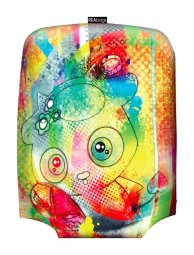
Textile or plastic protective covers are a great solution. They are reusable and an ideal way to protect your suitcase from scratches. Plus, thanks to a distinctive design, you will immediately recognize your suitcase on the carousel.
- Advantages: Excellent surface protection, reusable, easy identification.
- Disadvantages: Initial investment, you need to choose the exact size.
Wrapping the Suitcase in Film
You can find the service of wrapping your suitcase in film at most airports. It's a quick way to protect the suitcase from dirt, moisture, and partially from theft (it can deter thieves).
- Advantages: Available at every airport, protects the entire suitcase, relatively cheap.
- Disadvantages: Very environmentally unfriendly (single-use plastic), the film tears easily on sharp edges, it can be cut open during a security check. The film can also block the handle or wheels.
Luggage Straps
Sturdy luggage straps are a classic. Their main purpose is not to protect the suitcase from scratches, but to prevent it from opening unintentionally if the zipper fails. They are also a great identification feature.
- Advantages: Increase the strength of the suitcase, prevent opening, cheap, easy identification.
- Disadvantages: They do not protect the surface of the suitcase.
3. Security Inside and Out: Locks and Proper Packing
Protecting your suitcase is not just about the outside. Securing the contents of the suitcase is just as important.
Use a TSA Lock
Whether you have an integrated lock or use a padlock, always choose a TSA lock. Security officers (especially in the USA, but increasingly elsewhere) have a universal key that allows them to open the lock for inspection without damaging it. A classic lock would simply be cut. Most modern suitcases already have an integrated TSA combination lock.
Tip: For a better explanation of how TSA locks work, consider reading our specialized article. For better clarity, we have also prepared detailed instructions on how to set different types of locks.
Proper Packing Saves a Lot of Trouble
Packing your suitcase smartly is fundamental.
- Pack fragile items in the middle of the suitcase, cushioned by soft clothing.
- Keep all liquids in resealable bags to prevent any leaks from damaging the rest of the contents.
- Valuables, electronics, and medications should ALWAYS be carried with you in your carry-on luggage.
Tip: Do you know what you can and cannot take on board a plane? We'll give you a hint in a separate article!
4. Don't Underestimate Luggage Tagging
Properly tagging your suitcase is crucial in case your luggage gets lost or is accidentally taken by another passenger.
- Tag: Every suitcase should have a tag, or a luggage tag. Include your name, phone number, and email address on it. Never write your home address on the tag!
- Identification Inside: Place a business card or a note with your details inside the suitcase as well (in the top pocket). If the external tag gets torn off, this is the only chance the airline has to contact you.
- Modern Tracking: For absolute peace of mind, you can track the location of your luggage using trackers like Apple AirTag or Samsung SmartTag. You simply place them inside the suitcase and, with the Bluetooth signal on your phone turned on, you can see where your suitcase is.

Special Tips for Securing and Protecting Older Luggage
Do you have an older suitcase or prefer a textile one? This type of luggage requires a bit more care. Textile suitcases are more prone to getting wet on a rainy tarmac and get dirty more easily. Here, wrapping the suitcase in film or using a suitcase cover is particularly appropriate. For older suitcases where the zippers may no longer be 100% reliable, luggage straps are almost a necessity to prevent a disaster.
Quick Pre-Flight Checklist
Are you ready to go? Go through this quick list:
- You have a quality suitcase with no visible damage (wheels, handles, zippers).
- You have chosen an external protection (cover, film, or straps).
- The suitcase is locked (ideally with a TSA lock).
- There is a name tag on the suitcase (name, phone, email).
- There is a copy of your contact details inside the suitcase.
- All valuables and electronics are in your carry-on luggage.
- You have photographed your suitcase (outside and the contents) for a possible claim.
Tip: What to do if your suitcase is damaged? Despite all efforts, it can happen that your suitcase arrives damaged. In that case, act immediately. We discuss how to proceed with a claim for damaged luggage with the airline in detail in our separate article.
Tip: Your suitcase is lost, what now? The suitcase didn't arrive at all? Don't panic. You can find the procedure on how to report the loss and what your rights are in our guide.
Frequently Asked Questions about Protecting Your Suitcase in Air Travel
- How can I best protect my suitcase from scratches?
The best protection against scratches and scuffs is provided by a textile or plastic suitcase cover. It also protects the suitcase from dirt and is reusable. - Is it better to wrap the suitcase in film or use a strap?
It depends on your goal. Wrapping the suitcase in film protects the entire surface from dirt and moisture, while luggage straps mainly serve as a safeguard against unintentional opening if the zipper fails. - What exactly is a TSA lock for?
A TSA lock allows airport security personnel (especially in the USA) to open your suitcase with a special key for a random check without having to damage or cut the lock. - What information should I write on the luggage tag?
Always put your name, phone number, and email address on the tag. For security reasons, never write your full home address. - What should never be in a checked suitcase?
Never put valuables, electronics (laptops, power banks, cameras), important medications, and documents in a suitcase that you check in. All these items belong exclusively in your carry-on luggage. - What should I do if my suitcase arrives damaged?
If you find that your suitcase is damaged in the arrivals hall, act immediately. Before leaving the baggage claim area, go to the baggage claim counter and fill out a damage report (PIR).
Travel with Peace of Mind and Secure Your Luggage from Damage
Protecting your suitcase during air travel requires a little preparation, but the peace of mind is worth it. Whether you opt for a durable suitcase cover, practical straps, or a one-time film wrap, you are doing your best to ensure your luggage arrives safely. Combined with a TSA lock and proper tagging of the suitcase, you give your luggage the best chance to withstand the rigors of air travel without damage.