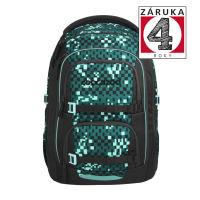
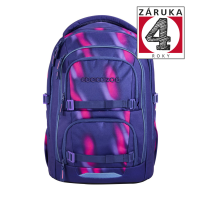
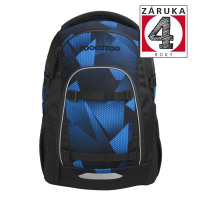
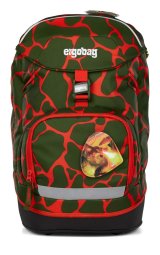
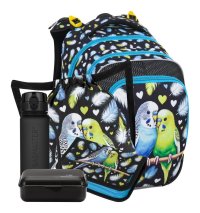
Choosing a school backpack is not just about the color or the popular print your child picks. Even though design is key for a small pupil or a teenager, from a parent's perspective, the absolute priority is health, ergonomics, and durability. A child's spine is constantly developing, and a poorly chosen backpack can lead not only to bad posture and back pain but also to unpleasant health complications. It is therefore essential that the backpack fits your student's height and sits well on their back.
In our guide, we will focus on how school backpacks for primary and secondary school differ. We will advise you on how to best choose a school backpack according to the child's age and height, which features not to underestimate, and what else to get for the school backpack or satchel.
Contents:
- How needs differ between primary and secondary school
- Primary school: backpack or satchel?
- Secondary school: student backpack
- How to choose the best school backpack
- Healthy back and correct posture
- Materials, water resistance, and maintenance
- Comparison table: primary vs. secondary school
- Popular brands and girls' vs. boys' designs
- Don't forget the pencil case and accessories
- Frequently asked questions
- The right backpack is an investment in a healthy back
How needs differ between primary and secondary school
Choosing the right school backpack depends on age, physical constitution, the amount of school supplies, and the level of independence. While a small first-grader needs a stable, lightweight and organized satchel to get used to the load and system, an older student in secondary school has much higher demands on volume and storage organization, not only because of the number of textbooks and notebooks but also electronics. For some subjects, it may be necessary to carry a tablet or laptop. The backpack must therefore adapt to the amount of items carried and the child's rapid physical growth. Both age groups share the need for quality ergonomics that protect the developing spine from overload. An adjustable back system often helps with this.
A suitable school backpack must protect a child's back. An overloaded or poorly fitting backpack will negatively affect a growing spine, so it pays to choose quality and ergonomics rather than the cheapest piece.
Primary school: backpack or satchel?
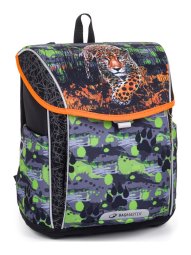
At the beginning, parents often wonder whether to choose a school backpack or a satchel. For first-graders and younger pupils, whose physical structure is most vulnerable at this age, a lightweight school satchel with a rigid construction is more suitable. The solid bottom and reinforced walls hold their shape, so the bag stands by the desk on its own and does not tip over. The child easily finds their way around the one main compartment and does not have to think about where to store textbooks, a pencil case, or folders that facilitate the organization and carrying of notebooks. Especially in primary school, maximum clarity, stability, and simple handling are more important than lots of pockets or a trendy print.
What a school satchel for primary school (grades 1–5) should have
- Ergonomics: Anatomically shaped back and padded S-shaped shoulder straps.
- Rigid construction: The satchel must have a solid bottom and stand on its own.
- Low weight: An empty satchel should ideally weigh 1 kg (max. 1.2 kg).
- One main compartment: Clear layout with a flip-top lid makes orientation easier for first-graders.
- Distinct reflective elements: Ensure the child's safety on the way to school in low light.
- Chest and waist strap: Help distribute the load weight correctly and relieve the shoulders.
Tip: Always choose according to the child's current height and build. The backpack should fit well; its size should not exceed the shoulders or the bottom. School satchels and backpacks are usually designed to last children from 1st to 3rd grade even without an adjustable back panel.
Secondary school: student backpack
In secondary school, the volume and weight of school supplies increase significantly. Older children usually carry A4 workbooks, textbooks for 6–7 hours of classes, a larger snack, a water bottle, equipment for afternoon clubs or courses, and increasingly often a laptop or tablet. A multi-compartment student backpack is designed to fit teenagers (most often with a height from 140 to 180 cm) who need more space for their things. A recommended volume of around 28 liters is ideal – it won't overload them too much, but it will hold everything necessary for school and can also be used in leisure time. Higher demands are also placed on design and appearance; older children already have their own style and want to look more mature, so keep in mind that in this case, you will be choosing an ergonomic backpack that will also be a fashion piece.
Children between 11 and 15 years old grow faster and their body shape changes significantly. If you want to have 100% certainty that the backpack will fit the child correctly throughout secondary school, then choose a backpack with an adjustable back system. In this case, a sliding back panel allows you to move the upper part with straps relative to the lumbar support point (sacrum) so that the padded part optimally copies the curvature of the spine and sits well on the hips, which is essential for proper weight distribution of the entire backpack.
What a student backpack for secondary school (grades 6–9) should have
- Ergonomics: Anatomically shaped back panel and ergonomic shoulder straps.
- Growing back system: For optimal adjustment of the backpack's back length during the child's puberty growth period.
- Larger volume: A capacity between 22 and 30 liters ideally holds daily school equipment.
- Multi-compartment system: Separate compartments for textbooks with sections for heavy items and pockets for a pencil case and electronics ensure clarity and comfort when carrying.
- Laptop pocket: Padded space for safely carrying a tablet or computer.
- Compression straps: Allow you to regulate the backpack's volume and adjust the center of gravity.
- More mature design: Older students want to stand out; they prefer urban-style backpacks that have a solid-color look or trendy prints, or perhaps a skate style.
Tip: Pick a model, check the ergonomics and size, but leave the choice of appearance to the child. Manufacturers today offer a wide spectrum of color variants and motifs that appeal to both girls and boys in secondary school.
How to choose the best school backpack
Categories by age and child's height (approximate):
- 1st grade (approx. 115–130 cm) → school satchel for first-graders or backpack for primary school
- 2nd–5th grade (approx. 125–150 cm) → school backpacks for primary school
- 6th–9th grade (approx. 140–180 cm) → school backpack for secondary school or student backpack
For children and students, a school backpack is the number one helper with which they will spend several years of their lives. To choose the best one, keep in mind that personal testing is the best filter and guarantee that the backpack will really fit the child.
Key parameters:
- Backpack width x back width: The backpack should not be significantly wider than the child's shoulders.
- Backpack height x body height: The top edge of the backpack should end at the shoulders, and the bottom should not exceed the hips. There must be no large gap between the child's back and the backpack.
- Individual adjustment: Put the backpack on the child's back; in the case of an adjustable system, choose the size corresponding to the height (S, M, L, XL). Fasten the waist belt and tighten the shoulder straps – they should smoothly follow the shape of the shoulders without pulling in the armpits. Finally, fasten the chest strap, which keeps the shoulder straps together so they don't slide off. Tighten the balance straps and stabilize the backpack's center of gravity.
Tip: When testing the backpack at the store or at home, put several heavier books in it. Only when moving with a real load will you best verify whether the straps and back system fit the children exactly as they should.

Healthy back and correct posture
To ensure the backpack truly supports healthy back growth, teach your children these 5 basic rules:
- Always carry the backpack on both shoulders: Carrying it on one shoulder is the most common bad habit that leads to one-sided muscle overload, spinal curvature, and pain.
- Tighten the shoulder straps correctly: Every time you put it on, you need to tighten the straps so that the backpack sits firmly on the back and does not hang below the waist.
- Fasten the chest and waist straps: If the backpack has them, always fasten them. A significant part of the weight is transferred from the shoulders to the hips, relieving the trapezius muscles.
- Pack heavy items as close to the back as possible: Folders with notebooks and bulky textbooks belong in the back. Store lighter items, a pencil case, or a snack in the front compartments.
- Regularly remove unnecessary items: Teach children to remove supplies they don't need for the next day according to the schedule every day.
Materials, water resistance, and maintenance
Most school backpacks and satchels today are made of polyester (often recycled) – it is lightweight, abrasion-resistant, and handles daily wear well. Many models have a surface resistant to normal rain, so textbooks will stay dry even when it's raining outside. Reflective elements and bright colors are a matter of course to ensure the child's visibility on the way to and from school. Some manufacturers also offer rain covers for school backpacks and satchels.
Several principles apply to maintenance:
- Do not wash the backpack in the washing machine unless the manufacturer explicitly states so – you don't want to damage the reinforcements or the back system.
- Clean stains manually with lukewarm water, a sponge, and mild soap, then let it dry freely (not on a radiator or in direct sunlight).
- Put the snack in a box and the water bottle only in the pocket intended for it so that nothing leaks onto the notebooks.
Tip: Further recommendations for comprehensive cleaning of a school backpack can be found in a separate article in our advice section.
Comparison table: primary vs. secondary school
A quick comparison of the most important things when deciding what to get for a younger and older student:
| Parameter | Primary school | Secondary school |
|---|---|---|
| Type | Satchel or backpack with rigid construction | Student backpack (with adjustable back) |
| Age and height | 6–10 years (approx. 115–150 cm) | 11–16 years (approx. 140–180 cm) |
| Volume and layout | Smaller volume, clear one main compartment | Larger volume, approx. 22–30 liters, 2 to 3 compartments |
| Bag weight | Ideally up to 1.2 kg (under 1 kg for first-graders) | Ideally up to 1.4 kg |
| Main fastening | Magnetic buckle (one-pull opening) | Two-way zipper for the main compartment |
| Ergonomics | Anatomical back and shoulder straps | Anatomical back and shoulder straps |
| Internal space | Space for a snack box and A4 folders | Padded pocket for laptop/tablet |
| Front pocket | Large simple zippered pocket | Organizer with key carabiner and mobile pocket |
| Carrying and hanging | Wide handle + loop for the desk | Padded textile handle |
| Material and maintenance | Washable bottom with feet | Abrasion and rain-resistant fabrics |
| Safety | Reflective elements from all sides | Reflective details on the front |
| Appearance and design | Fairy-tale and animal motifs | Timeless color combinations and patterns / urban style |
Popular brands and girls' vs. boys' designs
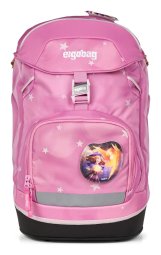
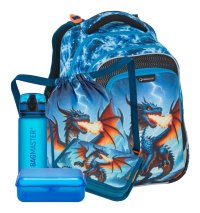
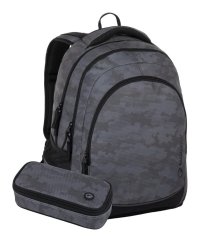
Design is what often decides for children. The manufacturers' offer is varied and counts on typical boys' and girls' motifs. For girls, there are more colorful, pink, or purple shades; the most common are pictures of unicorns, horses, cats, butterflies, and flowers. Backpacks for boys are characterized by a combination of darker colors, and you can find cars, dinosaurs, soccer balls, or rockets on them. For older students, decent student backpacks with abstract prints and modern patterns lead, which can also be taken out in leisure time.
Among the popular brands of school and student backpacks are, for example, Bagmaster, Step by Step, Ergobag, and Satch – they rely on ergonomic backs, an adjustable back system, and durable and safe materials.
Tip: Leave the design to the child, but check the technical parameters yourself. You can also give the child a choice from the models you have pre-selected. When they choose the backpack themselves, they will be happy to wear it correctly – and that's what it's all about.
Don't forget the pencil case and accessories
A few things belong with the backpack that a student cannot do without. The basis is a quality pencil case – for first-graders, you will appreciate, for example, an equipped tiered pencil case with colored pencils and other supplies. Older children will appreciate an empty case with a nice motif more, and they will put writing utensils into it according to their own discretion and choice.
Another essential equipment for students is a snack box and a water bottle. Choose those certified for contact with food that seal well and do not retain odors. The best ones are those that are easy to wash, for example, in a dishwasher.
For first-graders, a shoe bag or a gym bag will come in handy. A small wallet is also important, ideally for the neck or with a carabiner for attaching to a belt, in which children store small pocket money and a chip for lunches in the school canteen. If you want your child to have everything color-coordinated, then it pays to buy a whole school set.
Some manufacturers offer specific accessories for satchels and backpacks, such as rain covers, blinkers, organizers for satchels, interchangeable pictures, reflective vests, or stylish pendants.
Tip: Are you preparing your first-grader for school for the first time? In our article Be ready for September, we will advise you on how to handle the entire preparation calmly and easily.
Frequently asked questions
Is a satchel or a backpack better for students from 1st to 3rd grade?
For the very beginning, a satchel or a backpack with a rigid construction is suitable. It holds its shape, stands on its own, and the child easily finds their way around in one compartment. Ergonomic backs and low weight are essential.
How to choose the size of a school backpack?
The number of compartments and the volume of the backpack depend on what the child needs at school. Single-compartment satchels have a volume of around 20 liters. Two-compartment backpacks are more spacious, up to 28 liters. They will hold heavier textbooks, notebooks, a snack, a bottle, and a laptop, or things for an afternoon club.
Will the backpack grow with the child?
School backpacks for secondary school, which have an adjustable back system for a height of roughly 140–180 cm, will last for several years. For first-graders, choose exactly according to their current height.
How long will a school backpack last in secondary school?
A quality student backpack should remain functional for at least 3 to 4 years. Quality of workmanship is also guaranteed by the extended warranty of many manufacturers. Solid and safe materials without harmful substances, durable zippers, and reinforced ergonomic backs are important – cheap backpacks do not have these features, and therefore they wear out and fall apart quickly.
Does a backpack for secondary school need a laptop pocket?
Yes, older students carry a laptop or tablet to class upon request, so a reinforced and padded pocket with easy access is useful. It will protect the electronics from impacts.
Will a student backpack last for high school?
A multi-compartment student backpack with a laptop compartment will serve students even in high school if its volume and number of compartments are sufficient. The durability of the backpack is also influenced by how the student treats it and whether they do not overload it long-term when carrying (exceeding the recommended load capacity set by the manufacturer).
Is a regular sports or fashion backpack suitable for school?
For carrying textbooks daily, definitely not. Sports and fashion backpacks (even of well-known brands) usually do not have reinforced backs, chest, or waist belts, so they do not transfer weight from the shoulders and strain the hips, shoulders, and the entire spine. A student backpack with a back system belongs at school; leave the fashion piece for freer days at the beginning or end of the school year or for leisure time.
The right backpack is an investment in a healthy back
A backpack for a primary school pupil differs from student backpacks primarily in size, volume, and back system. For smaller children, a clear satchel or a backpack with a rigid back fits, while for older ones, a larger student backpack with an adjustable back and a laptop pocket is better. For both, the same applies: bet on ergonomics, the right size, and a reasonable weight of the backpack. Before you buy the backpack, load it with books, adjust the strap settings, and let the child walk for a while. If everything fits, you have won, and your student can set off for the new school year with determination.