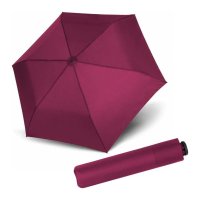
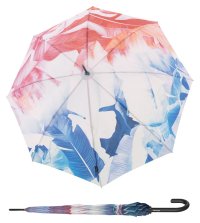
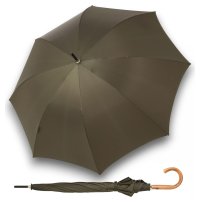
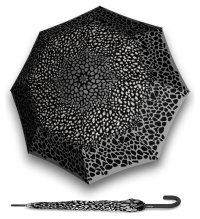
Whether an umbrella lasts one season or ten years depends on three parameters: frame material, number of ribs, and wind resistance. Fiberglass bends under pressure and returns to its shape, eight ribs maintain the canopy's structure, and quality models pass wind tunnel tests at speeds of 80 to 120 km/h, as stated by the Austrian manufacturer Doppler for their product lines. These are exactly the three things that the cheapest umbrellas cut corners on, which is why they only last until the first gust of wind. Fortunately, choosing the right umbrella is not rocket science; you just need to know what to look for.
Contents:
- Types of umbrellas: folding, stick, or mini?
- Opening system: manual, push-button, or fully automatic
- How to recognize a quality umbrella: frame, ribs, and canopy
- How to choose the best umbrella based on how you use it
- The highest quality umbrellas: a comparison of Doppler, Knirps, Derby, and Bugatti brands
- Maintenance and mistakes that shorten an umbrella's life
- Frequently asked questions
- An umbrella that will survive autumn and a few more
Types of umbrellas: folding, stick, or mini?
The first decision is the format. This determines the size of the canopy and how and when you will carry the umbrella with you. A folding umbrella is the clear choice for everyday carry, a stick umbrella relies on elegance and coverage, and a mini umbrella on compactness.
| Type | Canopy diameter | Best for |
|---|---|---|
| Mini umbrella | 88 to 95 cm | handbags, briefcases, small backpacks |
| Folding umbrella | 94 to 98 cm | everyday carry, travel, commuting |
| Stick umbrella | 99 to 107 cm | city use and cars, formal occasions |
| Large umbrella | 110 cm and more | for two people, concerts, walks |
What is a stick umbrella and what are its advantages
A stick umbrella has a solid shaft without joints, offering a larger canopy and fewer points where something can break. It is suitable for the city, the car, and with a suit. The disadvantage is that it does not fit in a handbag.
Opening system: manual, push-button, or fully automatic
The opening method affects comfort and failure rate. A simple rule applies: the more mechanics, the more comfort, but also more points that can fail.
- Manual umbrellas are opened by hand. The simplest, lightest, and least failure-prone solution, typical for mini models.
- Push-button umbrellas open with the press of a button and are closed manually. Handy when you are carrying a bag or holding a child in your other hand.
- Fully automatic systems, known at Knirps as Duomatic, open and close with a single button. The most comfortable variant, ideal when getting into a car.
Tip: If you use your umbrella mainly on the way from the car to the door, go for a fully automatic model. You can close it with a single press without getting your sleeve wet. Fully automatic opening is found from the mid-price range upwards; the cheapest models do not feature it. You can find the complete range in the umbrellas category.
How to recognize a quality umbrella: frame, ribs, and canopy
This is where durability is decided, and it is exactly this part that cheap manufacturers usually neglect. Doppler declares a standard for its products, using only components with TÜV, Ökotex, REACH, or FSC certification and verifying construction resistance in a wind tunnel.
What is an umbrella frame made of
The frame and ribs bear all the load in the wind, which is why durability and price depend on the material used.
| Material | What it offers | Typically found in |
|---|---|---|
| Steel | strength at a low price, higher weight, and susceptibility to corrosion | stick umbrellas, affordable lines |
| Aluminum | noticeable weight reduction of the construction | folding models for every day |
| Fiberglass | flexes under pressure instead of snapping | windproof umbrellas |
| Carbonsteel | flexible steel that carries more than standard steel at a lower thickness; despite the name, it is not carbon fiber | premium lines, most often combined with aluminum |
In practice, you will encounter combinations more often than a single material. Roughly four out of five umbrellas in our range have a frame made of two or three materials, and that is how manufacturers balance the compromise between weight, flexibility, and durability. Most often you will find:
- Steel and fiberglass: solid shaft and flexible ribs, the most common solution.
- Steel, aluminum, and fiberglass: lightweight folding models for every day.
- Aluminum and fiberglass: the lightest umbrellas for a handbag.
- Aluminum and carbonsteel: top-tier durability at low weight.
- Steel and wood: classic stick umbrellas with an elegant handle.
Ribs, canopy, and weight
The construction alone is not enough. Four other details found in the product description determine how you will use the umbrella.
- Number of ribs. Eight ribs are the standard today and a reasonable compromise. Six ribs are found in the smallest models, ten or more in large stick umbrellas where they maintain the shape of a wide canopy.
- Canopy. Standard polyester is durable and easy to clean. Pongee is softer, dries faster, and repels water better. Jacquard looks more luxurious, while recycled rPET is more eco-friendly.
- Weight. The lightest models weigh only 99 grams, a standard folding umbrella 250 to 330 grams, and stick pieces around 400 grams, with the largest ones exceeding 700 grams.
- Handle. A shaped handle improves the stability of the umbrella in your hand during gusty winds. Wood and rubberized surfaces are easier to hold than smooth plastic.

How to choose the best umbrella based on how you use it
The most common mistake is buying an umbrella based on design and only then finding out it doesn't fit in your handbag. Try it the other way around and start from the situation where you will need it most often and where you want to carry it.
- For a handbag or briefcase: a lightweight women's folding umbrella under 200 grams with a canopy around 95 cm.
- For commuting and everyday carry: a fully automatic folding model with a diameter around 98 cm and eight ribs.
- For a travel backpack: the shortest folding umbrellas measure only 16 cm when folded, and the lightest ones weigh just 99 grams.
- Men's umbrella for work: a dark folding model with a reinforced fiberglass or carbonsteel construction.
- For the car and city: a push-button stick umbrella with a canopy over 100 cm that you can open with one hand.
- For two people: large umbrellas from 112 cm and up.
- For a child: smaller diameter, simple mechanism, and especially reflective elements. You can choose from children's umbrellas.
Tip: For easier selection in our range, you will find elegant women's umbrellas and durable men's umbrellas in separate categories.
The highest quality umbrellas: a comparison of Doppler, Knirps, Derby, and Bugatti brands
Useful information for decision-making: Derby, Doppler, and Knirps all come from the same Austrian family, and the Bugatti brand is produced under license under the same roof. They do not differ in origin or build quality, but in the level of technology used. The most reliable indicator of quality is the length of the warranty. The manufacturer is stating how long they expect the umbrella to last, and the difference between two and five years is noticeable in the materials used.
| Brand | Position | Warranty |
|---|---|---|
| Derby | affordable entry | 2 years |
| Doppler | proven mid-range, widest selection | 3 years, 5 years for selected lines |
| Bugatti | design line | 2 to 3 years |
| Knirps | technical leader, lightest models | 5 years |
| Doppler Manufaktur | handmade and exclusive materials | 5 years |
Maintenance and mistakes that shorten an umbrella's life
Many umbrellas are not destroyed by wind, but by poor handling after the rain. Getting used to a few small things takes seconds and extends their lifespan by years.
- Let a wet umbrella dry open, never rolled up in its case. Moisture in the joints means rust.
- Do not dry it near a heater or with a hairdryer; the canopy loses its water-repellent treatment.
- Before folding it, shake off excess water and align the panels so they don't twist.
- Have a damaged rib assessed under warranty; quality brands usually offer service and spare parts.
Frequently asked questions
- How many ribs should a quality umbrella have?
Eight is the gold standard. Six is enough for mini models for a handbag, ten or more makes sense for large stick pieces. - Does a folding umbrella withstand wind as well as a stick one?
With the same construction, yes. The material of the ribs is decisive, not the number of joints. Fiberglass bends and returns, steel bends and stays. - What diameter do two people need?
Count on at least 110 cm, comfortably around 120 cm. - Why does an umbrella turn inside out?
It is a defensive reaction of the construction against wind pressure. In quality models, the canopy can be returned without damage; in cheap ones, the rib breaks. - Is pongee better than polyester?
It dries faster and feels softer, but standard polyester lacks nothing in terms of durability.
An umbrella that will survive autumn and a few more
If you take three things away from this entire article, let them be these: frame material, number of ribs, and warranty length. Fiberglass or carbonsteel handles wind, eight ribs maintain the shape, and a five-year warranty is the clearest signal that the manufacturer believes in their product. The rest is a matter of format and personal preference, because the best umbrella is the one you actually carry with you, not the one that stayed home on the coat rack.