


Are you heading to the mountains this winter? Do you enjoy adrenaline experiences and plan to leave the groomed slopes to try freeriding or even heliskiing? In that case, an avalanche backpack is a necessity for you.
Avalanche backpacks are designed for everyone who moves in mountain terrain where there is a risk of an avalanche. In addition to freeriders, this can include ski mountaineers or, for example, snowmobile riders. If you enjoy any of these sports, do not underestimate the risk of avalanches and purchase one of the avalanche backpacks that will help keep you alive in the event of an avalanche.
How avalanche backpacks work
When an avalanche occurs, the most common cause of death is being buried and subsequently suffocating under the mass of snow. Victims of this disaster often have blocked airways due to the high pressure on the chest, and in the case of being completely buried, the chance of survival does not even reach 50%.
Avalanche backpacks prevent you from being buried in an avalanche by increasing your volume. When particles of different sizes move, larger particles are pushed upwards, and this is exactly what happens in the case of avalanches. Initially, a person carried by an avalanche is pushed to the surface, but this changes the moment the avalanche stops. The higher density of the human body compared to snow causes the person to suddenly sink deeper into the snow mass. This phenomenon is prevented by avalanche backpacks, which are equipped with either 1 or 2 airbags inside. After pulling the trigger handle, these fill with air and increase your volume by up to 170l. Statistics from 2010 state that 97% of people survived an avalanche when using rescue ABS backpacks, and 84% of people were uninjured.
Types of avalanche backpacks
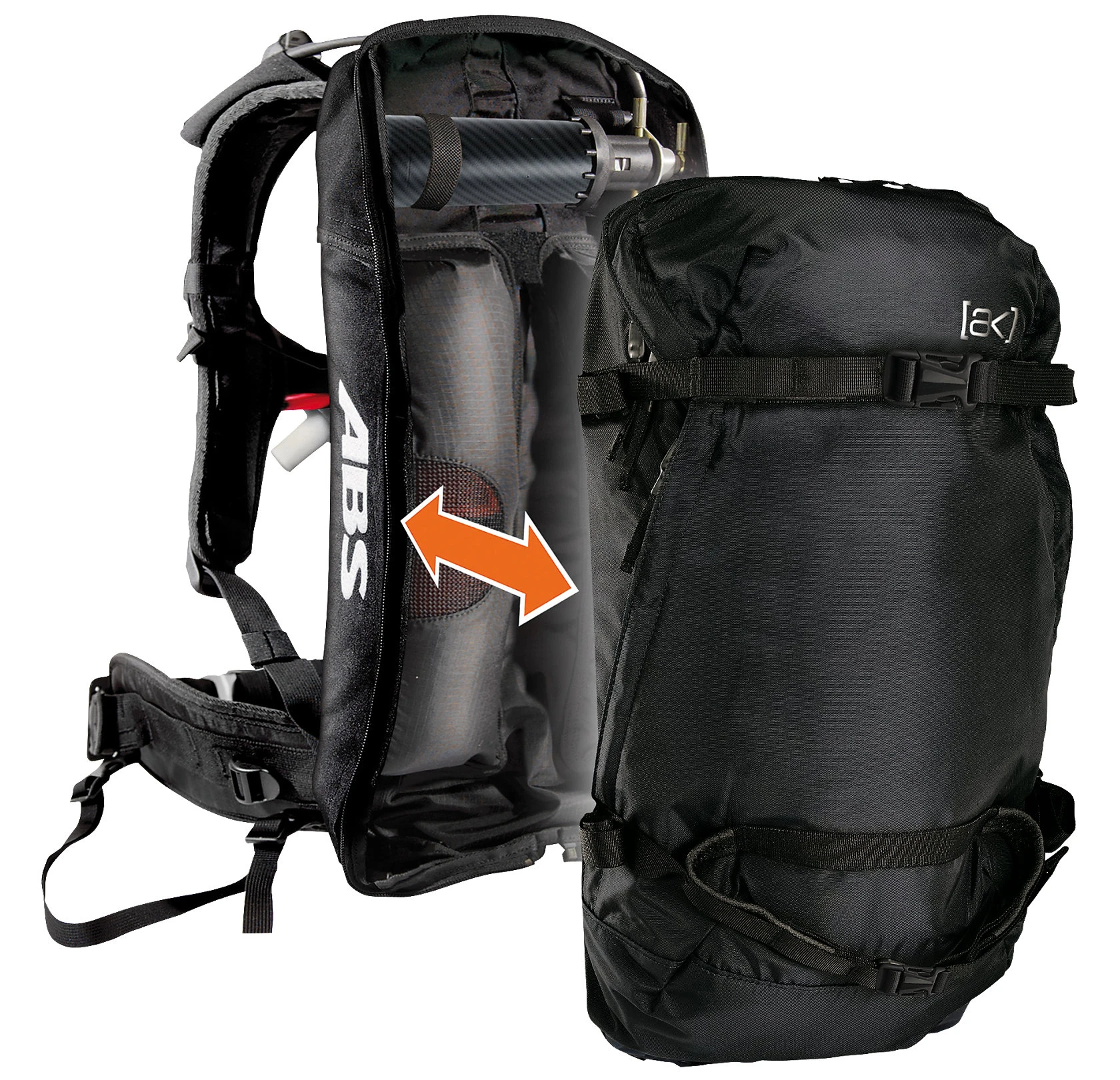 Currently, various types of avalanche backpacks are available on the market. The most established and well-known is the ABS backpack system. These backpacks are divided into two parts: a base unit and a cover, which you choose according to how large you want the volume of your backpack to be. The advantage is that you can purchase only the base unit, and you can get the volume part from other brands such as Burton, Dakine. The base unit contains two inflatable bags that are located on the sides of the backpack, as close to the center of gravity of the human body as possible. Each of these bags has a volume of approx. 85 l. Another component is a pressure cylinder filled with a combination of gases. When the trigger, which is equipped with a cartridge, is activated, a pressure wave is released, which creates a vacuum in the pressure vessel, causing both air bags to begin filling. These can then save your life in an avalanche. The only possible disadvantage of the ABS system, which is widely discussed, is primarily the problem of the head and neck being unprotected, which other manufacturers solve by placing the airbag differently.
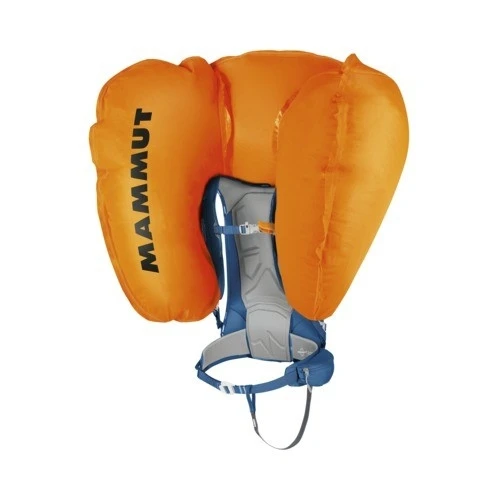
Other types of avalanche backpacks include, for example, BSA backpacks. They differ from ABS products primarily in the placement of the airbag, which in this case is only one with a volume of 150 l. After activation, the airbag inflates directly behind your head like a pillow, thereby preventing various cervical spine injuries. Another difference from the ABS system is the mechanical pull handle. Backpacks from the company Mammut/SnowPulse have a similar system. In this case, the air bag does not inflate only behind your back, but also around your shoulders, thereby further eliminating injuries to the head, shoulders, and neck. A possible disadvantage of an airbag placed in this way is the reduction of your field of vision.
Price
Although avalanche backpacks are relatively expensive, in recent years one can notice a gradual decrease in price, which is related to the increasing competition among manufacturers. Currently, you can purchase a high-quality avalanche backpack in the range of 13,000 to 20,000 CZK. The price depends primarily on the manufacturer and the size of the backpack. When buying, it is also necessary to count on expenses for the pressure cylinder. Some manufacturers add the cylinder to the backpack and include it in the total price. Elsewhere, we can encounter the option of choosing whether we want to buy the backpack with a cylinder or not. The price of cylinders depends on the material and weight, ranging from 2,000 to 6,000 CZK. After use, it is possible to refill the emptied cylinder at authorized service centers and shops for a small fee, so you do not have to buy a completely new one every time.
Whichever brand you choose, consult an expert before buying. Even the best avalanche backpack may not save you if it does not fit on your back, if the pressure cylinder is damaged, or if the airbags are poorly folded and positioned. It is also necessary to keep in mind that before using the backpack in the field, you must perfectly know and control its trigger system. Therefore, choose carefully and consider the advantages and disadvantages of all offered types of backpacks.
We wish you many experiences full of adrenaline.


