


An expedition into nature is an opportunity to relax, have extraordinary experiences with friends, connect with the landscape, overcome yourself, practice self-discovery, reflect, or conversely, immerse yourself in the present. Whatever your reason, you will likely be looking for a way to experience the journey in the greatest possible comfort and without complications. This means having everything you need with you, including enough food and water, and being prepared for potential obstacles.
That is why I have created this series for you, which can provide inspiration for your adventures. Gradually, I will cover topics such as equipment, choosing the right backpack, orientation, nutrition, hydration, and so on.
So let's get straight to the first topic and go through a list of things you might need in the field. We are setting out on a journey through our Step-by-Step Trek Preparation series, which will remind us, among other things, that (even) the journey is the destination and it is good to enjoy it properly.
What not to forget for a trek?
Fortune favors the prepared, they say. And even if it doesn't... they are prepared. :-) Although you can hike relatively light, better equipment means greater comfort and better starting conditions for handling potential crisis situations. On the other hand, if you carry four pairs of shoes, half a kitchen, and 150 meters of rope, your back and feet will not thank you. The ideal way is, of course, to have exactly as much as you need – no more, no less. That is easier said than done. That is why I have written down a few tips on equipment that might come in handy on a trek:
Proper Footwear
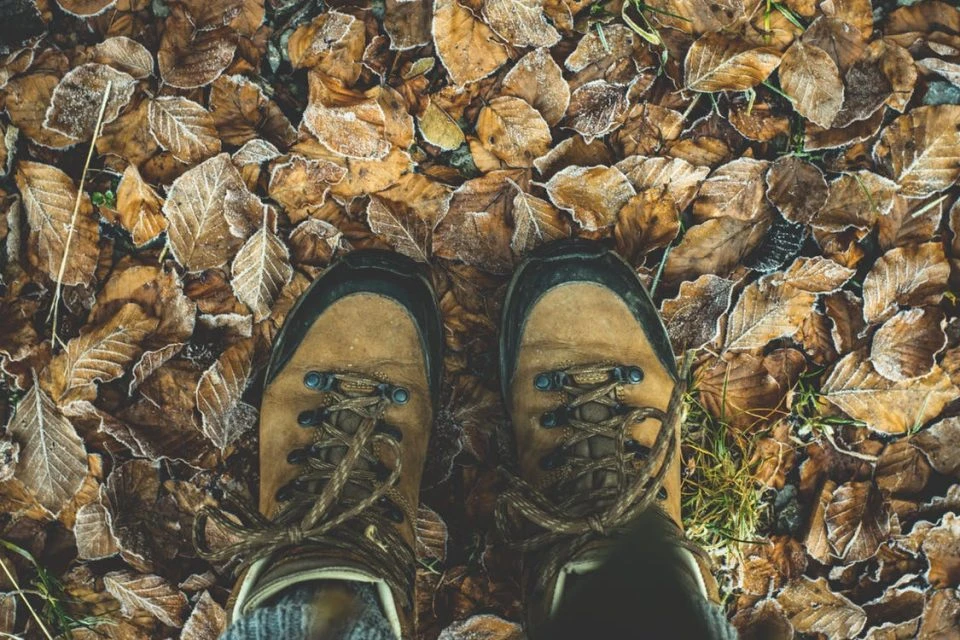
The first item on the equipment list is a given, yet that is exactly why I must list it first – proper shoes. High-quality and comfortable footwear appropriate for the terrain, climate, and distance is the foundation of literally every step. Spare shoes can also be useful, e.g., light sandals, in case your primary shoes get damaged or wet. Sandals can also be used in hot weather and on less demanding terrain. Before you set off, don't forget to thoroughly waterproof your footwear, clothing, and backpack (spray-on waterproofing can serve this purpose, or beeswax for leather products).
Clothing for all weather
As for clothing, I usually wear: a waterproof jacket, a sweatshirt or vest, two to three t-shirts, two pairs of trousers (I recommend one with zip-off legs), gloves, a scarf/neck warmer, a hat, gaiters, and thermal underwear for cold weather, socks, and underwear according to the length of the trip. Especially spare clothing, but also other equipment, must be kept away from water. A backpack rain cover, which is included with some backpacks or can be bought separately, will reliably protect your things from rain. Waterproof packaging for your clothes ensures that you will have a dry alternative if, for example, you fall into a river with your backpack.
You yourself will stay dry in clothing with a high water column (ideally at least 20,000 mm) or a waterproof poncho. This can also serve as a shelter for camping, a mat for sitting in damp or cold weather, or as an extra thermal layer in emergency situations.
Camping
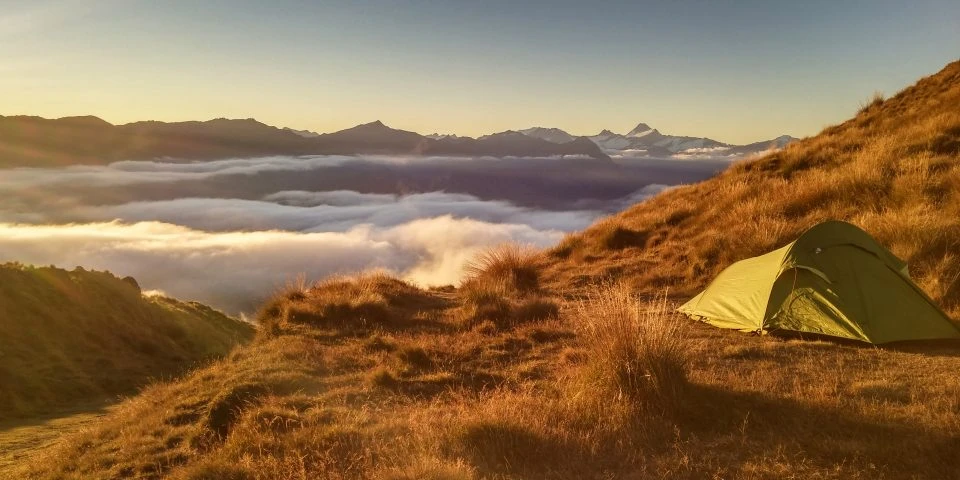
Every trek inherently includes sleeping equipment. A sleeping bag adapted to morning temperatures and a durable sleeping pad are absolutely essential for a good rest. A light, comfortable, and reliable travel sleeping pad will ensure not only a good night's sleep but also protection from the cold coming from the ground, which can have a significant impact on your performance the next day. It pays not to underestimate the choice. A wide range of camping pads will allow you to choose the most suitable option that will meet your needs and requirements, and which will ensure the necessary comfort even in demanding conditions.
Depending on the style of sleeping that suits you, you can further choose either a tent, bivy bag, hammock, tarp, poncho, or a construction for building a shelter, etc. You will likely be deciding between a comfortable but heavy tent or minimalist and light alternatives.
Recharge your energy
And if you don't plan on eating cold food, you will use cooking equipment: a stove (with enough fuel), a sufficiently large pot with a lid (I recommend at least 1 liter), a durable spoon, or possibly a mug. For moving at night and camping, a powerful flashlight or, better yet, a headlamp will come in handy, leaving both your hands free (which is useful when camping, searching in your backpack, walking with poles, etc.). I recommend a waterproof headlamp with the option to choose light intensity, a strobe, and red light (it doesn't disturb natural "night vision" as much as white light). Charged spare batteries can also be useful.
Basic Equipment
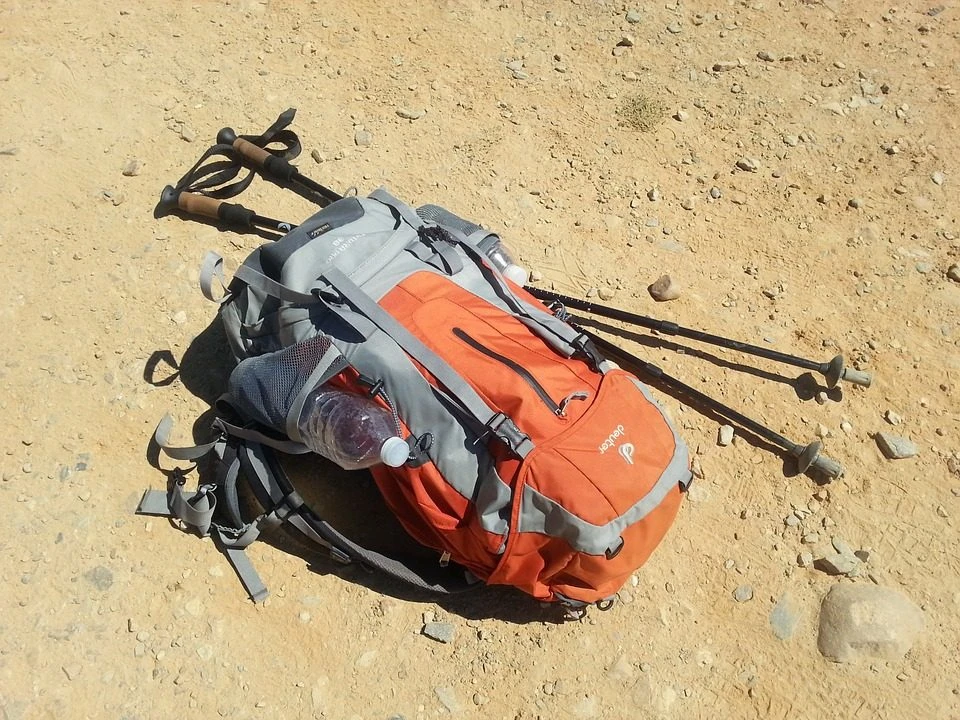
As for tools, a key piece of equipment is a knife. It will be useful for eating, camping, adjusting gear, making makeshift tools, and other activities. Either a larger pocket knife (ideally with an integrated saw and other tools) or a large fixed-blade knife can serve this purpose. Basic equipment also includes a lighter and matches, whether you plan to camp or not. Fire will serve for warmth, heating food, drying, and also for keeping mosquitoes away.
Regarding matches, I recommend non-safety ones (you can strike them on anything), or ones specially treated against wind and moisture. I prefer a jet lighter (it is significantly more powerful). To ensure you can easily start a fire in a crisis situation (and very humid environment), a fire starter (e.g., fuel tablets, a small candle, etc.) is useful.
Keep your direction
On a trek, you also cannot do without a good map, whether you reach for a paper or electronic version. If you plan to use paper maps, I recommend getting/printing them with sufficient space around your route so that you don't "walk off" the map and get lost. The same applies to downloaded offline maps (e.g., if you are moving near borders, it is useful to download maps of the neighboring country as well). It is also worth insulating paper maps. There really is nothing worse than a soaked map. We will talk more about maps in the third part of this series, which I will dedicate to orientation.
Another useful piece of equipment is a rope, which finds versatile use: repairing gear, attaching extra items to the backpack, replacing a belt or shoelaces, overcoming obstacles, first aid, creating a shelter, etc. A light and compact paracord is particularly practical in this regard. I recommend a length of at least 20 meters and a diameter of 4 mm, which can carry more than 250 kg.
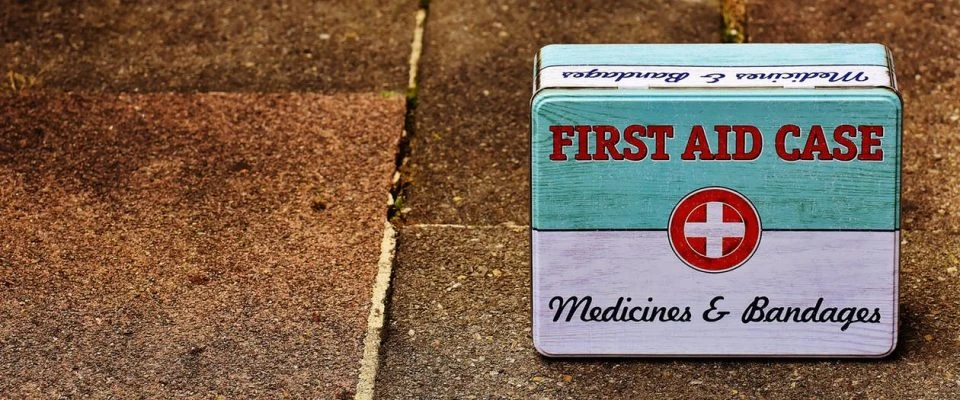
An item that has its unquestionable place among basic equipment is a first aid kit. I will therefore discuss its contents in a bit more detail:
First Aid Kit
A first aid kit can be useful not only to you but also to your fellow travelers. Every trek involves a certain risk because we often move in demanding and unknown terrain, handle fire, knives, etc. With fatigue, the probability of error increases, and we must not forget the additional weight we carry on our backs (which manifests itself with every heavier step). Digestive problems, diarrhea, or just pain can also make your trip quite unpleasant. A first aid kit can mean the difference between relative comfort and suffering with every step, but also the difference between life and death.
However, I don't want to scare you unnecessarily. An anxious preparation for all possible black-scenario outcomes is not exactly a good starting point for a trip. It is not advisable to overestimate the risk and stress yourself unnecessarily, but on the other hand, it is not good to ignore it either.
Therefore, the following should not be missing from your first aid kit:
- First aid supplies: wide bandage, wide tourniquet, blood clotting agent, pneumothorax foil, breathing mask.
- Supplies for minor treatments: bandage, plasters of various sizes and breathability, disinfectant, adhesive tape, foot powder, burn gel, insect sting relief, etc.
- Medicines for treating illnesses: medicines for fever, inflammation, pain, diarrhea, constipation, allergies, and personal specific medications. Magnesium tablets against muscle cramps are also useful.
- Universal supplies: gloves, scissors, scarf, sunscreen in small packaging.
Calling for help
If you get into a crisis situation (I will use a broken leg as an example), an isothermal foil can prevent potential hypothermia. It can also be used as a signaling device to call for help (the metal layer reflects not only heat but also light well). A whistle, which is sometimes part of backpack chest straps (e.g., Lowe Alpine AirZone Trail Camino 37:42), or an intense light can serve the same purpose.
However, the main signaling device will likely be a mobile phone. In many ways, it is a miraculously multifunctional tool (navigation, light, internet, weather, calling for help, etc.), but relying on it too much may not pay off. It is enough to be out of signal, or the phone breaks, gets wet, you lose it, or it simply runs out of battery. Then you won't just lose one tool, but several at once if you don't have other alternatives. Therefore, I recommend not relying only on a single piece of equipment in crucial areas, but having alternatives prepared.
Other useful equipment
Other items that may come in handy include reserve money in all currencies of the countries you will be traveling through. I recommend storing reserve money separately from primary money (e.g., keep one with you and the other in the backpack) in case of loss. A situation where you are hundreds of kilometers from home and don't even have money for a ticket doesn't sound very appealing. The same applies to all reserve items and items with a similar role: do not put them in the same place.
On a trek, a quick-drying towel will also come in handy; in the bright sun, you will appreciate headwear (a versatile scarf will also serve) and sunglasses. Last but not least, paper tissues or toilet paper will be useful. Universally usable plastic bags and sealable bags are also a practical little thing that can come in handy. To dry wet laundry, you will use the already mentioned rope and clothespins. You will appreciate a needle and thread when repairing clothes. To extend the phone's battery life, a lighter power bank might come in handy. And definitely don't forget hygiene supplies, money, documents, water, and food, which have a tendency to stay at home (just like salt, which is often forgotten from personal experience).
Sources:
(1) https://www.czechout.cz/article/poradna/co-si-sbalit-na-trek
(2) https://www.paracord.cz/www-paracord-cz/1-O-NAS/2-O-Paracordu
(3) https://www.moira.cz/blog/funkcni-na-druhou-jak-spravne-vrstvit-aby-zima-nemela-sanci/


