


The Ptáček siblings are dedicated to martial arts, where they are currently succeeding in winning the world's biggest competitions. What lies ahead for Martina and Josef this year, how do they feel among their rivals, and what activities have they devised for children in Moldova? Find out along with other interesting facts in our interview.
In our first interview, we asked you which achievements you value the most. Have any new ones been added?
Martina: Yes, a lot has happened since our interview. For example, I became the first European woman to earn a black belt in hand-to-hand combat, won the World Cup, the World Championship, and so on. I also finished my bachelor's degree and started my master's. I also became a Goodwill Ambassador for the Ministry of Foreign Affairs, and my brother and I have launched many projects for the blind, children, and women. I am proud of many things.
Pepa: It is very important to realize that I value all my achievements equally. Since our last interview, I have enriched my collection with 3 world champion titles in grappling. I am now a four-time world champion in grappling.
What is the world of martial arts like? Do you feel rivalry among your opponents outside of competition, or do you stick together as one big community?
Martina: Competition has always been here, is here, and will be here. Before the races, there is a very unpleasant and competitive atmosphere. Everyone is watching and guessing each other. Matches are usually very intense. However, behavior always depends on the nationality and character of each person. After the races, we shake hands, talk, and move on. Some can accept defeat, but there are also those who cannot handle it.
Pepa: I wouldn't make a distinction between rivalry in martial arts and any other sport. Rivalry is everywhere and always. I cannot say that everyone sticks together as one community, but for the most part, we have good relationships with each other. As Martina says, the atmosphere is always very intense, but that is part of professional sport.
I got hit and started crying. When Dad saw that, he signed me up for martial arts.
How did you actually come up with the idea to pursue such sports? Who had the initial idea?
Martina: I didn't come up with anything. It was my parents' idea. I had problems at school and was bullied. That led them to the idea of signing me up for martial arts. No one expected that I would one day dedicate myself fully to martial arts. Everyone even discouraged me, saying that martial arts are not suitable for girls.
Pepa: Lately, I've really liked this question. Martina was bullied at school, but I was bullied at home by Martina. She would always come back from training and desperately needed to try something out. I got one or two hits and started crying. When Dad saw that, he was ashamed of me, and that's why he signed me up for martial arts.
Thanks to the sport, you travel a lot. Which country was the most interesting for you, and which one disappointed you? And do Cabinzero backpacks still keep you company? :D
Martina: Every country is interesting in its own way, and we always take away a lot of experiences from each one. I think countries where there is not much tourism are more interesting to me. We like to discover countries that are not typical tourist destinations. On our travels, we are always accompanied by backpacks and suitcases from Bagalio – whether I am preparing for a diplomatic trip, a visit, a sports event, or a race. In addition, we carry our mascot – Pandora the panda.
Pepa: We are travelers who prefer traveling to "unconventional countries". We don't like famous tourist attractions. But that doesn't mean we don't sometimes travel to big cities. Cabinzero backpacks have been accompanying us on our travels for over 2 years. It is very liberating to travel with only carry-on luggage. We only have the essentials.
What is the biggest injury you have experienced? How long did it limit you?
Martina: Bigger and smaller injuries appear all the time. However, I didn't have my biggest injury from martial arts. It happened 2 years ago on roller sleds. At that time, I wanted to try something new. I crushed and broke my foot. I was absolutely out of commission. A big life lesson.
Pepa: Since I grew up quickly, I have problems with my knees. I have a torn meniscus in my right one. Sometimes it happens that my knee pops out. It's unpleasant when my knee "pops out" during a match. I always have to put it back quickly.
Hand-to-hand combat is a dynamic, fast, and powerful self-defense system.
One of you practices hand-to-hand combat, the other grappling. To an amateur like me, both seem like quite brutal disciplines. Why did you like them? Can you simply explain what they are about?
Martina: They are. I like that everything is possible in this discipline. We wear a kimono (this symbolizes the common clothes that people wear on the street), it is a dynamic, fast, and powerful self-defense system. There are big injuries here, but I think every sport has its pitfalls.
Pepa: I do grappling. It is a combat sport in which we try to end the match by breaking various parts of the limbs, joint locks, or chokes. I liked it because this sport is very diverse. There are many techniques that can be learned. I also liked it because I know that I still have a long way to go.
Martina, have you ever encountered the underestimation of your abilities just because you are a woman?
Martina: Of course, I hear some nonsense like that sometimes, but I don't let it bother me. I believe in myself and no one can easily throw me off. Not anymore. I used to dwell on such thoughts, and that was wrong.
You also dedicate yourselves to training and teaching children. How does working with them differ from working with adults? Do they perceive martial arts differently?
Martina: Working with children is much more work. They have a harder time concentrating, one has to alternate activities more, it is harder to teach them something. Some children are not interested in sports at all, but it is only the interest of their parents. Children who may have problems at school also come to us, we approach them more individually. We try to teach everything in a playful way. Even adults and other groups. It's a shame that everyone is afraid of martial arts; they have something to teach. They teach respect, honor, and discipline.
Pepa: Today's society has huge demands. The work differs mainly in the approach. We always try to design training sessions for a specific group. They perceive martial arts well. Our goal is mainly to teach children and adults the ability to defend themselves.
You spent some time with children in the Romanian Banat. Why there? Were the local children different, not only in terms of sports and training, than Czech children?
Martina: We support Czech minorities all over the world. The children are absolutely great, they are very easy to work with. They are clever and curious. And they are always looking forward to us, and we to them.
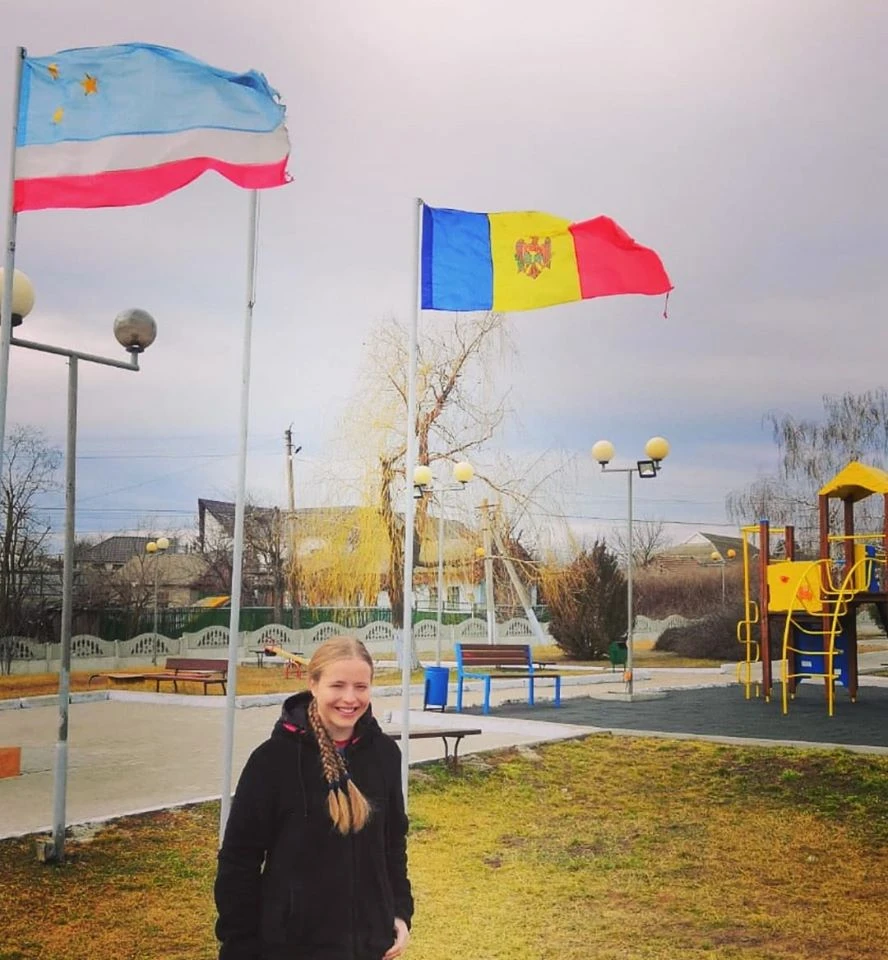
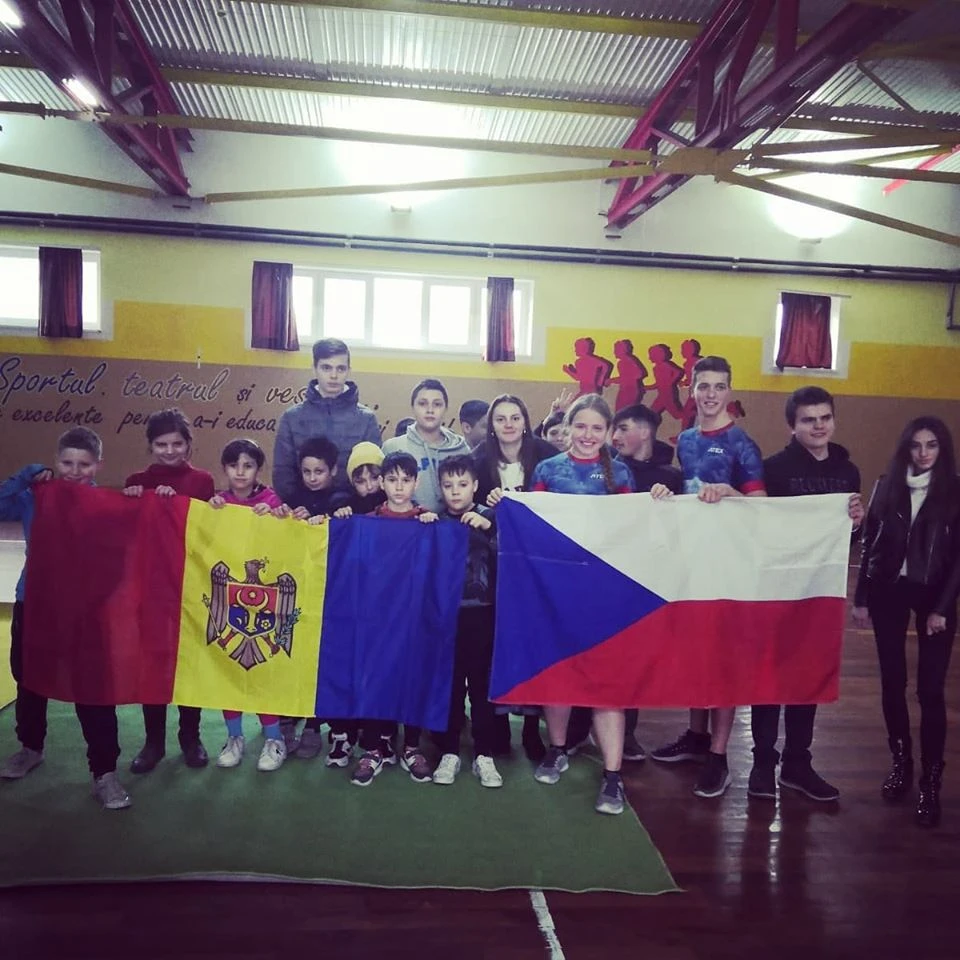
Pepa: We have now returned from Moldova, where we visited another Czech minority in the village of Holuboje. Here, we prepared various activities for the children. In return, the children prepared a demonstration of their traditions and local customs for us. It fulfills us immensely.
You started your own merch, what does it mean to you?
Martina: A lot, we have a team of children, we organize various projects, and we are an inspiration to many. We also receive many nice messages, which pleases us a lot.
Pepa: I will follow up on Martina. The fact that people write to us is perceived as positive feedback. People of different age groups write to us, which incredibly charges and motivates us for further work. We came up with our collection together with my sister. She always comes up with something, and I always help her finish it. We complement each other.
Do you use social media? I follow Facebook myself, do you take care of any others? What value and meaning do they have for you? Do they help your career in any way?
Martina: Social media has great power these days. I have Facebook and Instagram myself. Social media doesn't mean much to me. It seems sad to me that nowadays everyone only cares about the number of likes and followers, and not the content. I post on social media, but I have it more as my own diary.
Pepa: Of course, the era of social media did not avoid us. I am building my brand mainly on Instagram and Facebook. Just like Martina, I use social media as a memory diary. Besides that, it is also feedback for me.
What awaits you in the new year? What are you preparing for? And where are you planning to travel?
Martina: A lot of new challenges and opportunities await us. Also many obstacles, but I believe we will handle them all. We just returned from Moldova, where my brother had exhibition matches and we also prepared activities for children, took an expedition to a Czech village, and much more. World championships also await us, we will organize other projects for children against bullying, I was also sent to represent the Czech Republic at a world conference to support children in Sri Lanka, and so on. Our plans will depend a lot on the security and especially the health situation. We will adapt everything to that.
Pepa: There are many possibilities, but as my sister says – it will mainly depend on the health situation. We would like to do a tour of Europe, but we'll see, we won't get ahead of ourselves. You can definitely follow us and keep your fingers crossed for us. We will be happy.
Thank you for the interview and we wish you many successes!
Photo source: Martina Ptáčková's Facebook and Josef Ptáček's Facebook
Intro photo: Martina Houdek


