


Making the beginning of the year more pleasant with a trip to Sri Lanka seemed like a very good idea to Akim, another of our panda mascots. His partner and guardian was our friend František, who had already experienced several similar expeditions. I decided to interview him and find out for you what made this journey so special.
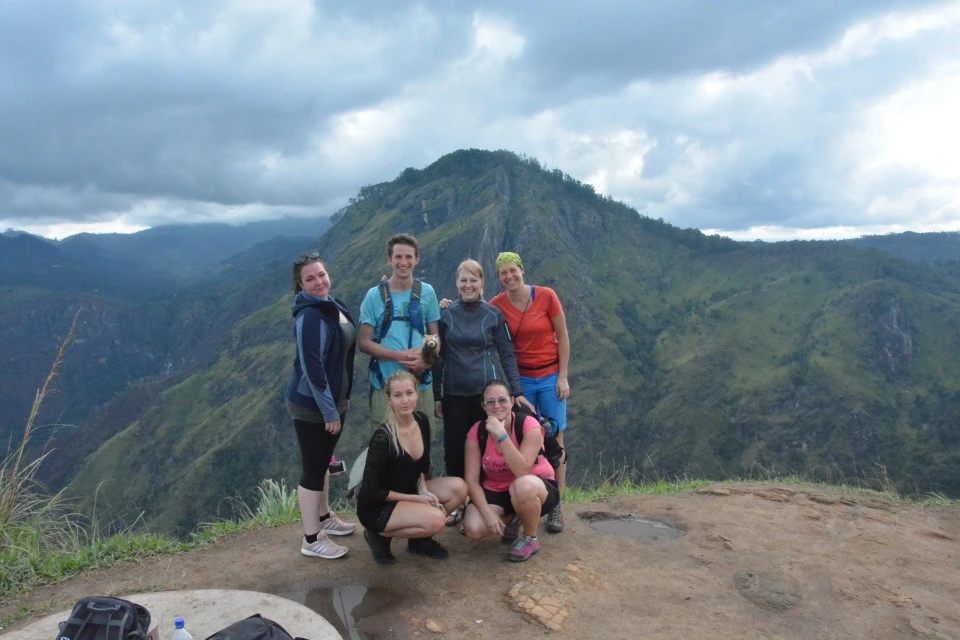
Life balance is important for many of us, even if we sometimes resist it under the weight of our responsibilities. When Fanda, whose job and focus require a lot of time spent in front of a computer screen, was offered a unique opportunity to go and discover the beauties of Sri Lanka for two weeks at an affordable price, he did not hesitate for long. However, so that he would not feel out of place in a group that, besides him, consisted of five representatives of the fairer sex, he packed Akim along, whom he affectionately called Pandak.
The fewer tourists, the more authentic the experiences
Akim and František have a lot in common – besides beautiful nature, they also like to discover the culture of the countries visited and the way of life of the local inhabitants. During their tour of Sri Lanka, they had the opportunity to get to know both. The first authentic experiences, which a classic, supposedly carefree stay in hotel resorts would have deprived them of, came already when arranging accommodation.
"You get off at some train station and tuk-tuk drivers start gathering around you and immediately start offering accommodation. You have to turn a few people away and haggle a bit with them, but that's how we found most of our lodgings for really low prices."
However, according to Fanda, the mentality of the local people depends a lot on the specific area. This is especially evident in the way they approach tourists.
"At the beginning, we were by the sea, where it was quite touristy, and there we often encountered people who wanted to make money off tourists. Simply put, prices were completely senselessly inflated – for example, food there was four times more expensive than somewhere where locals went. But even there, we found pleasant people. In general, they are very warm-hearted and like to talk to people from Europe. But we had the absolute best experience with people when we went outside those tourist spots; there, the locals were truly friendly and tried to give us valuable advice. Sometimes we were even an attraction for them, like when they would touch us on the train."
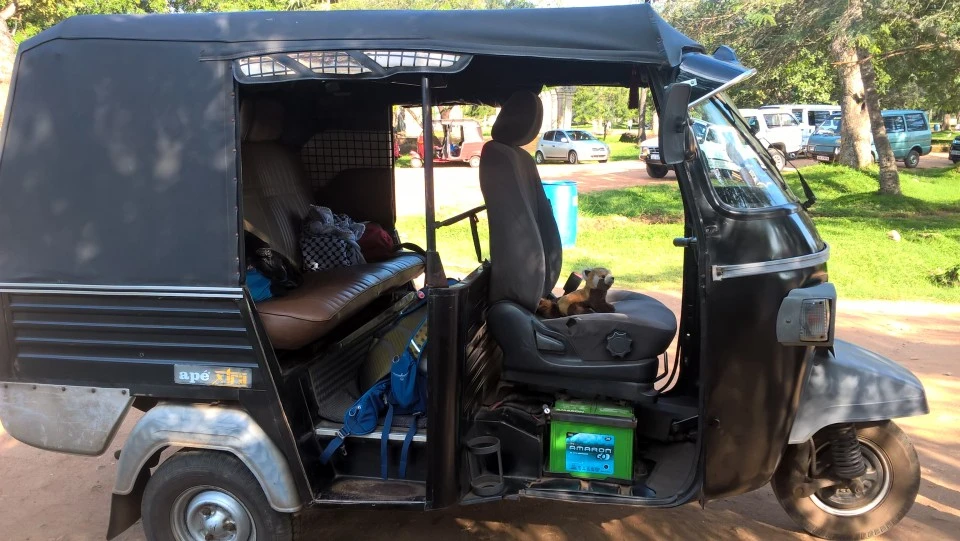
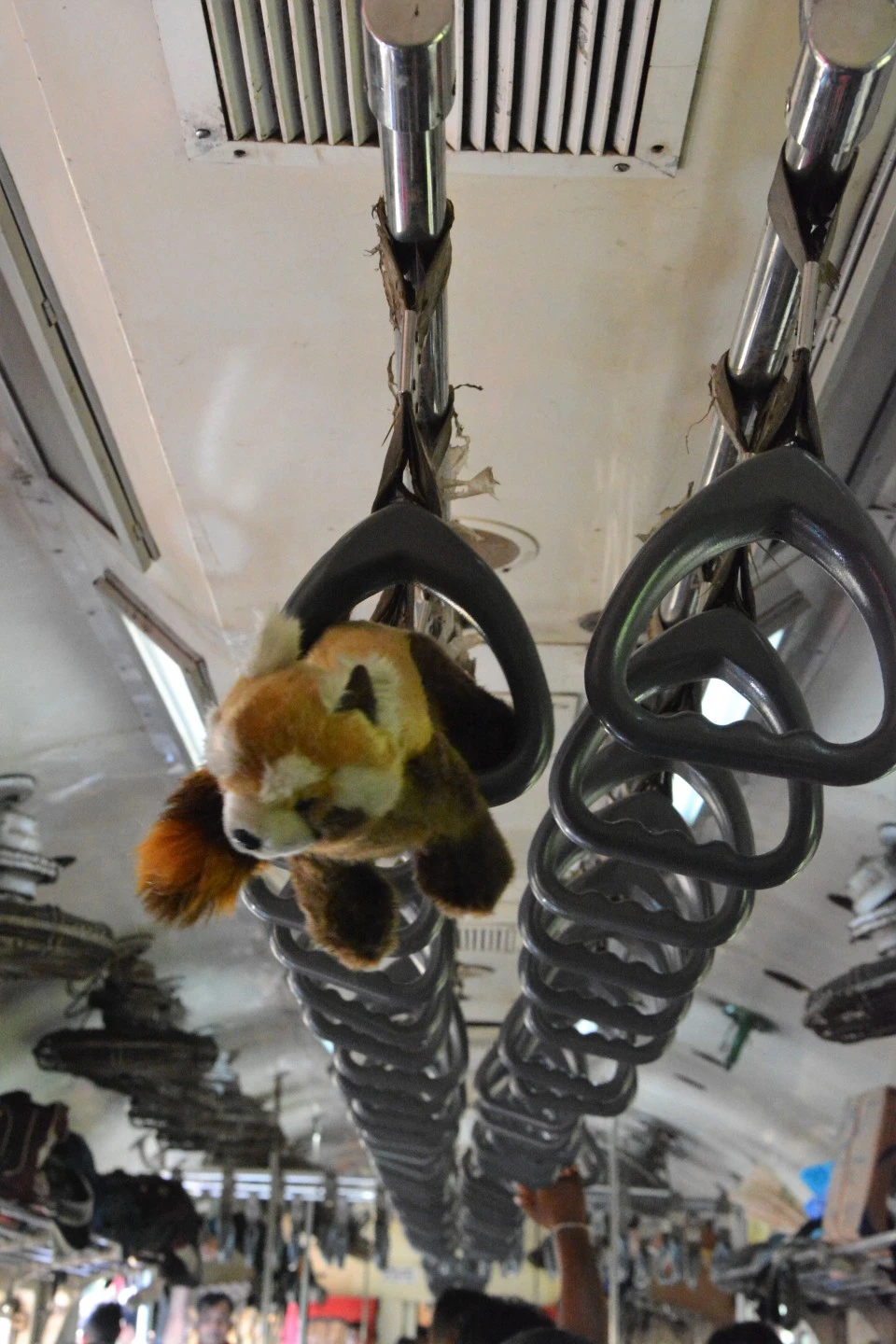
Train journeys were also made more pleasant for the members of the expedition and the locals by Akim, who often and gladly became the center of attention.
"The natives reacted to him quite often – they asked what it was because they don't have pandas there. Typically, it was the most fun in public transport because there is time, you are locked in there with those people for maybe two hours. Once we rode such a fancy train – it was InterCity, so it went about 50 km/h :-) and was of course a bit more luxurious because the tickets were twice as expensive. The luxury consisted of an old fan on the ceiling that didn't work, and a lot of handles for standing. We were swaying there in various ways, and so I thought to myself that I had to show this to Pandak too, I put him in one of those handles, and that made the whole carriage laugh."
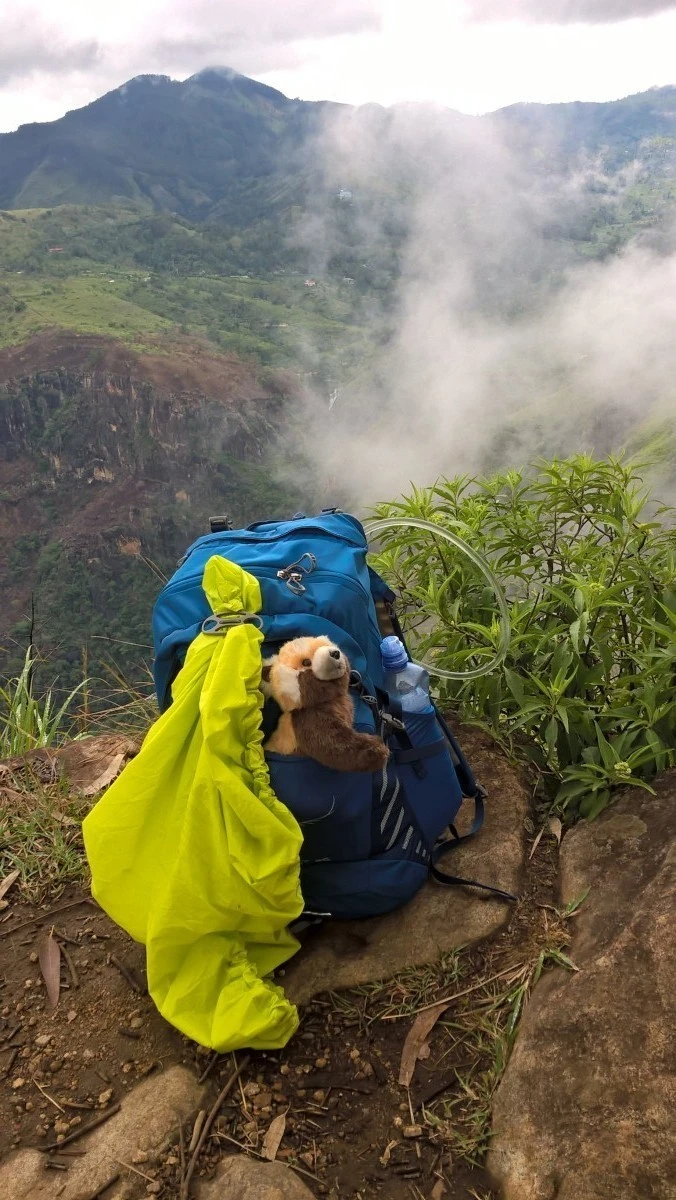
Akim was definitely a good partner and psychological support in cases when it was unbearable with five women. :-) When his paws hurt, he was carried in a pocket on Fanda's backpack so he could always have a good view. He was also a grateful conversation topic. His tendency to make friends with everyone was met with enthusiasm, and the locals definitely did not resist his unceasing love for people, especially children.
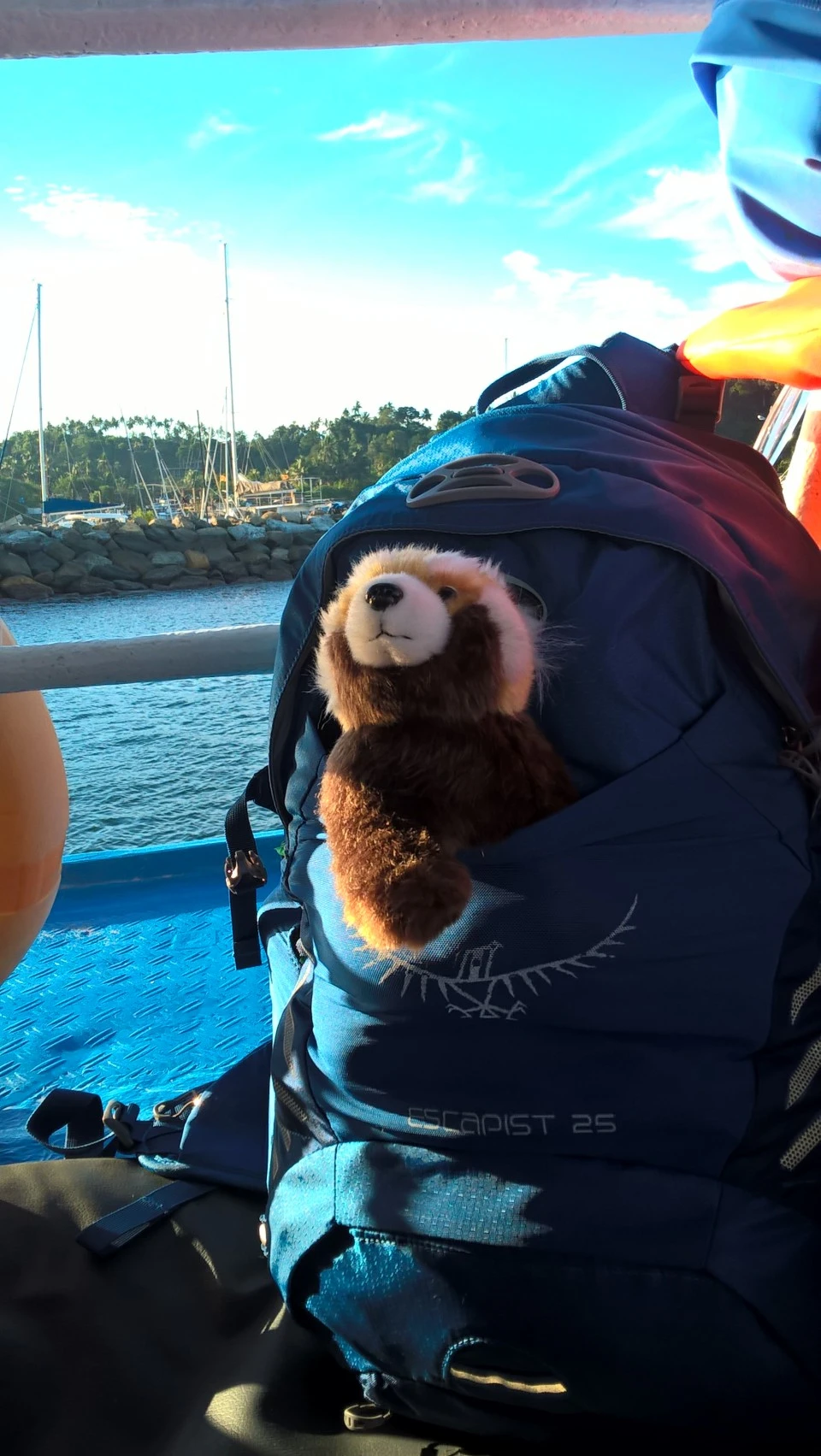
However, it wasn't just the panda that made František feel a bit like an exotic creature at times. In addition to the plush mascot and torn pants, there was also a strange tube sticking out of Fanda's backpack. It was, of course, a water reservoir well known to us, but for the natives, such gadgets most likely fell into the same category as teleportation or unicorns.
"When I ordered two bottles of water in a restaurant and poured them into my backpack, the whole restaurant gathered around. So I had to show them that you drink from it."
To each their own
How better to get to know a foreign culture than through traditional cuisine? The food was generally very spicy, which at least served as an effective disinfectant. The typical flatbreads, probably made from flour and coconut water, which the locals used in various preparations, often in combination with a vegetable mixture that usually included leeks, also left a positive impression on the expedition members. But truly unforgettable was the taste of the fruit, especially the bananas. It will probably surprise no one that it cannot even be compared to what we are used to in our parts.
A typical drink and at the same time a souvenir is Ceylon tea, as Sri Lanka was formerly called Ceylon. A somewhat more controversial gift item, which, however, is not related to what we put into the digestive system, but rather to what comes out of it, is paper made from elephant dung. It is produced primarily in the elephant orphanage mentioned below, and tourists are dying to buy it.
Did the obligatory question about the weather cross your mind? According to Fanda, temperatures ranged between 25 and 35 °C, so you can probably imagine that there was definitely no reason for complaints. Especially by the sea, the weather was very pleasant – the wind was blowing, it rained occasionally, but that was rather welcome. Compared to Vietnam, for example, the air was not heavy and humid, so you were dry again quickly. In the mountains, it was of course a bit colder – at night, temperatures dropped to 12 degrees.
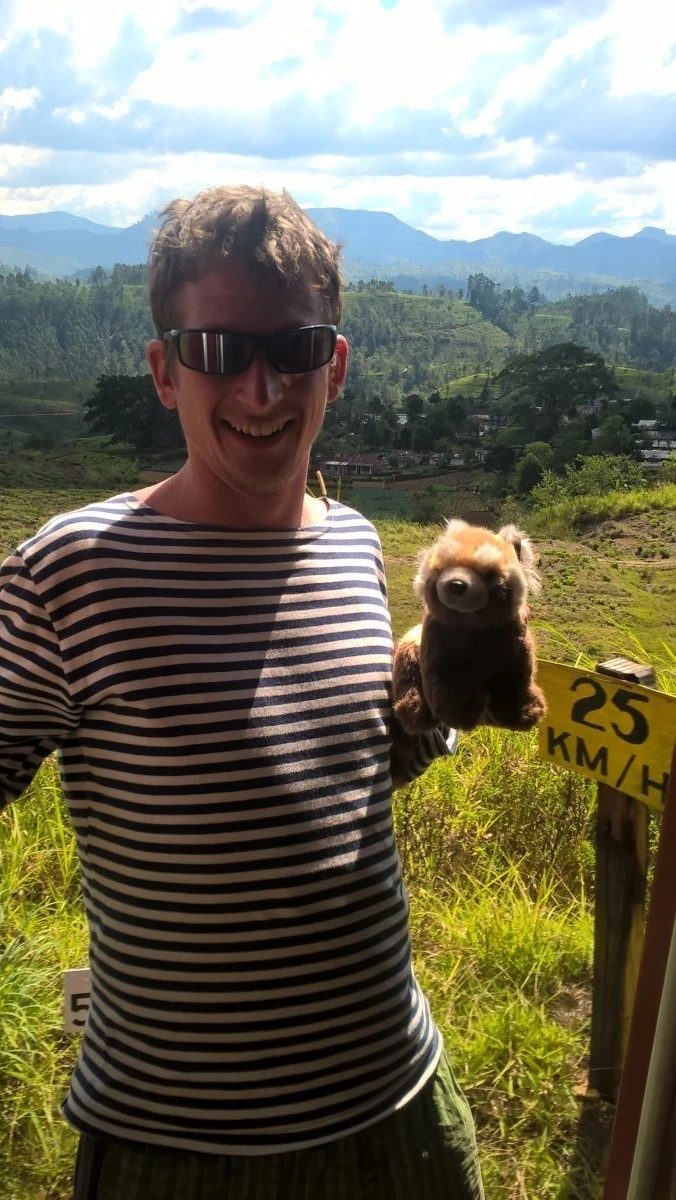
Because the whole group was quite disparate and some members imagined their ideal time on vacation a bit differently, their paths often diverged. But Akim and Fanda formed an inseparable duo that stuck to their plan primarily to get to know the local people, food, and culture. They stayed more in the villages and talked to the locals, even when the girls headed to the city.
"There is also a famous elephant orphanage, where even the elephants we have in Prague come from. The girls really wanted to go see it. It didn't appeal to me much because they don't live freely there, people can ride them and so on. It's just a circus. So I didn't go there, for example, and instead, Pandak and I wandered around and visited some monastery."
Towards the end, the group split into two groups for good – Fanda's group continued further north, the rest returned to the sea. The goal of the continuing members was the ancient city of Anuradhapura (a UNESCO World Heritage site), and they definitely did not regret this detour. This place made the biggest impression on František – Buddhist temples, remains of royal palaces, and lots of ruins partially overgrown by the jungle prepared a unique spectacle.
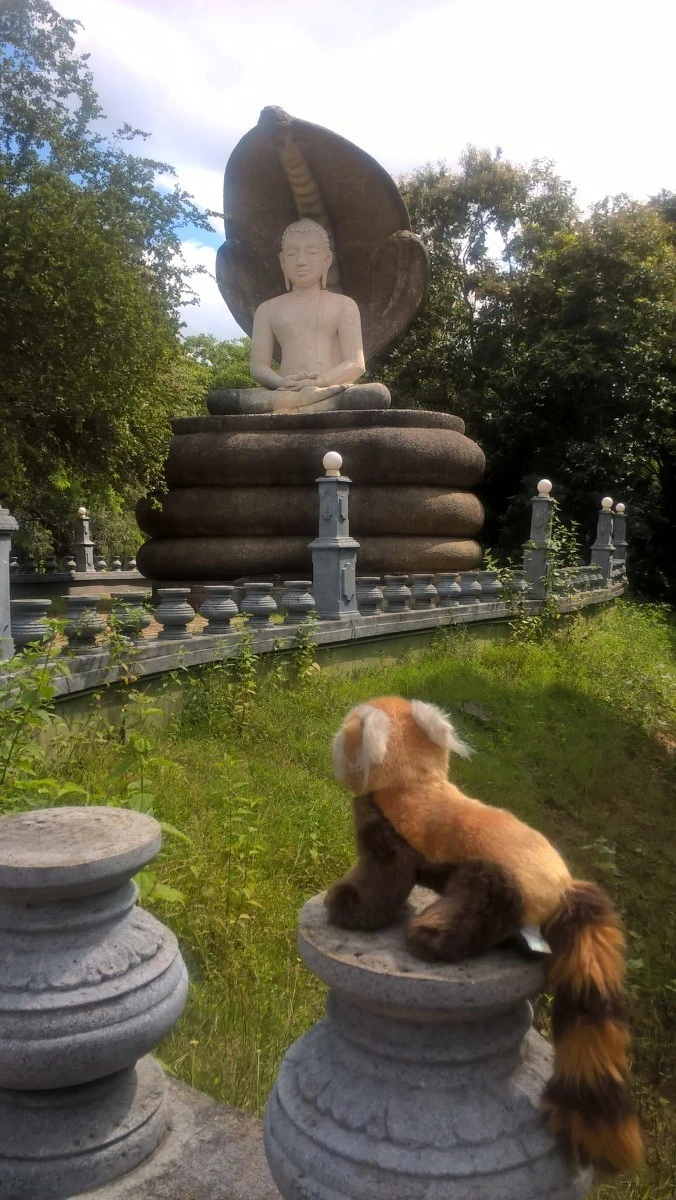
"Simply a beautiful connection of the past and nature at the same time."
The travel plan was therefore partially influenced by the current mood, but some waypoints came from recommendations of friends who had already visited Sri Lanka, and also from well-meant advice of the natives on how to get to the destination as easily and cheaply as possible. Awareness of where the Czech Republic lies was not a matter of course for them, but even so, people were found here who surprised and were very well oriented.
Transport a bit backwards
When I asked Fanda if he also brought back negative experiences or encountered any problems and dramas, he hesitated for a moment. Apart from a tendency not to care too much about cleanliness, he finally revealed perhaps the biggest Achilles' heel of this otherwise very stress-distanced country. And that is undoubtedly road transport.
"Once we set off for some Ayurvedic massage – the owner of our hotel said he would take us there. And when we were driving back by car in their traffic, it seemed terribly dangerous to me. It was at night and it works there in such a way that when someone wants to overtake, they just honk and go. And once I really thought we were dead. The car that was overtaking us completely senselessly avoided us barely three meters in front of us. It was quite unpleasant."
To everyone heading to Sri Lanka, Fanda recommends using local train transport. The rides are very slow, but thanks to the picturesque view, it is definitely not a drawback – quite the opposite! Moreover, local vendors walk through the train, offering very tasty fried lentil balls and many other goodies.
And what lesson does František take away?
"You see that being poor means something completely different than working for minimum wage here. It opens your eyes a bit and forces you to think in some way. But what I mainly take away is that poor people here have no problem being happy and actually have no ambition to change it and own things, which gives them enormous freedom and they are happy for every positive thing that happens to them."
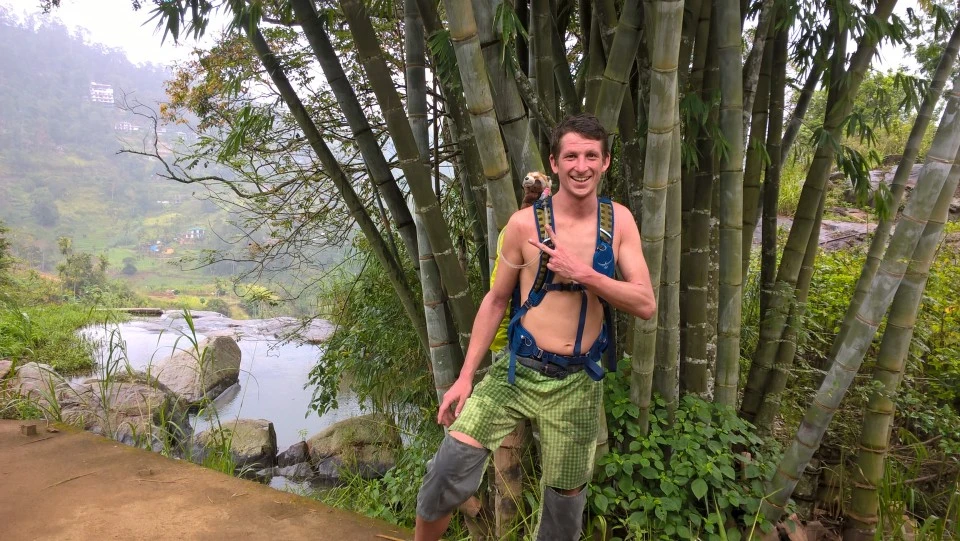
In the future, Fanda plans to discover the beauties of Iceland or Botswana, which, however, he must first coordinate with his work duties. We hope it will be very soon and look forward to packing Akim's backpack for his travels again.


