


Reliable, discreet, yet distinctive
| Pros | Cons |
|---|---|
| + high-quality workmanship, materials, and seams | - small bottom compartment |
| + plenty of space | - side pockets are too shallow |
| + easily adjustable back system | - lacks a dedicated rain cover pocket |
| + long and comfortable hip belt | - lacks a zipper flap cover |
| + spacious front outer pocket | |
| + wide pocket on the hip belt | |
| + discreet yet distinctive color |
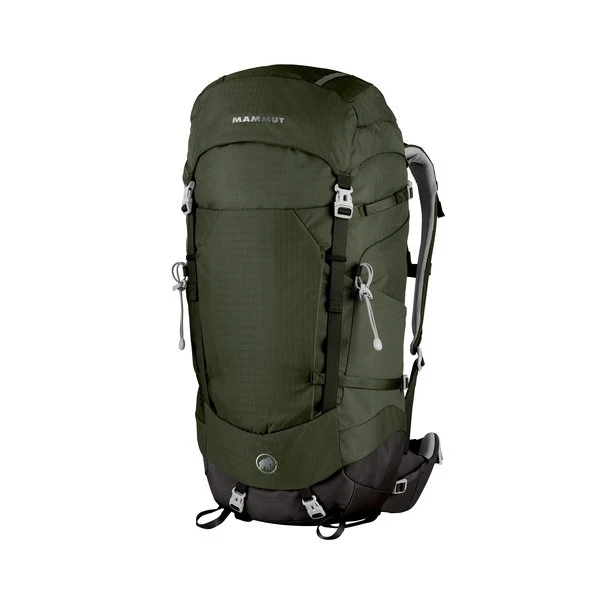
A truly big elephant (layout)
Given its volume and features, the Lithium Crest 40+7 L is primarily designed for treks with medium-weight gear. It is a two-compartment backpack with two access points: top loading through the lid and bottom loading via a zipper.
You can expand the backpack by seven liters by pulling out a strip of fabric hidden under the lid. This is useful, for example, for storing extra cargo (like when adding food supplies) or clothing if it gets warmer. You can use the spacious open outer pocket on the front of the backpack for a similar purpose. Thanks to the stretch mesh and adjustable straps with buckles, it can be expanded or tightened to an almost "invisible" form.
You will find two more stretch pockets on the sides. While they are wide enough, they are too shallow for my taste if you want to store a larger bottle. When putting on/taking off the backpack, it fell out several times (I use a 1-liter Salewa Hiker). I therefore used the pockets more for smaller gear. Two pairs of compression straps effectively tighten the backpack if you decide not to use the full volume, bringing the weight of the load closer to your back.
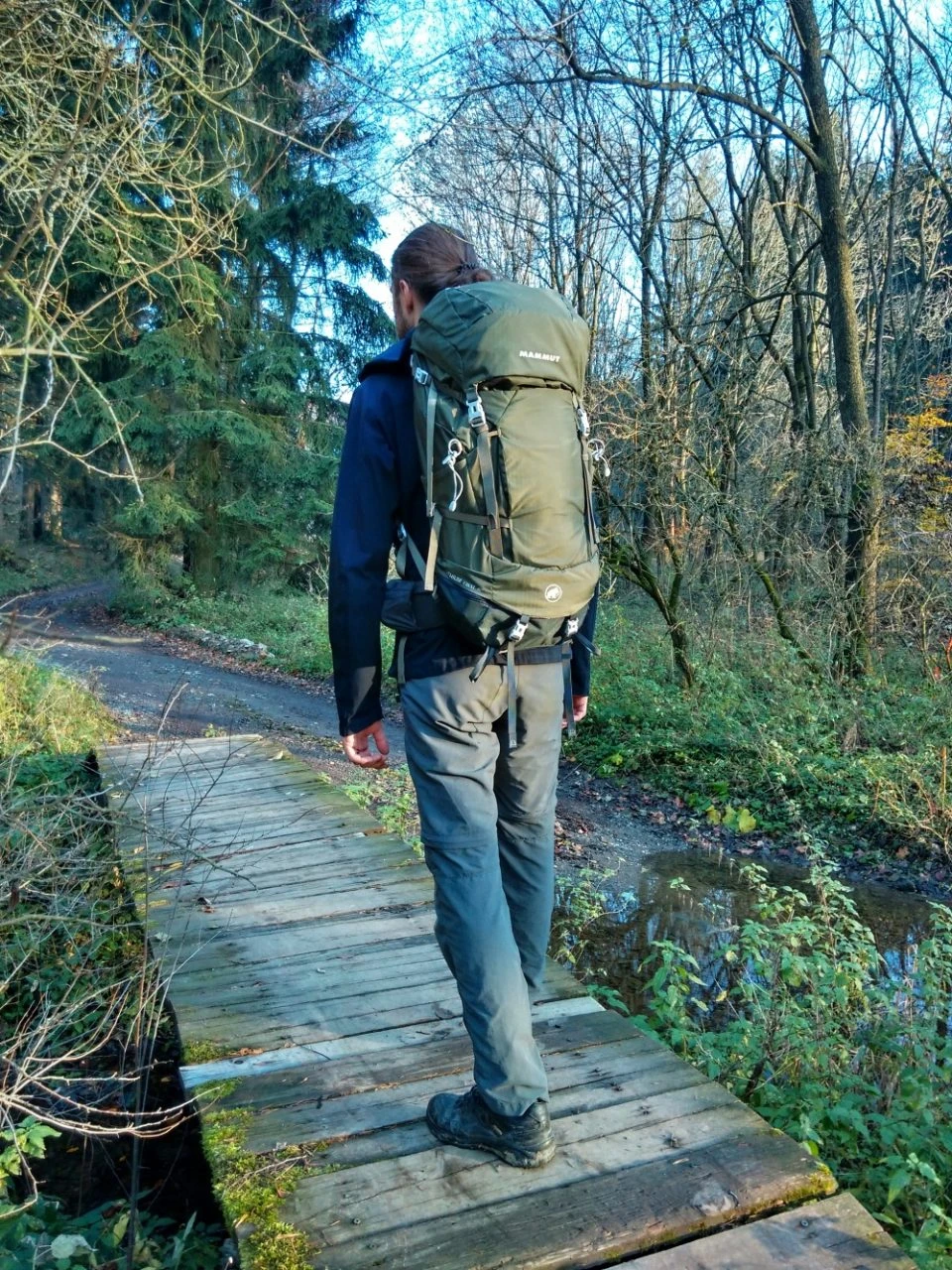
The mammoth's belly (internal organization)
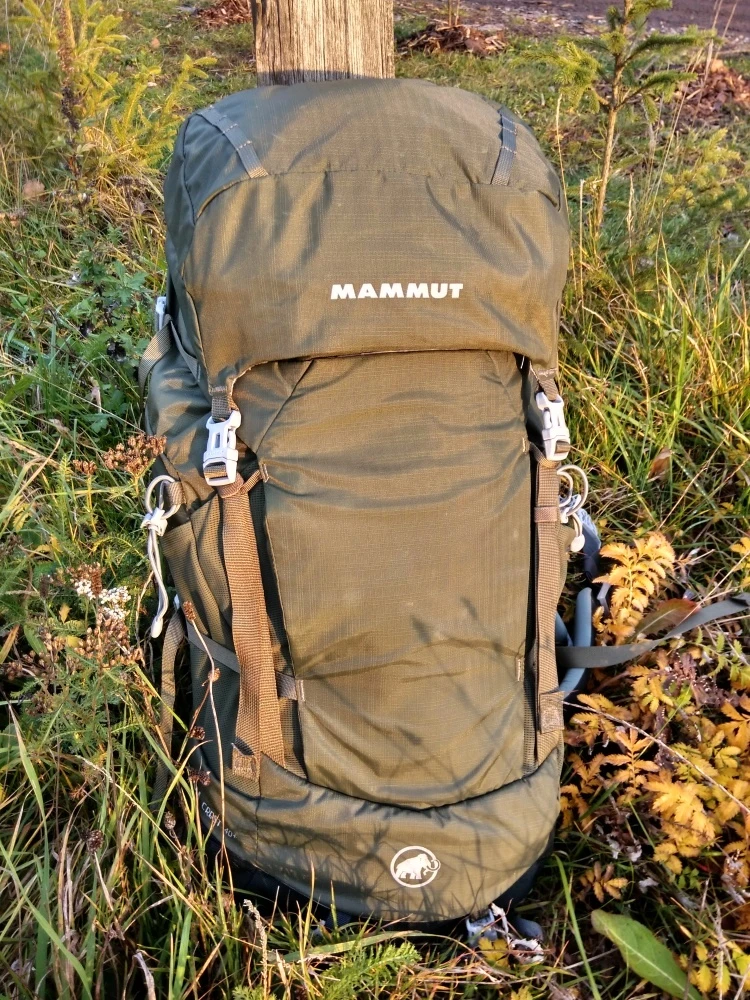
The backpack is divided into two compartments by a partition that can be closed with a drawstring. If you need one large space, it can be easily opened with a quick motion. However, I would have welcomed the bottom compartment to be a bit larger (it accounts for an estimated one-eighth of the backpack's volume). For example, a larger sleeping bag will not fit inside.
You will find more storage space in the backpack lid. It is large enough and accessible classically from the back via a zipper. This pocket is suitable for a first-aid kit, raincoat/poncho, or map. Inside, you will find a key loop to which a red rain cover is attached. Personally, I would prefer to store the rain cover in a separate pocket, which I find missing on the backpack. In the lid, the rain cover gets in the way, and if it is wet, it can dampen other items. The lid can be easily detached and used, for example, as a separate bag for other luggage. The lid zipper is covered with fabric, but I would have appreciated a fabric flap as better protection against rain.
In addition to the lid, the backpack is equipped with three more pockets. A zippered, elongated mesh pocket located on the back side about ten centimeters below the top edge pleasantly surprised me. You can store small items, valuables, and various practical tools here that might fall out of the lid. Thanks to the mesh material, you can easily see what is where.
You will also find a sufficiently large closable pocket on the left hip belt. It comfortably fits a 5" phone, flashlight, or pocket knife. A hydration bladder pocket is a standard feature in hiking backpacks today, as is a loop for hanging the bladder (velcro) and a flexible loop for securing the hose on the right shoulder strap.
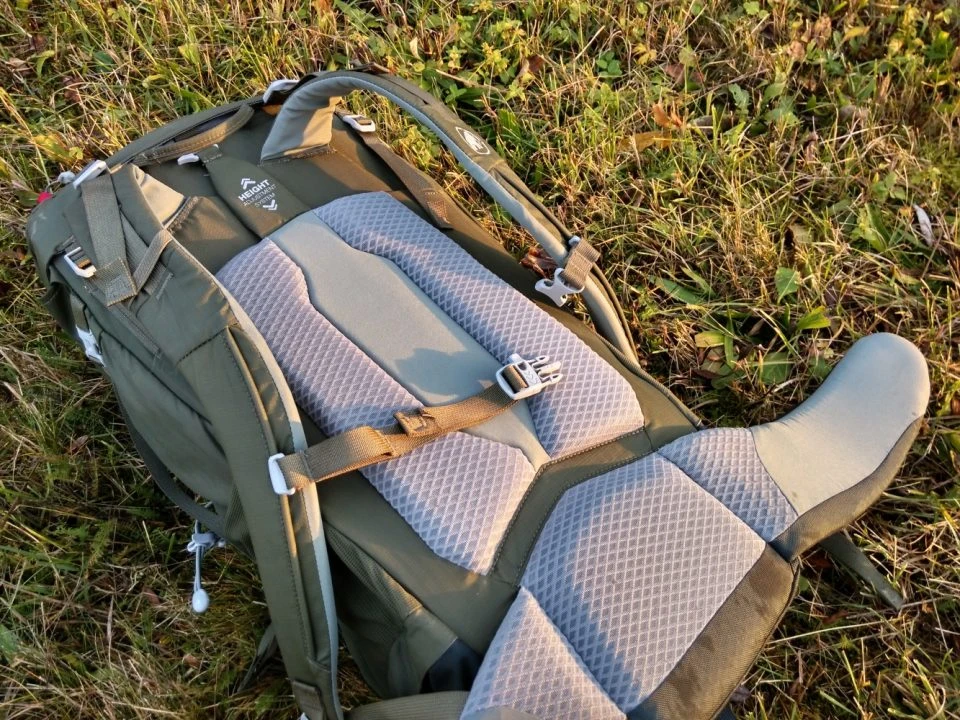
Comfort (carrying system)
The back system is height-adjustable using velcro, which has a sufficient surface area and holds firmly. You can choose between M, L, XL, and XXL positions, so according to the manufacturer, the backpack is suitable for medium to very tall figures. The hip belt is long enough and comfortable, the strap is wide, and the buckle feels sturdy.
The shoulder straps are longer than average; for my taste, they could be a little wider and more padded, but that is a matter of personal preference. A height-adjustable chest strap is a matter of course; moving it is easy and stable. Additionally, you will find a small whistle on it for calling for help in crisis situations. The shoulder straps are equipped with load lifter straps, thanks to which you can pull the backpack closer to your shoulders even while walking. The hip belt is also equipped with straps, which, however, are not adjustable.
The carrying system is comfortable for me, and the backpack does not press anywhere on my back. I especially praise the long hip belt. However, for heavier loads (20 kg and more), I would prefer a model with even more padded shoulder straps.

Fur (external attachment system)
On the backpack, you will find two adjustable attachments and two fabric loops for attaching trekking poles and an ice axe. A pair of compression straps that fix the flap protecting the bottom compartment zipper also serve as an additional safety for closing the bottom compartment and are long enough to attach extra cargo. However, in my opinion, these straps could be stronger.
Five pairs of loops can be found on top of the lid and under the hip belt on the bottom edge of the backpack. You can attach other gear to them using string or carabiners. Loops are missing on the front of the backpack, but that is a logical trade-off for the outer pocket. To attach cargo, you can, of course, also use the side compression straps. Their length is sufficient, but I would welcome greater width, similar to the straps on the bottom compartment.

Mammoth perspective (overall impression)
The backpack impresses with its high-quality workmanship; the joints are thoroughly stitched with strong seams. The materials used, 100D Nylon Flat Ripstop and 420D Nylon, inspire confidence. During the time of use (five months), not a single defect appeared on the backpack, and I used it both daily for carrying regular items and in the field. Also, the weight of 1570 grams is favorable given the volume.
I grew fond of the Mammut Lithium Crest 40+7 L Iguana-Graphite thanks to its discreet yet eye-pleasing "uncommon" color. The buckles, clips, and zipper pulls are not only made of hard plastic, but the manufacturers also played with their design, which feels slightly futuristic. Overall, I perceive the Lithium Crest as a backpack that can be relied upon even in more demanding conditions. I would recommend it to everyone heading out on shorter adventures (within a few days) or on a longer pilgrimage with lighter gear. Except for a few minor flaws, I found it to be a practical and faithful companion on my travels.


