


So I bought the Osprey Variant 52 L – a backpack that looks like it was designed by Rony Plesl, if he were into outdoor gear. It is a handy (not just) climbing backpack with so many features that you might not know how to use them all at first.
A great backpack for all conditions, but primarily for climbing activities
| Pros | Cons |
|---|---|
| + low weight | - only one access point to the main compartment |
| + foam back panel for comfort even on long hikes | - back is not adjustable (doesn't bother me, but some might consider it a drawback) |
| + large number of climbing features | - no rain cover included |
| + crampon pocket made of very durable material | - higher price point |
| + the design will suit you | - whistle on the chest strap is upside down |
I'm not one to do things by halves, and the Kestrel 68 hanging on my wall at home is a bit too robust for my mostly two- to three-day trips. Moreover, the Kestrel lacks central compression straps that would pull the inner bag into a chimney shape when half-empty, so I decided to try something a bit smaller, more oriented towards vertical movement, and therefore better adapted for carrying gear like ropes, crampons, ice axes, climbing shoes, quickdraws, and all climbing hardware in general.
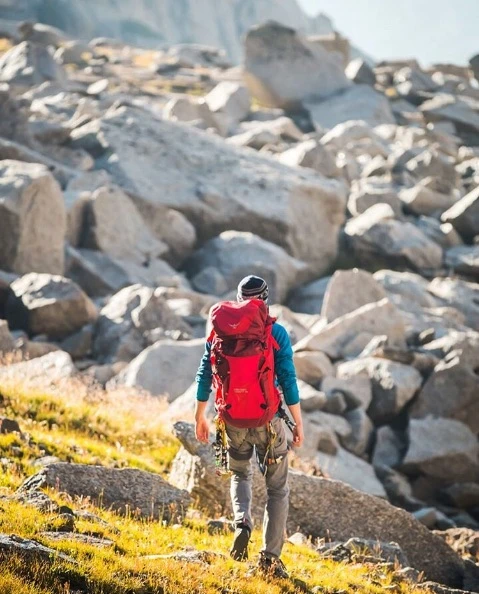
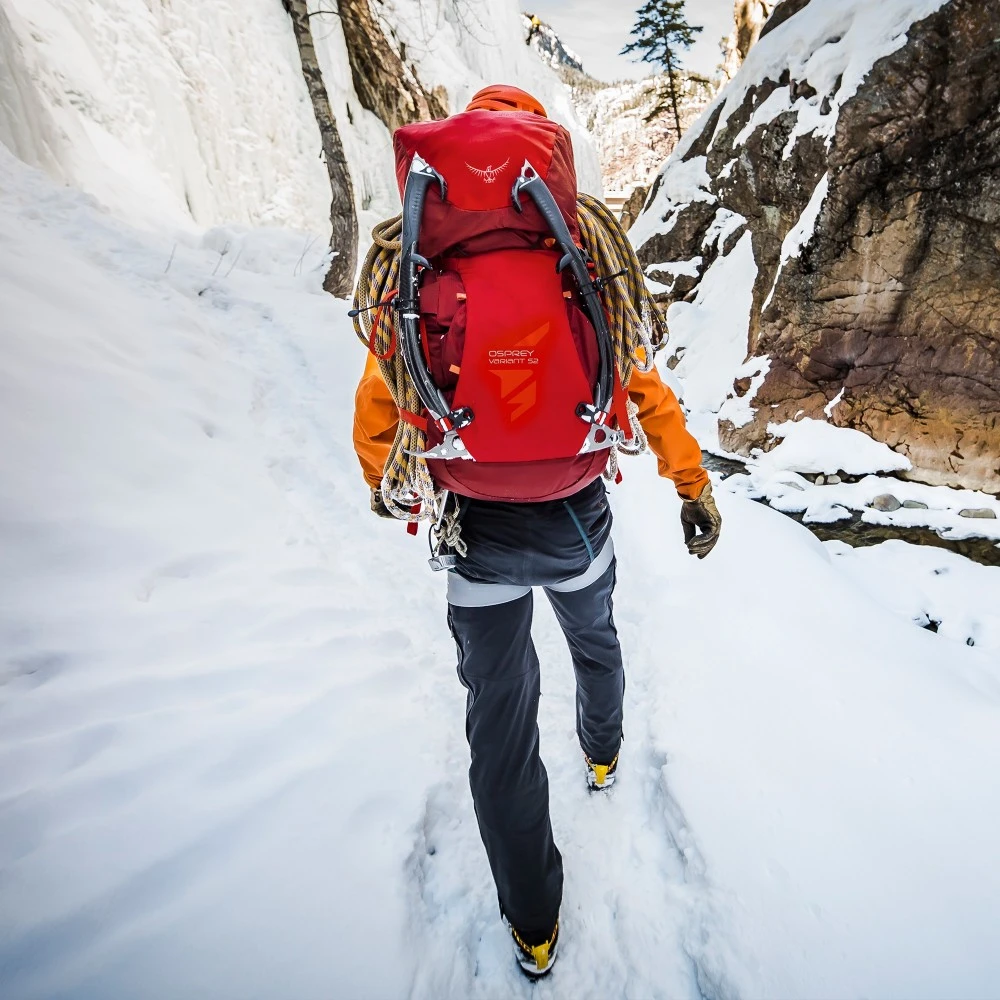
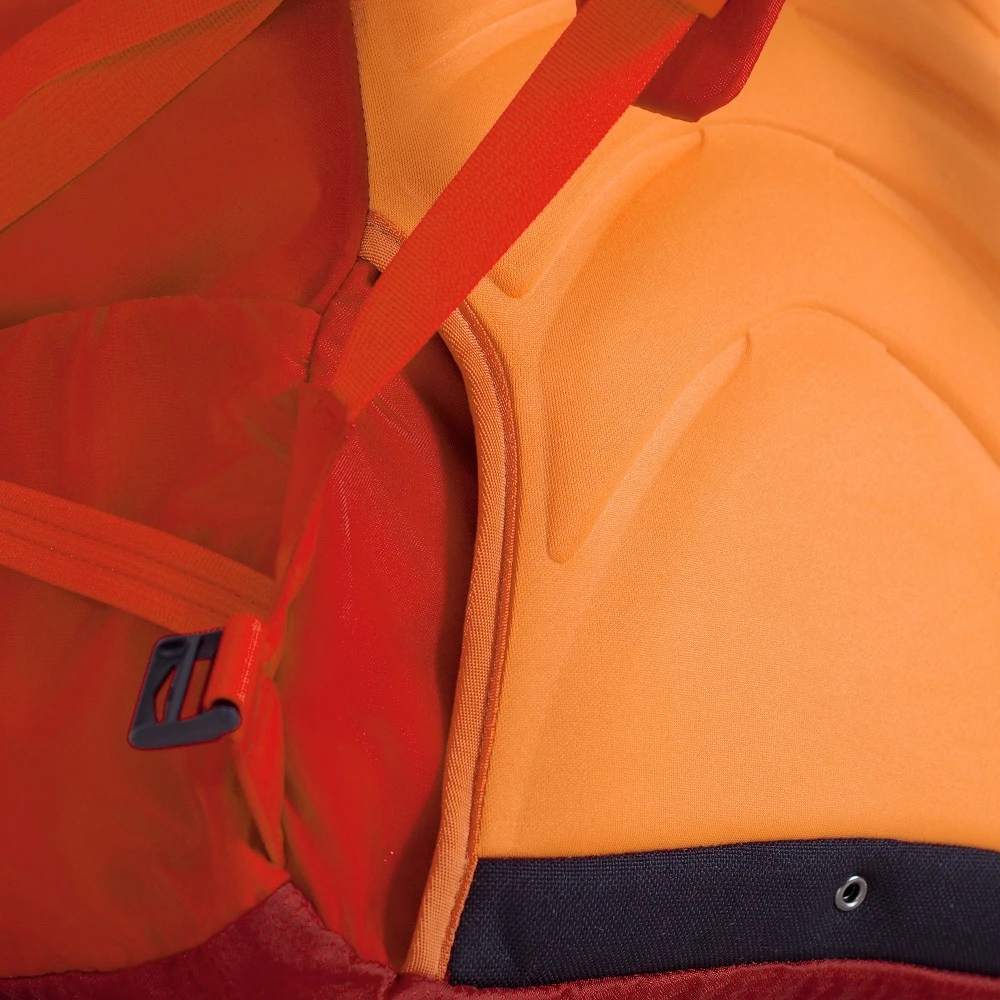
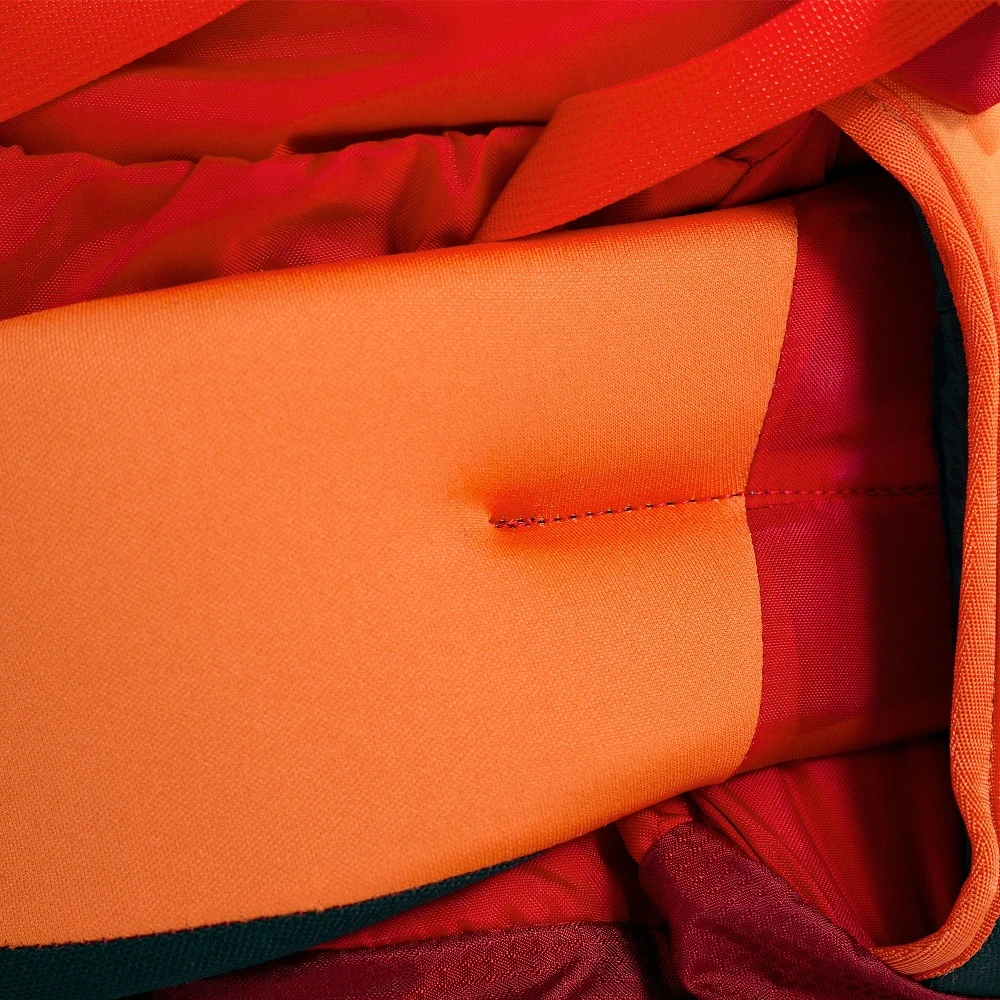
The backpack is truly superlight, despite being equipped with a comfortable back panel with a removable aluminum frame. At dimensions of 74 x 34 x 28 cm it weighs only 1.53 kg. However, that doesn't mean that if you pack 15 kg of gear into it, it will magically absorb and filter that weight.
You can, however, make carrying even a fully loaded backpack much easier by correctly adjusting the shoulder straps and hip belt. This way, you carry most of the weight on your hips and won't be completely exhausted after a twenty-kilometer hike. If you are counting every gram, you can remove the hip belt by simply pulling it out of the construction. But if you are going to be gaining some altitude during your hike, it's not a good idea to get rid of the hip belt.
What is hidden inside?
Access to the main compartment is located at the top of the backpack and is the only opening through which you can get into the pack and fill it. The compartment itself is closable with a drawstring, for which you definitely don't need a manual, and yet it can be comfortably manipulated even while wearing gloves.
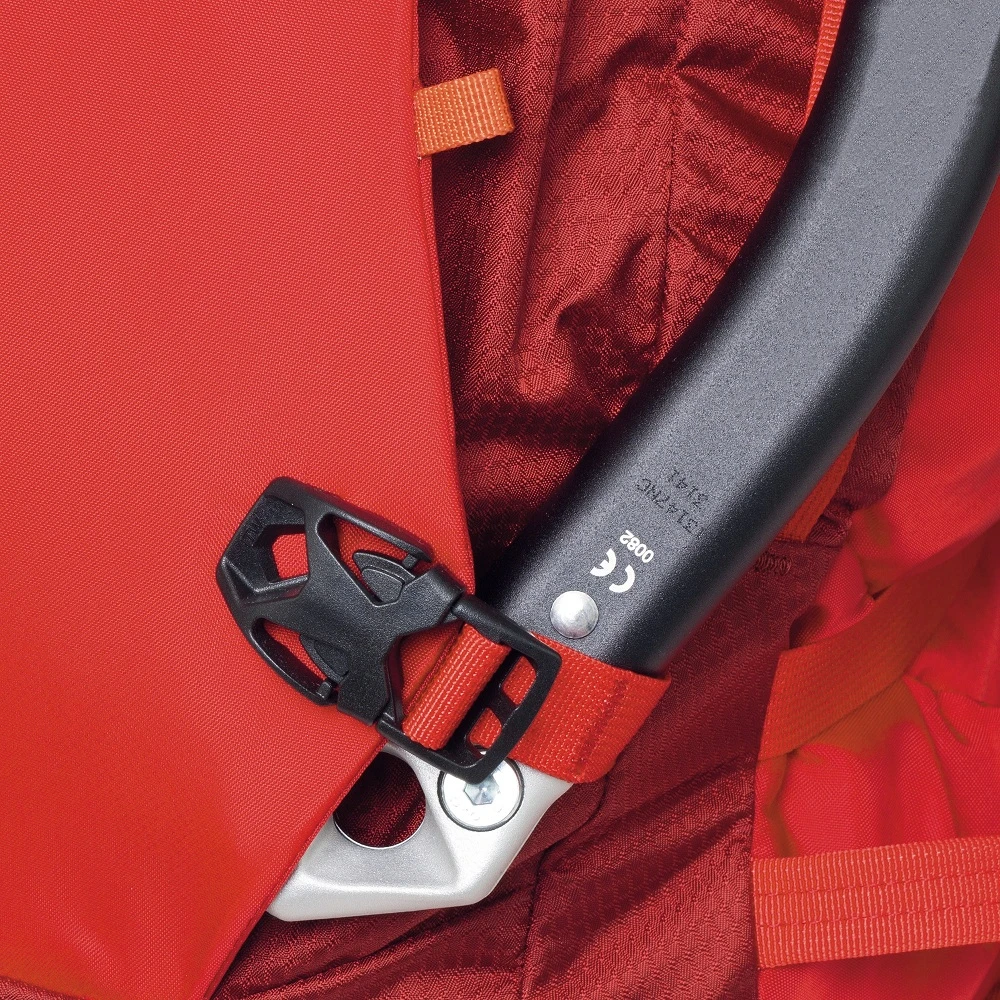
The backpack does not have bottom access to the compartment because there is an external reinforced crampon pocket in the front, which helps protect one of the most stressed parts of the backpack from weather and abrasions. It's not very visible in the video and pictures, but when I first saw this feature, I thought that only a very smart person could invent a fabric pocket for crampons. It will get punctured! However, the entire compression pocket is reinforced (I don't know exactly with what, maybe Kevlar?), well-closable, and sufficiently resistant to rough handling, placing it on rocks, and other minor accidents that can happen during climbing and non-climbing activities.
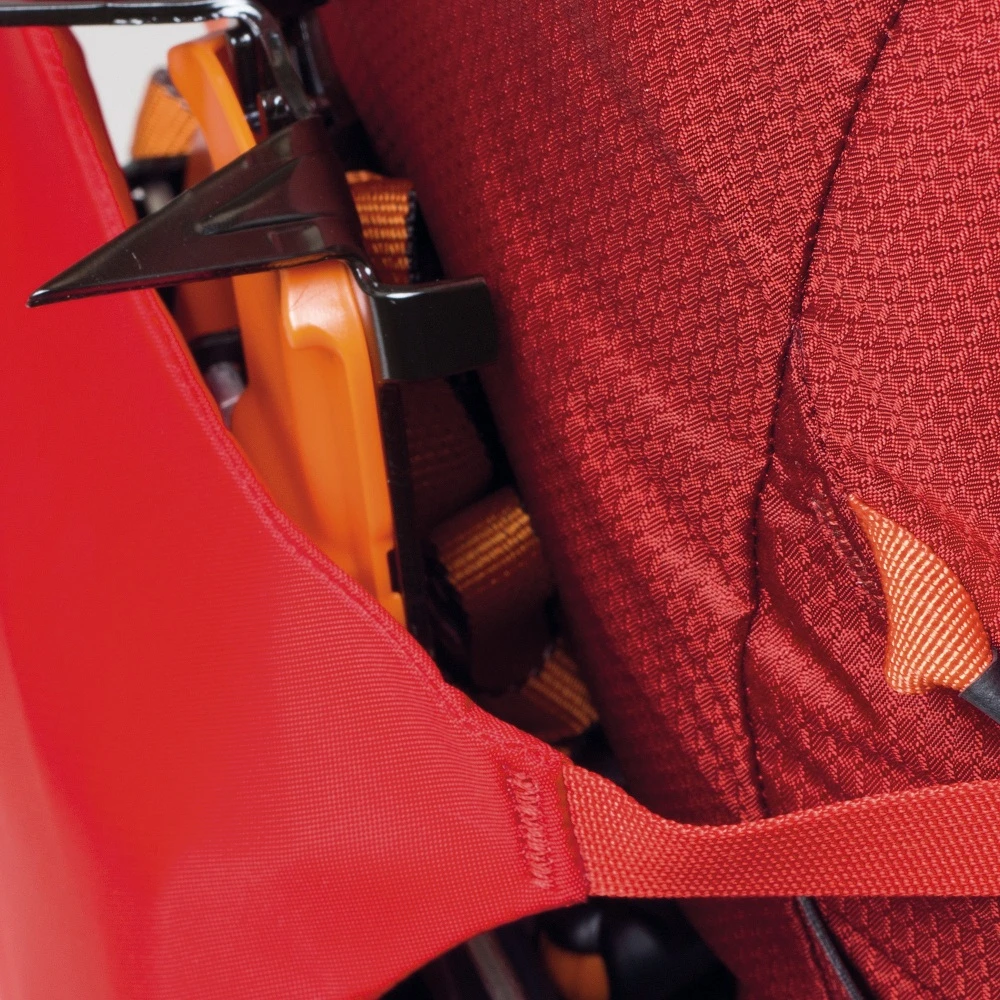
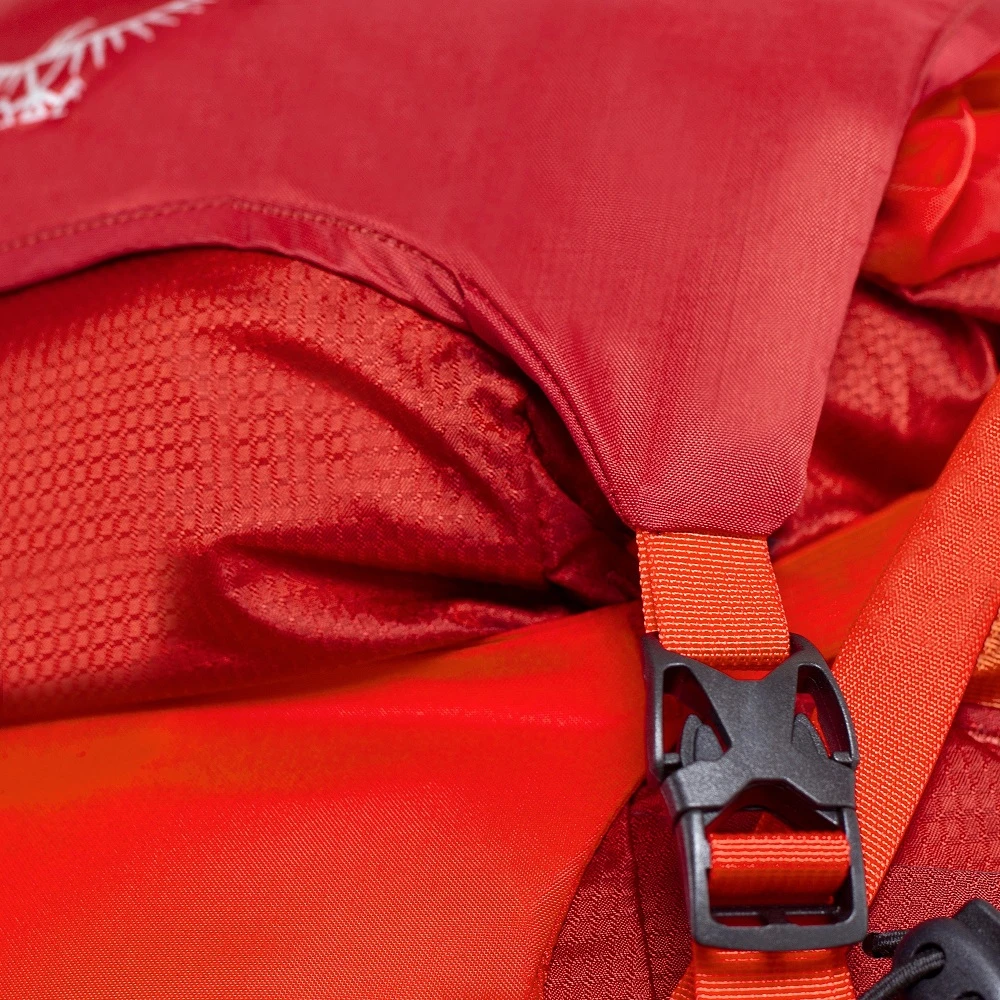
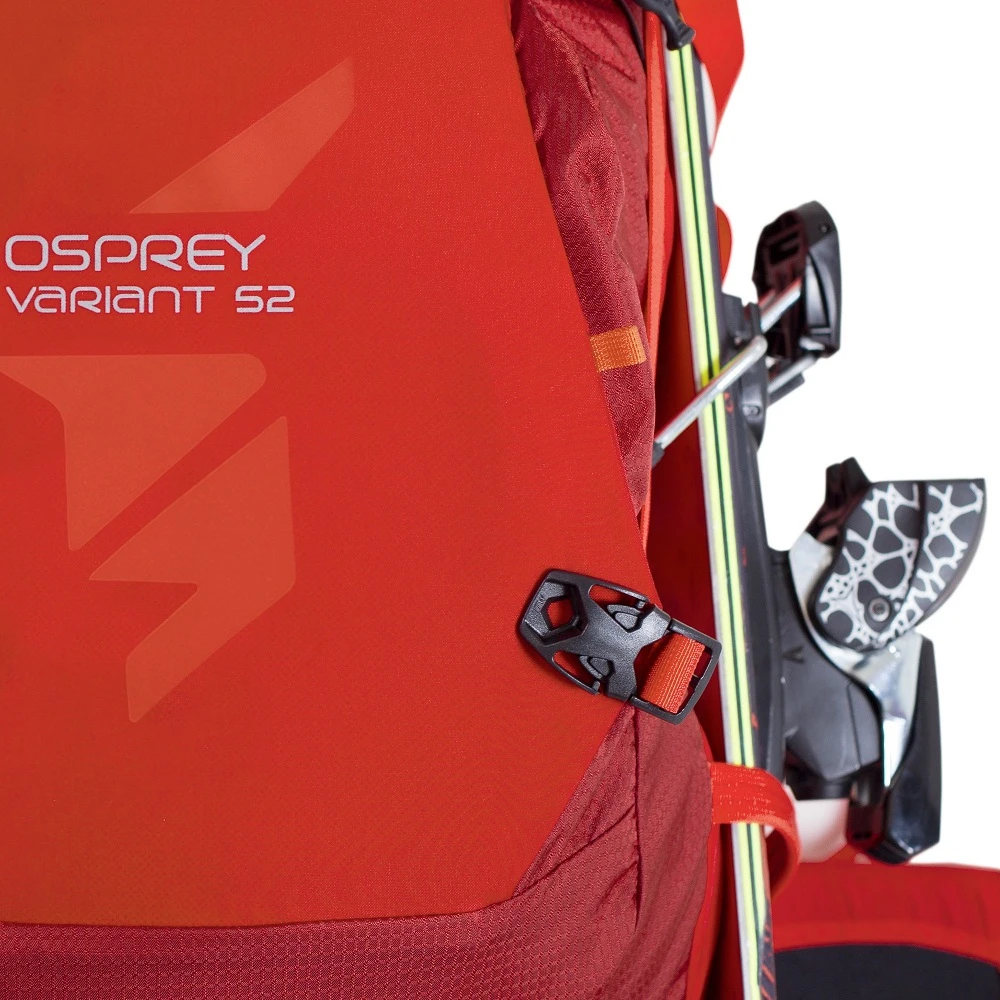

In the lower part of the backpack, there are pockets on both sides, which are not very elastic, which is a bit of a shame because if you pack the backpack tightly, you probably won't be able to put anything in them. And when I say nothing, I mean not even a finger will fit, let alone a water bottle. So I solve this by putting the bottle there if I don't have crampons or other bulky material in the aforementioned large pocket. There is enough space there after all, and the bottle won't fall out because the whole pocket can be tightened using compression straps, which simultaneously tighten the entire upper part of the backpack – a very good feature.
Straps and loops...
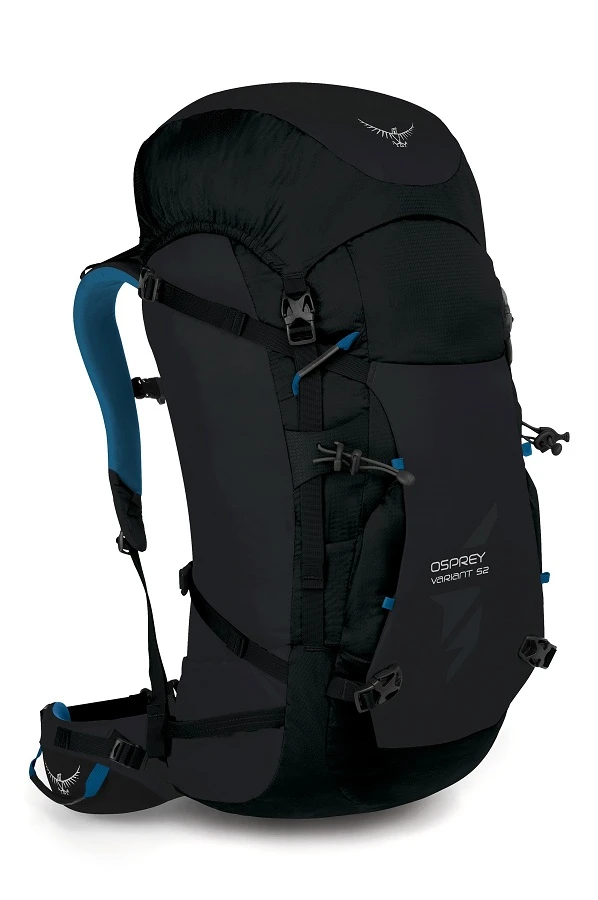
On the hip belt, you will find super loops, which are basically the same as those on a climbing harness. So if you climb with a backpack and have a harness on, you probably know well that the hip belt (if you have it fastened) usually gets in the way of taking out your gear. The Variant 52 has one loop on each side, on which you can put enough material. Then you just tighten the belt so you aren't carrying the weight only on your shoulders and it doesn't tip you over like a sunflower, and you can climb like a boss.
Another two extra loops serve for attaching the backpack to a belay station, which is also quite practical because the one loop that is usually behind the lid is not built for the weight of the backpack and could tear. In the best case, the backpack would fall right under the rock, in the worst case, to the bottom of the valley. To attach the backpack to the belay station, however, you must have your own carabiners and appropriate extensions via slings, otherwise you will be looking at those three loops like a mole at a pair of panties. Even though the backpack is comfortable, sitting for even half an hour at a belay station with a load approaching, say, 15 kg and waiting for your buddy to climb up to you is not exactly comfortable, quite the opposite. So watch out for that.
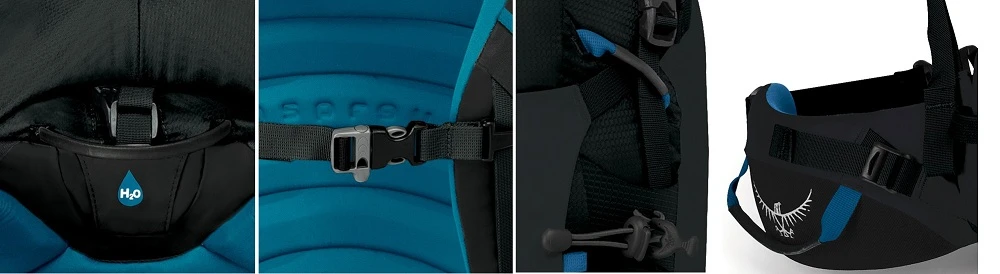
Some might miss a small pocket for small items on the hip belt, which some models have. Personally, I find it unnecessary because I put my mobile in my pants pocket, hang my keys on a small carabiner in the top pocket of the lid so I never lose them, and a knife? Well, if I'm a real woodsman, I'll probably have a knife right on my belt along with a sharpener.
...and other straps and loops
Also super is the rope strap, which you throw over the closed lid cover – FlapJacket™. The rope won't fall out even if you have already unfastened the top lid. The loose ends of the rope can be tucked behind the upper compression straps with fixation cuffs, so they won't loosen and will hold like a rock. If you aren't carrying a rope, but maybe just a regular sleeping mat, you can put it there too, because the backpack doesn't have any straps for sleeping mats. But a person can handle this on their own. :)
If you also have the top lid attached, there will be a slight problem with the lid not sitting flush on the backpack and it will stick out slightly. However, this can also be solved relatively easily by loosening the straps holding the lid to the body of the backpack, and thus you actually just raise the whole lid. Nothing will bend or be difficult to tighten by force.
The main compression straps are also sufficiently long, so it's clear that the manufacturer evidently counted on this variant of use. However, if you are an aesthete of the highest category, you probably won't like it very much, as an unclosed lid under which there is a sleeping mat doesn't look very aesthetic. It is also necessary to be careful not to get hooked (on a door handle on a train or anything else sticking out in the way) with a bit of inattention and have something torn off.
Osprey Variant is a friend of water
Inside the backpack, there is a hydration bladder pocket and by the lid, there is also an opening for routing the hose. When I have a fully loaded backpack, it has proven effective for me to put my Camelbak on top of all the things and not force it into the designated pocket at all costs. Because when you walk for several hours and drink its entire contents, then upon refilling, you have to take everything out in a complicated way to put the hydration bladder back, which is sometimes a real hell. In my setup, manipulation is easier, nothing cools my back on the way, and I don't have any fears that the hydration bladder would burst under high pressure and soak the contents of the entire backpack. And when I drink all the water, I can also easily and quickly refill it.
The backpack has one small minus for not having an integrated rain cover, so those who cannot live without it will have to buy it separately. Although the backpack is made of durable materials (210D nylon shadow box and 210D high tenacity nylon), I preferred to use the rain cover from my Kestrel during a trip to the Jeseníky, Beskydy, and Velká Fatra mountains. However, I had to tighten it because there is a big difference in size between the two backpacks. I could have gone without the rain cover, of course, but I didn't want to risk my things getting wet, and after a several-hour hike in the rain, I didn't want to go from wet to wet just because I left one thing to chance.
Colors, colors, little colors
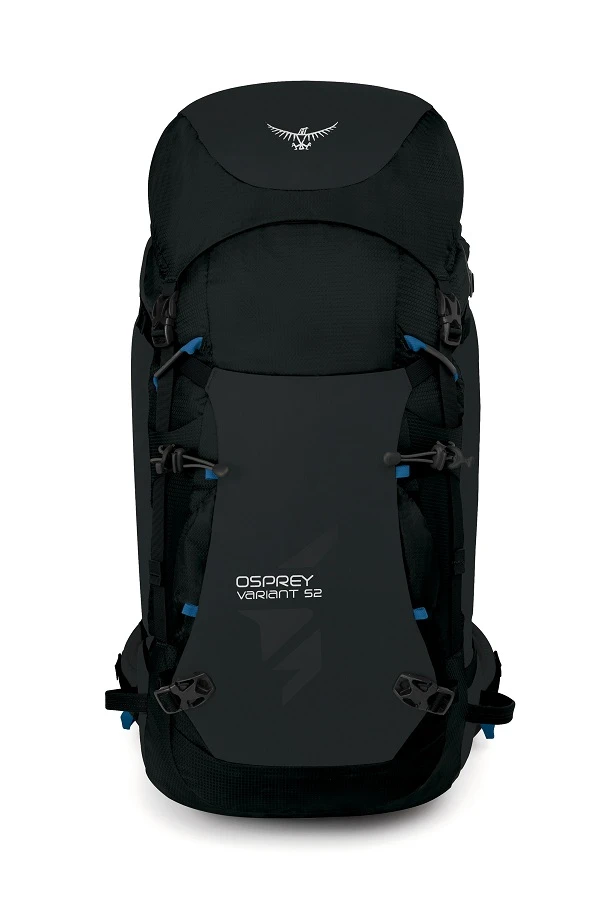
As for the appearance and color, I was personally more impressed by the combination of black and blue, but even the red-orange variant is not bad. However, the black one is more practical, which is just as dark in reality as it is in the picture. When the backpack gets dirty, it's not as painful as having grass or moss/lichen stains on a red backpack.
If you climb or hike in the mountains actively (often and regularly), it will get dirty whether you want it to or not – you put it down here, you lean against it there, you put it on the ground on the train, or you squeeze into a bus with it. Even if you "only" climb in it, it will show on it in a while. The advantage, however, is that it can be easily cleaned when dirty. I personally use a cleaning spray for outdoor clothing, or classically lukewarm water with a little soap and a sponge or cloth.
So what are the pros and cons?
It's probably unnecessary to list things that the backpack has in common with many other models, such as having space for a hydration bladder, an integrated whistle on the chest strap, a reinforced three-point system, a series of loops and pockets for attaching or storing material, or that it has plenty of straps for adjusting almost anything. I am extremely satisfied with this backpack.
Everything I need fits into it, and my back didn't hurt even after a more than fifty-kilometer traverse of the Velká Fatra, nor from climbing in Slovakia. The 52-liter size is sufficient for both one-day trips and multi-day trips or hikes. It is a great partner and a good investment in equipment that will pay off, and not just in the form of many unique life experiences.
Author: Honza Kaděra
photo: ospreyeurope.com, Instagram Osprey


