


While a person can survive for weeks without food, we can barely last a few days without water. Both are essential on a trek to maintain good performance and well-being. That is why we dedicated the previous part of our Step by Step series to nutrition on hikes, and this time we will look at fluid intake: How much water should you take with you? What should you carry it in? And how to ensure its purity?
How much water will I need on the trail?
Various sources recommend drinking different amounts of water per day. You will likely most often encounter the formula body weight in kg / 30 = recommended daily fluid intake in liters. For example, a person weighing 80 kilograms should drink 2.66 liters of water per day. This fluid intake does not include coffee, black tea, and, of course, alcohol. However, this formula (and many others like it) is only a guide; the actual need will depend, for example, on exertion, temperature, and environmental humidity, as well as on each individual's personal needs. In general, it is impossible to determine the optimal amount of fluid intake. However, you can use the above formula as a guide and consider the calculated volume as a minimum.
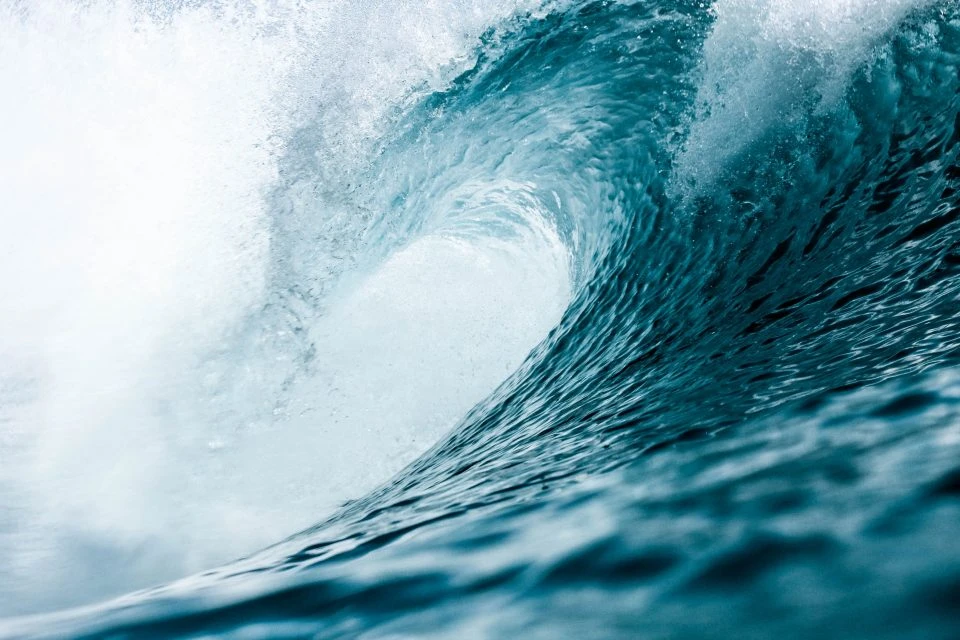
How much water will I REALLY need?
As for my personal experience, while in winter I only need about 2–2.5 liters of water a day, in the hot summer, I drink up to 6 liters on a more demanding hike. It is also important to keep in mind that water is not only needed for drinking but can also come in handy for cooking, rinsing, hygiene, or, for example, cleaning a wound. However, it is obviously unthinkable to carry 20 liters of water with you on a week-long trek. It also makes no sense not to burden yourself with carrying water and to drink "in reserve" at springs. The kidneys can only process about 300–350 ml of water per hour. So where can you get more water when you are away from civilization and the springs are dry?
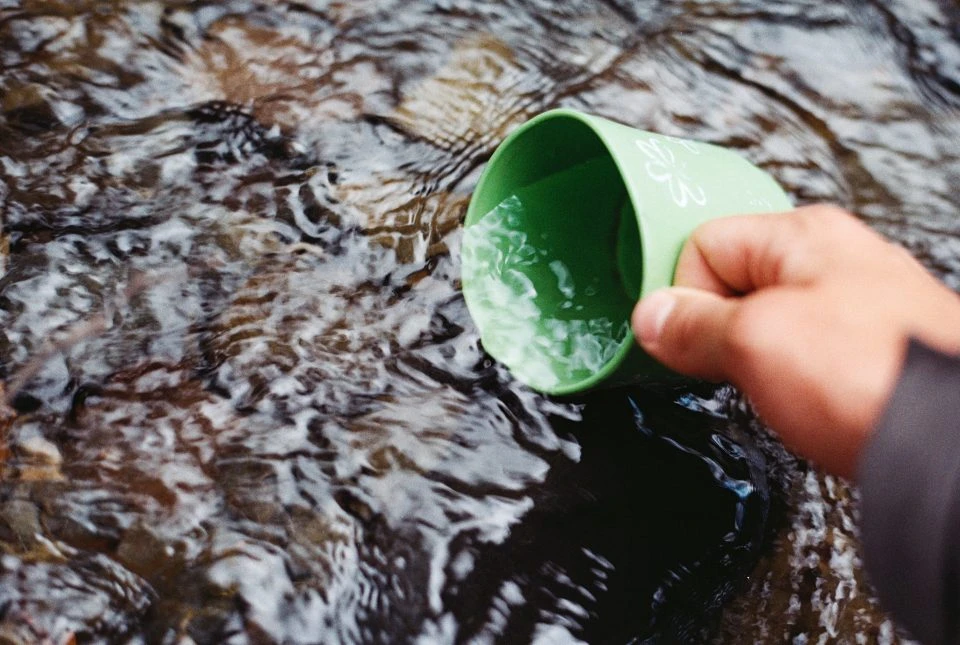
Water purification
There are four basic ways to remove impurities from water: boiling (at least 10 minutes of rapid boiling, or distillation), filtration (using outdoor filters), chemical treatment (e.g., two-stage chemical kits), and UV radiation (using a portable lamp). This way, you can obtain drinking water from any natural source that is not contaminated by inorganic waste from civilization. With chemicals, we must be more careful: not all filters and methods can remove them from the water.
Regarding sources, the rule is: the closer to the spring and the further from human settlements, roads, industry, and fields, the greater the chance that the water will be less harmful. If there is a field nearby, try to get water above it, not below it (to avoid industrial fertilizers, pesticides, herbicides, and other -cides washed into the water).

How often to drink?
We have already mentioned that the kidneys can process about 300–350 ml of water per hour. On a trek, the same principle applies (similar to food) to drink regularly in small doses. It is therefore ideal to treat yourself to a sip of water roughly every 15 minutes. For this purpose, hydration bladders with a tube are perfect. The water bladder is hung on a special loop inside the backpack, placed in a designated pocket, and the tube is pulled through a hidden opening and attached to the shoulder strap. When you need to drink, just pull the tube and sip water from inside the backpack. You can drink comfortably and regularly while walking without having to take off your heavy backpack every quarter of an hour.
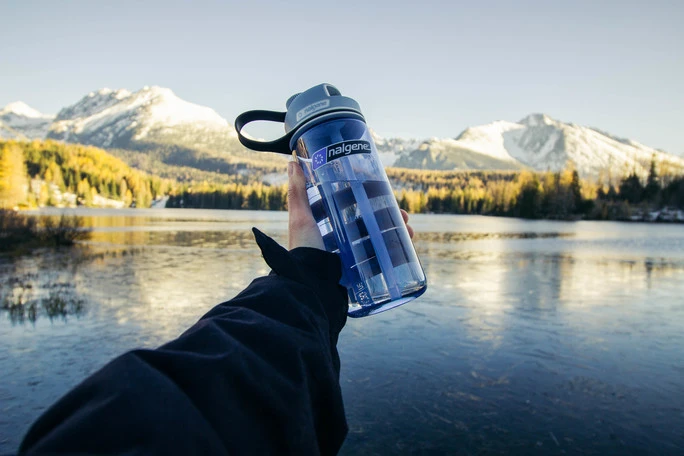
Choosing a suitable container
In our assortment, you will find a whole range of bottles. From very light plastic bottles (e.g., Nalgene Narrow Mouth 1 l), durable metal ones (e.g., Mizu V8 Stainless), to glass bottles (e.g., CamelBak Eddy Glass 0.7 l). You can choose in volumes from 0.35 l (e.g., Nalgene Flask 0.35 l) up to 1.5 liters (e.g., Nalgene Wide Mouth Silo 1.5 l).
Very practical are also soft flasks (e.g., Salomon Soft flask 0.5 l or Hydrapak Stash 1 l), which are not only very light but, above all, do not take up more space in the backpack than the amount of water you are carrying in them. They are perfect as backup/spare bottles. Personally, I have found it useful to take more containers than the amount of water I am carrying. And for two reasons: If water sources are further apart, the extra volume will come in handy. Secondly, if you destroy or lose a bottle, you will be glad for a spare.
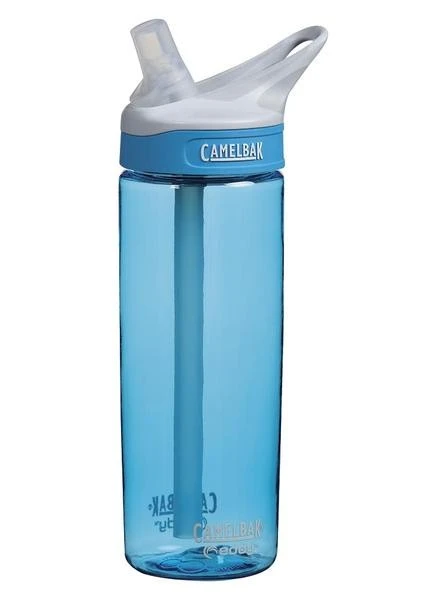
Various accessories can also be useful for bottles: for example, insulating sleeves (e.g., Nalgene Bottle Clothing Classic Neoprene Green/gray), which keep drinks warm or cold for longer, bladder cleaning kits (e.g., CamelBak Reservoir Brush kit), adapters for easier drinking (e.g., Nalgene Easy Sipper 63mm Yellow), and spare parts for various types of bottles.
You can find more tips for choosing a bottle in our advice center.
Now you won't get lost in questions regarding hydration. And so that you don't get lost in the terrain either, I will dedicate the next part of the Step by Step series to orientation and map reading.
Photo #2 by Jeremy Bishop on Unsplash


