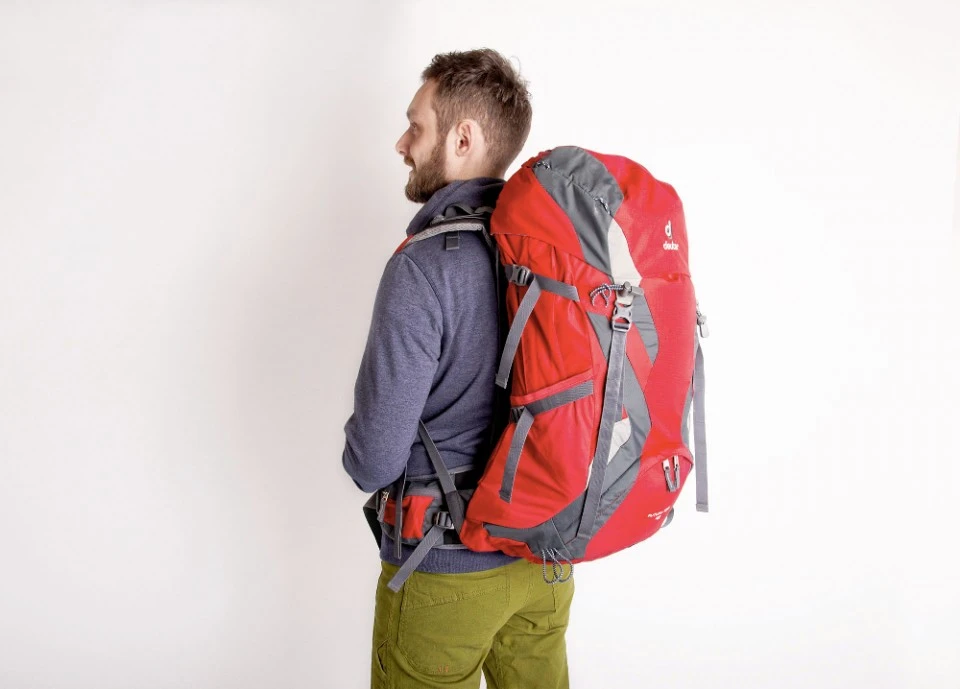
The Futura Pro 42 model series has been a staple in the German brand Deuter's range for years. Thanks to its volume, this popular hiking backpack is an ideal companion for weekend trips. The model is well-known among hikers for its mesh back system. The floating Vari Flex hip belt is also top-notch.
| Pros | Cons |
|---|---|
| + flexible padded hip belt with zippered pockets | - higher price point |
| + bottom compartment separable by zipper | - lack of front access |
| + comfortable ergonomically shaped shoulder straps | - curved backpack construction in some situations |
| + rain cover included | |
| + hydration system compatible |
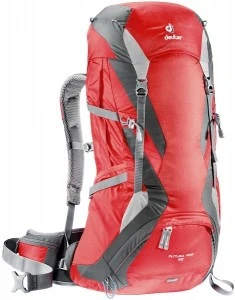
A perfectly crafted hiking backpack for shorter treks and longer sightseeing trips
Construction and materials used
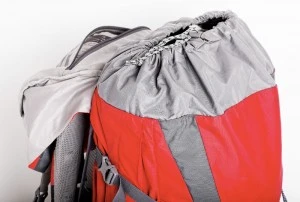
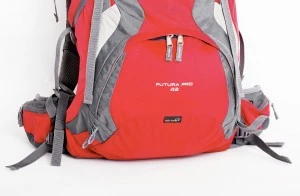
Deuter has opted for a simple and clean design here. The backpack has a classic shape that is best suited for general hiking. The Futura can be divided by a zipper into two main compartments, with the bottom part intended for a sleeping bag, shoes, or dirty laundry. The remaining space forms the main compartment, which offers plenty of room despite the fact that the back construction takes up some space due to its curvature. However, one can still comfortably pack for 2–3 days. Both the bottom and main compartments can be accessed separately. The former has a semi-circular zippered entrance. The zipper is robust and very easy to handle. The main compartment is closed from the top by a lid, under which there is a standard drawstring entrance. Every element here is of the highest quality, and there is no need to worry about anything breaking while closing it.
At first touch, it is clear that we are dealing with a very well-made backpack. Every seam is protected from the inside with textile tape to prevent mechanical damage during handling. The bottom of the backpack is made of Super-Polytex 600 material. This is a coarse polyester with a polyurethane coating. Other parts of the backpack are made of Microrip-Nylon 210. This name refers to a lightweight nylon with ripstop fabric, also equipped with a PU coating. All zippers are YKK, and working with them is simple and fast. The buckles, of which there are quite a few on the backpack, are no exception. They are made of sturdy plastic and their functionality is flawless.
Mesh back system
A typical system consisting of tensioned mesh, metal reinforcement, and ergonomic shoulder straps belongs to all volume variants of the Futura series. Since the Futura Pro 42 is the largest model in this collection, Deuter has reasonably included more robust shoulder straps. These are extra padded and contribute significantly to the overall high load-bearing capacity of the backpack.
By metal frame, we mean two duralumin reinforcements in the shape of a bow. As mentioned, this causes the backpack to curve. From my own experience, I have to evaluate this element negatively. The center of gravity of the backpack moves further away from the back, and when fully loaded, the reinforcement exerts pressure on the lumbar area. This will likely depend on the user's physique, but it is still a kind of inconvenience that one does not want to deal with, for example, in the mountains when you have 30 km behind you in difficult terrain and twice as much ahead.

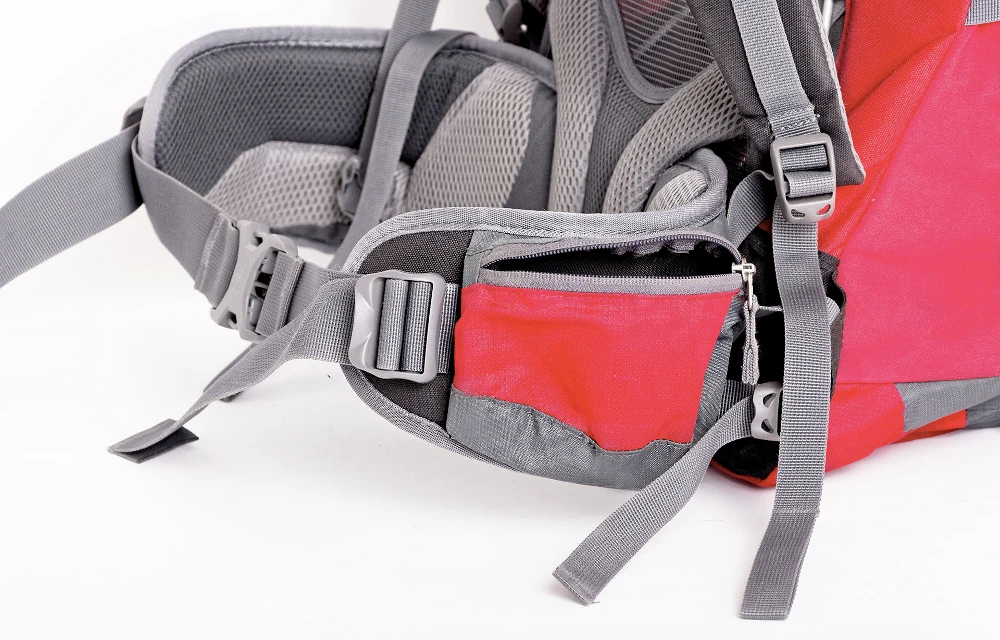
No less important is the last part of the back system, specifically the Vari Flex hip belt. It is clear from the name what this hip belt should excel at. Yes, it moves freely and adapts to walking. It is attached to the back of the backpack at a single central point, allowing it to move laterally.
In practice, this means that the weight of the backpack is distributed more effectively and evenly on the hips. The robustness and padding ensure absolute comfort and convenience. I was also pleased with the presence of zippered pockets on both sides of the hip belt. Small items can be easily stored in the pockets while walking.
Three-day Beskydy crossing versus a month in Asia
I used the Deuter Futura Pro for several months during various activities. I would choose the two biggest tests here, in which the backpack performed very solidly. As my first longer trip, I took the Deuter on a sightseeing trip in Asia. It involved traveling in Laos, Cambodia, and Thailand. I had the backpack fully loaded inside and out. The trip lasted one month, so it is clear that space was limited. I had to pack a sleeping bag, sleeping mat, shoes, clothes, toiletries, and some initial food. Although the backpack was "bursting at the seams" and weighed 12.5 kg at the airport, I managed to fit everything I needed into it.
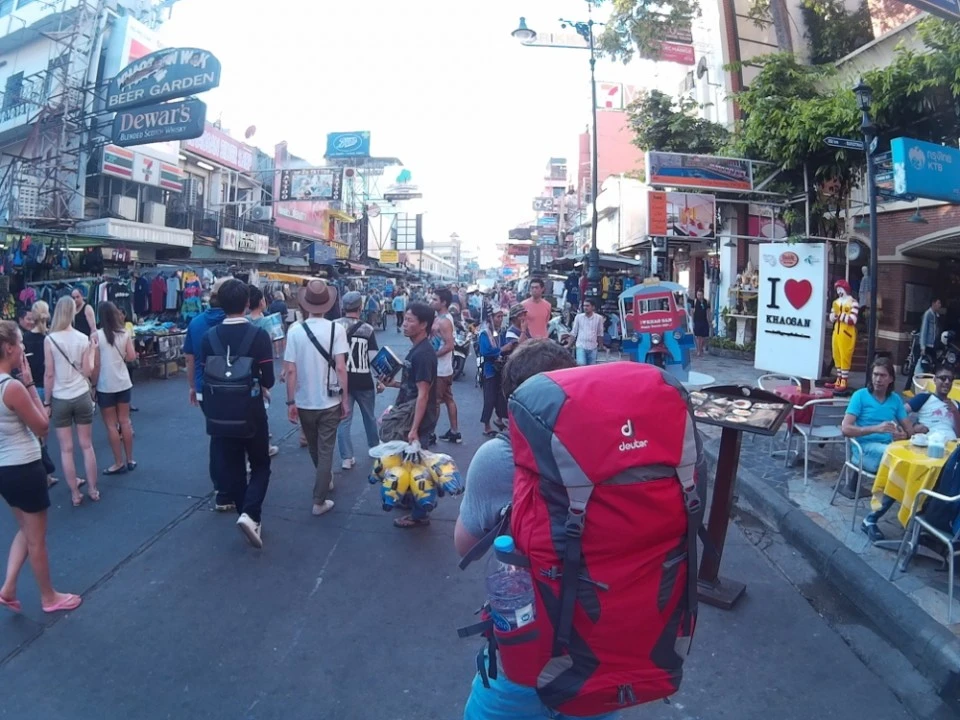
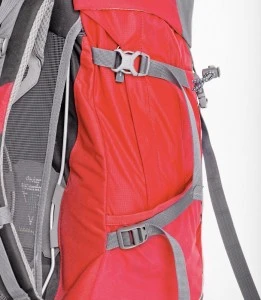
I appreciated the internal zippered pocket in the lid, where a mobile phone and wallet can be safely stored. On hot days, the sufficiently large side pockets, which can hold a 1.5l drink bottle, also proved their worth. A sleeping mat can be easily attached with the side fixation straps, and a sweatshirt for cooler evenings can be tightened with the front straps, which are attached to the lid and primarily used to close the top part of the backpack. Everything else goes inside, and one can focus only on the pitfalls of Asian culture.

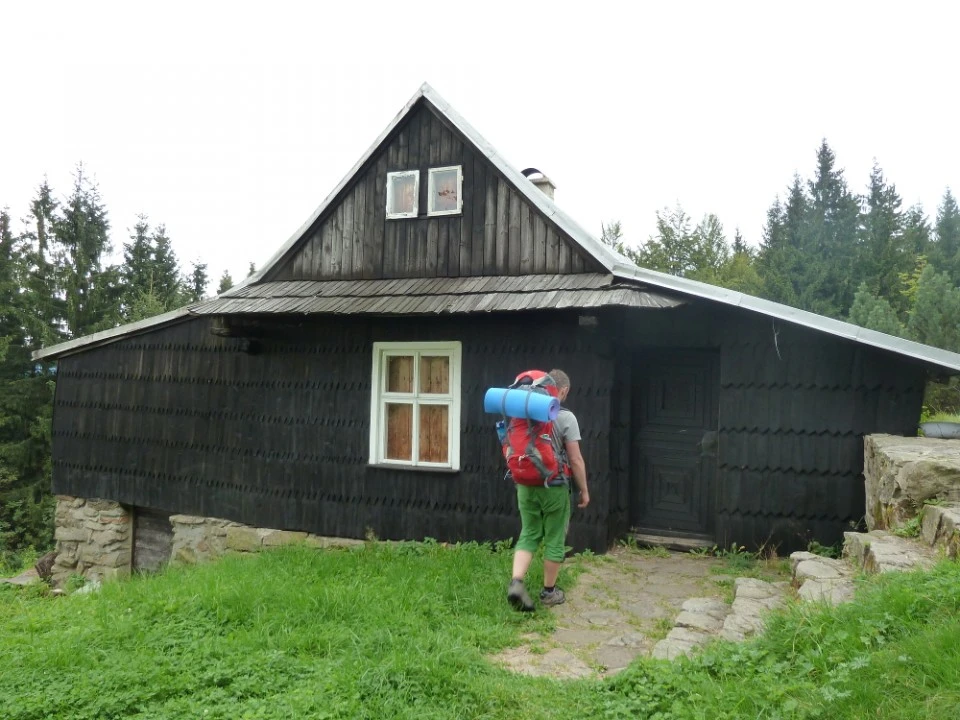
The second demanding test was undergone by the Futura here in the Beskydy Mountains. One might say that this must have been a morning walk compared to Asia. However, the opposite is true. A three-day crossing from Pindula to Ostrý over several Beskydy peaks, with a total elevation gain of approx. 3000 m and sleeping under the stars, was a very interesting test. It was necessary to approach packing much more effectively. The sleeping bag and mat had their classic places again. A gas stove had to fit into the bottom compartment next to the sleeping bag. Clothes and many energy bars went into the main part. Since the weather is never certain, I also packed a tarp for potential rainy nights, under which I could sleep. The final load again exceeded 12 kg, and it was noticeable by the second day. As I mentioned above, the fully loaded backpack caused pressure on the back in the lumbar area due to the curved construction. It is not pleasant, and I can claim that it was a relatively major problem. After this crossing, I tried to find out if any other users of this Deuter model had a similar experience. No one confirmed this negative impression to me, and I thus evaluated that I contributed to it to a large extent myself with my probably non-standard physique.
Final evaluation