Bushcraft, woodcraft, woodlore, scoutcraft… many exotic terms that can make your head spin. Yet, they all currently carry a very similar meaning, which is best captured by the English term "bushcraft".
Rather than explaining the etymological differences between these individual words (for those interested at the end of the article), let's look for what connects them all: they are skills and experiences necessary for being in nature, such as camping, hunting, gathering, fire-making, woodworking, tool making, herbalism, navigation, etc. Bushcraft can be short-term (a few days), long-term (a few months), or it can be a lifestyle (living permanently in nature). These are essentially the skills that allowed our ancestors to exist in nature as comfortably as possible. Today, however, they are mostly a matter of leisure activities and hobbies.
Probably the most famous popularizer of bushcraft is the British instructor and author of books Ray Mears, whose television shows became very popular and spread awareness of bushcraft to the whole world. Ray Mears is often compared to another British popularizer, Bear Grylls. However, the comparison is often based on a wrong assumption: while Ray Mears focuses on bushcraft, Bear Grylls is more of a master of survival techniques, which have a different goal: to return to civilization as quickly as possible, e.g., after a plane crash, shipwreck, or getting lost in the wilderness. Someone who is surviving does not want to be in nature because it represents a threat to them at that moment. In bushcraft, on the other hand, the goal is the most comfortable, self-sufficient existence in nature, using natural resources and opportunities.
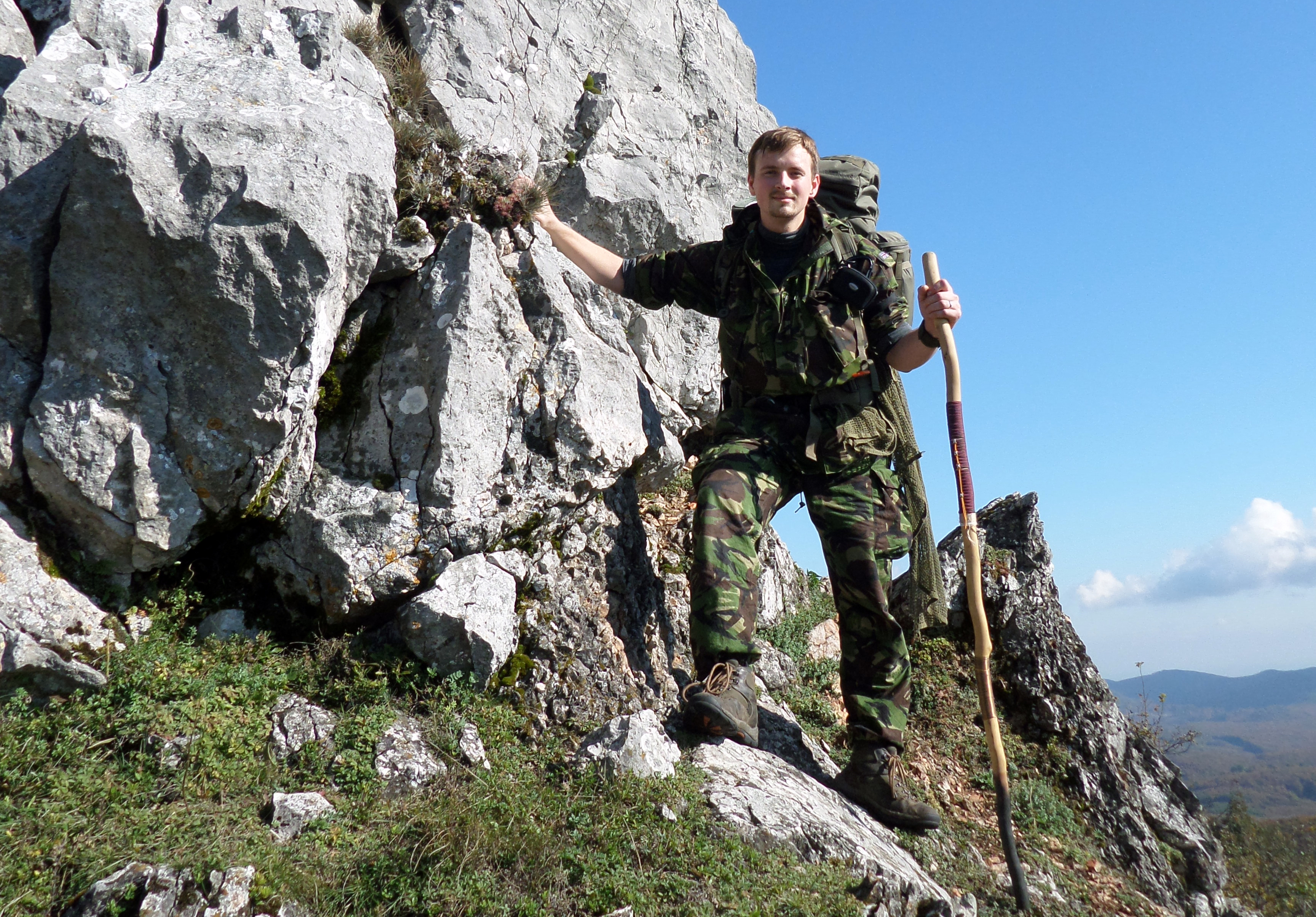
The fact that bushcraft is not just a discipline for experienced adventurers, survival experts, and former soldiers is proven by Jan Malůšek, a twenty-five-year-old architecture student from Brno, who has been intensively dedicated to bushcraft in his spare time for over six years. He told us about his passion and provided photographs (all images in this article come from his adventures):
How would you describe bushcraft?
Simply put, I perceive bushcraft as learning about nature through crafts and skills that allow us to live in it. In my opinion, it begins with the decision to voluntarily leave civilization and go explore nature, learn to draw all resources from it, and then use them for life. And because our ancestors practiced and perfected all of this over the centuries, we can say that bushcraft is the conscious acquisition of ancient crafts and skills that come from nature and point back to nature.
Is bushcraft more of a hobby or a lifestyle for you?
Bushcraft as a philosophy is inherently reflected in everyday life. It is about the relationship with nature and the world. It is about the desire to know and learn so that my life is fuller and easier. In practice, we can call it a hobby if we live in the city and occasionally head out into nature to try different techniques. If I live self-sufficiently in a remote area by the forest, just like my ancestors, I use bushcraft every day. Then it is not a hobby, but life. And that is what I want to achieve one day.
What leads you to spend time outside of civilization and learn natural skills?
Searching for peace away from the noise and hustle of people. And the desire to know the real world around me and myself. Not just through a computer screen and over-technologized Western civilization. A civilization living in apparent prosperity, where no one asks: where and how did all that pink meat in the supermarket live, die, and get processed? Where does the drinking water in the taps come from, or where does everything I carelessly throw in the trash disappear to?
Do you feel more "at home" in nature than in the city?
Each has its own charm, and I need both for a happy life. As an architect, I try to find ways to blend the boundary between nature and the city. With every additional plant in a balcony box, solid wood furniture, or dried herb collected from a meadow, I bring a piece of pure nature into my (current) home in the city, and that pleases me. And conversely, when wandering in nature, I like to take some "hi-tech" equipment from civilization with me, which is very useful to me.
What skills does bushcraft involve? What can you do?
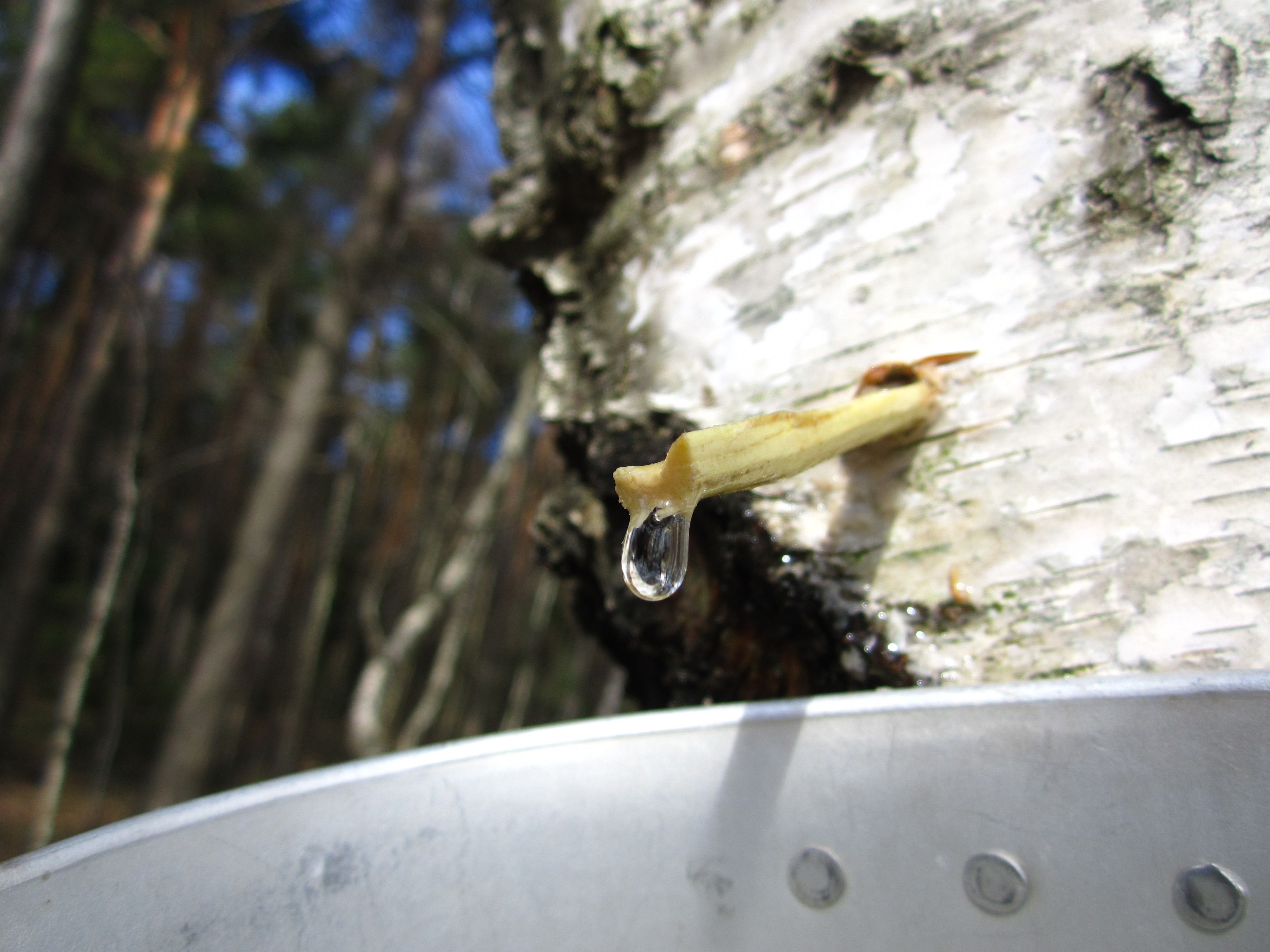
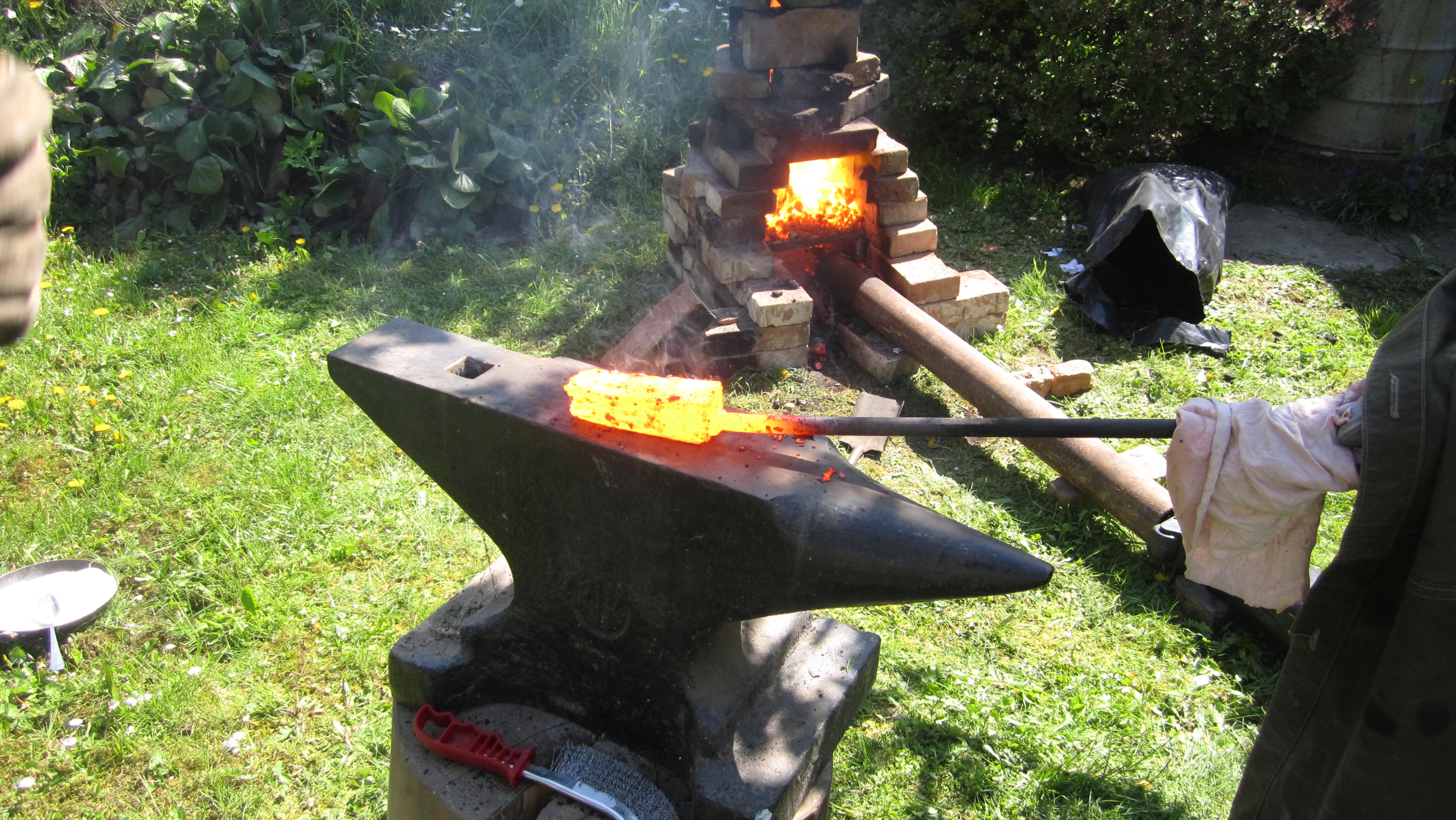
What can I do? Currently, I am quite confident in making fire with a flint, sleeping in any season and terrain, navigating outside of civilization, obtaining water, working with technical climbing equipment, and the basics of mountaineering. I have forged a hunting knife from folded steel, obtained water, fire, and oil from birch, learned to process fish, hares, rabbits, as well as chickens and birds, and grown my own harvest of fruits and vegetables.
What do you plan to learn next?
I still feel like a beginner. There is so much left for me to learn, try, and prove that I think I have enough for a lifetime. :-) I am planning to make a bow from ash (the trunk is already drying in my cellar), master the techniques of making fire with a bow drill and hand drill, and learn blacksmithing, carpentry, and woodcarving crafts. I want to actively participate in the slaughter and processing of a larger animal (pork, lamb, veal), learn tanning, make my own furs and leathers, and then craft useful items from them (a belt, a water canteen, a knife sheath, etc.).
Does bushcraft mean extreme experiences on the edge of survival? Can anyone do it?
Generally: You get out what you put in. :-) I dare say that bushcraft is for almost everyone. How "hardcore" you make your stay in nature is up to you. I think the only condition is a certain manual dexterity. However, for those who weren't born with it, it can be acquired through patience and training. In bushcraft, the rule is: Never give up!
Is living in the Czech countryside challenging?
Most of the Czech countryside has little in common with true wilderness. The only "danger" from the fauna in our forests might be (overpopulated) wild boars, for whom you are not on the menu anyway. During my expeditions, I also realized that it is difficult to truly get lost here, as you can find a village, a gamekeeper's lodge, or a remote house at every turn.
So you don't perceive nature in the Czech Republic as dangerous?
It depends on how you look at it. The boundary between "living" and "surviving" is generally much smaller than we often admit. It is enough to fall into a river during a winter trip in the Šumava mountains: suddenly you have soaked clothes, all your equipment is wet, and your mobile is non-functional. The temperature drops below zero at night, and a peaceful trip turns into a nightmare. Or into a harsh, yet strengthening experience, if you know how to keep warm and dry your things.
But we are talking about crisis situations…
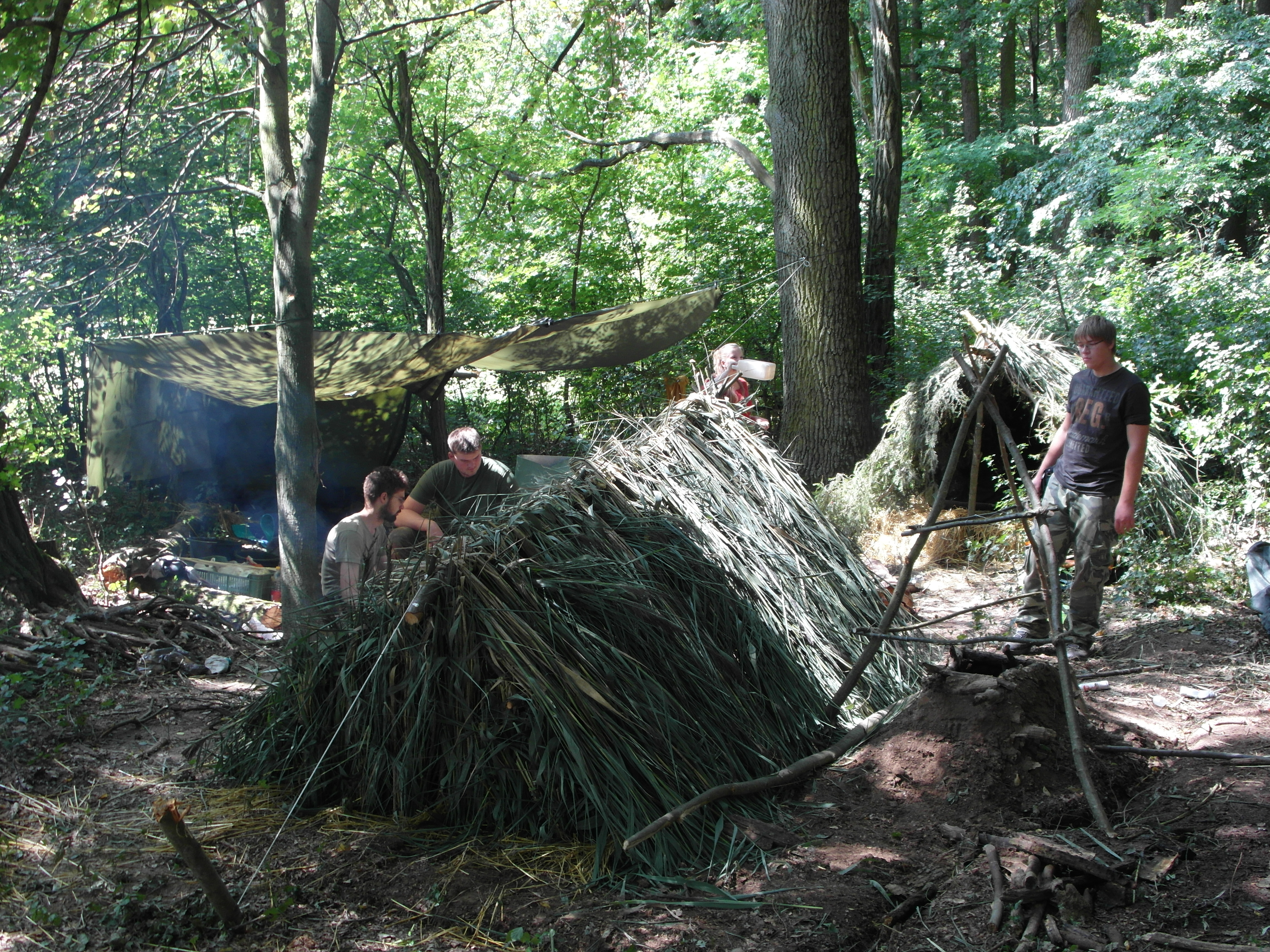
Yes. If no accident happens, it can generally be said that the Czech countryside is very forgiving even to an ignorant visitor. On the other hand, we have an even better environment for learning here. There is no risk of being eaten by a bear or freezing at -40 °C during your first camping trip. :-) And few countries in the world can boast such varied changes during the cycle of the year. So in the Czech Republic, we can reasonably simulate a subtropical rainforest in July near Litovel or at the Soutok, and experience Swedish conditions in the Krkonoše mountains in February. We should properly appreciate that.
Tell us about your most interesting experiences.
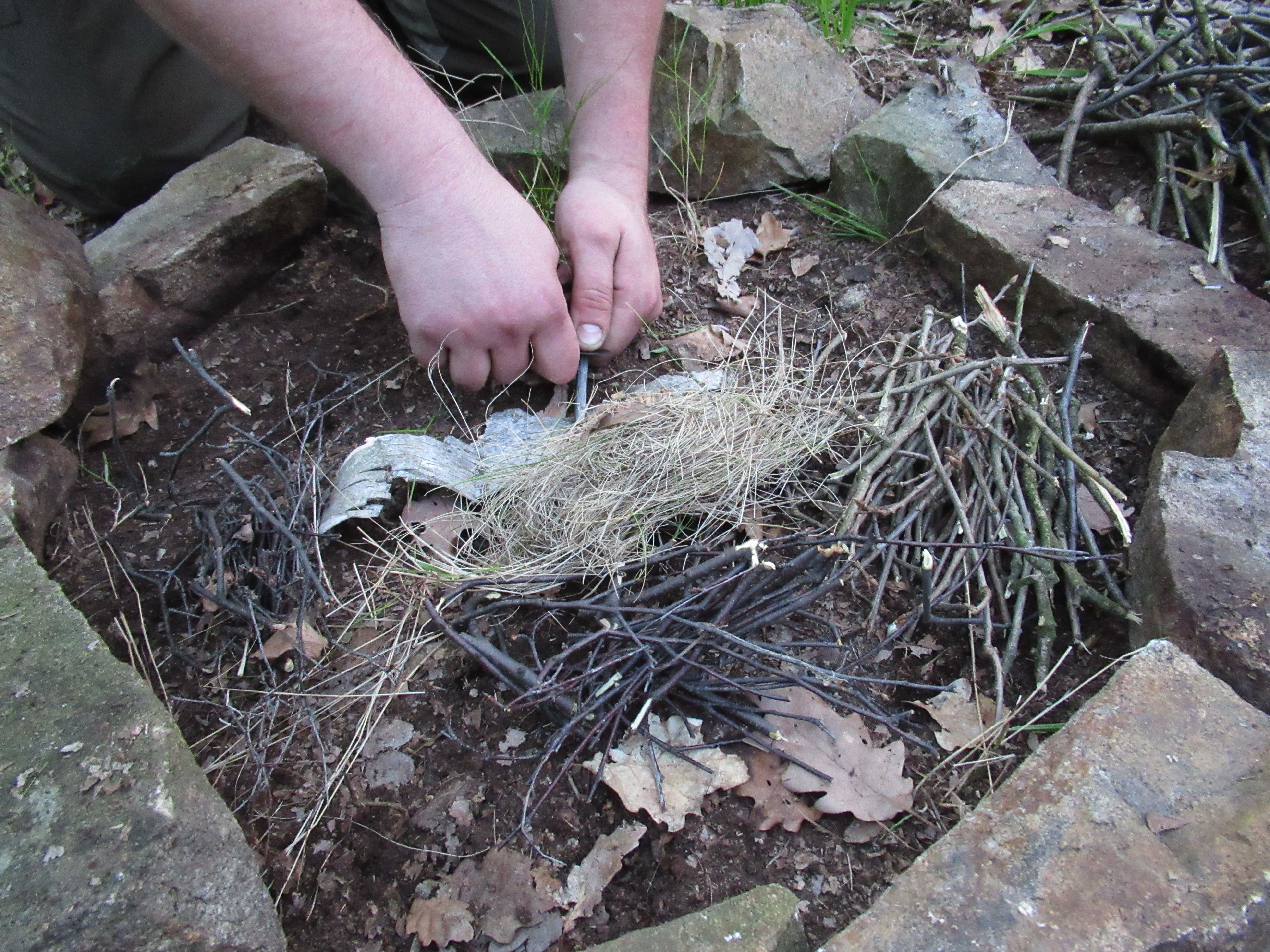
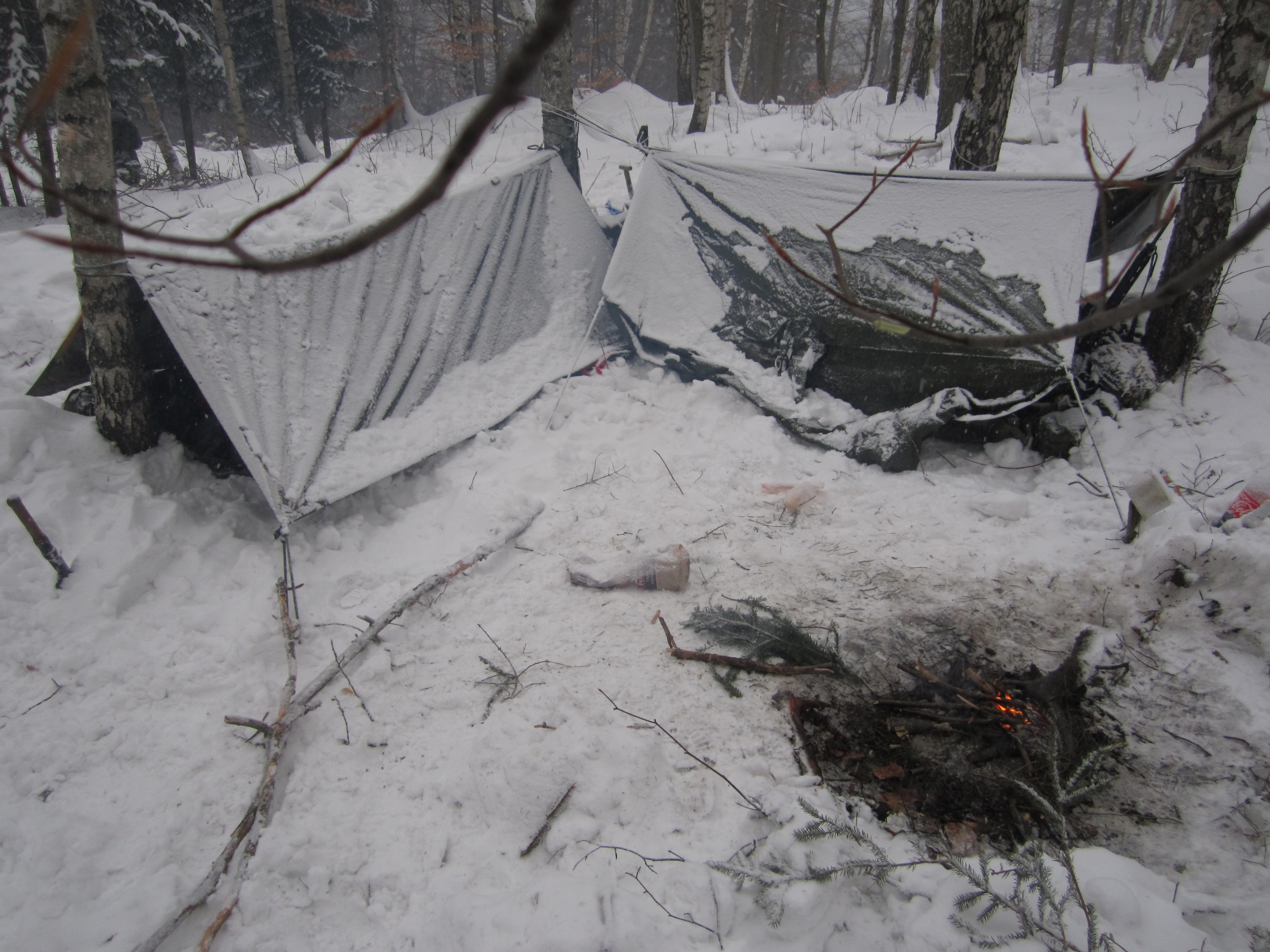
When you manage to ignite tinder from a small nest of grass after dusk using only a flint, which you were the only one to find above a half-meter snow cover and dried on your body with your own heat all day, that really warms your heart. The realization that there is no day when I could not decently spend the night outside of civilization also gives me confidence. I was able to confirm this this February when the temperature dropped to -20°C at night. Wading through rivers, rappelling down rock faces, climbing into treetops, hacking through thickets, crawling through mud… all of this pushes your limits and shows whether nature can stop you or not.
Is bushcraft about a battle with nature, or about living in harmony?
I lean towards the second option. But it must be realized that nature, as such, is no walk in the park. Food chains are clear proof of that. Everything in nature is born, lives, reproduces, and dies. It is an endless cycle. Living in harmony with nature also means killing, cutting down, plowing, and carving. Otherwise, we would not survive. I believe, however, that everything can be done with a pure heart. I therefore believe that we can live in harmony with nature to the extent that we understand it and are able to comprehend it.
Is bushcraft environmentally friendly?
That depends on each individual. You can cut down an entire spruce in a forest nursery, or obtain the same wood by cutting off one of the lower branches of a mature spruce. You can pick all the herbs in a meadow like a combine harvester, or leave every third one for the bees and self-regeneration. It is the same with fire. Why did no one declare a ban on making fires in the forest for centuries (with exceptions)? Because people knew how to work with fire. It is no wonder that today, for example, this ban is generally valid. At home, we just turn the thermostat knob on the heater under the window. To return to the question… bushcraft is a sustainable way of life. I take from nature as much as I need, and everything, after it has served its purpose, returns to nature. Bushcraft is also about love for nature. When you love it, you will take care of it, not harm it. So, yes, from a global perspective, bushcraft is clearly one of the most gentle ways of living on Earth.
Is it possible to engage in "natural skills" even outside of nature?
Bushcraft, especially more advanced levels, does not directly require nature. Quite the opposite. You will hardly forge a knife without an anvil and coal. :-) Of course, the more you are in contact with nature, the easier and more naturally everything goes. However, you can sit on the porch of your cottage and carve a bow, build a bread oven in the garden, or learn to climb on an artificial wall. The important thing is how you approach bushcraft, not where you practice it.
Do you practice bushcraft alone?
I spent a few days alone in nature with the thought of how great it would be to rest from everything and everyone and enjoy nature. But I gained the opposite experience. Solitude is sad, too quiet. You cannot tell anyone how much you like it here, you cannot share a beautiful sunset view with anyone. Solitude closes a person off. Some may like it, I don't. So not for such a long time. Besides, it is good to go on expeditions with more people you can fully rely on, if only because bushcraft is not easy at all, and often another pair of hands comes in very handy. Personally, I practice bushcraft with my wife (who is just as passionate about it), my brother, and a few good friends.
What sources do you draw from?
The first book I learned from was the "survival bible" SAS Survival Handbook by John Wiseman. I still draw from his incredible knowledge today. Then the book Survive! and Fight! by Len Cacutt. I have downloaded all episodes of the series Man vs. Wild by Bear Grylls, which I still watch with interest and take many notes. A few years later, on a friend's recommendation, I discovered the also famous (somewhat less known in the Czech Republic) Ray Mears. However, the key details on which the success or failure of every attempt stands usually do not fit into the series. I mostly found more detailed instructions on YouTube. Here I would definitely mention as my role models Mr. Míla with the Primitive Skills channel, Petr Bear, or Marek Chlíbek. I would like to meet them in person one day and learn "live".
What does it mean to "be good" at bushcraft?
That is the beautiful thing about bushcraft. Most disciplines in the world need referees, committees, or judges to decide how good you are at this or that. In bushcraft, the only and strictest judge is nature itself. It gives you nothing for free, you cannot bypass or bribe it. Either you know something and it works, or it doesn't. Usually, there is nothing in between. And as with everything: only through training can perfection be achieved.
Does bushcraft stand on quality gear and "modern" tools, or do you rely only on natural resources?
I am not a die-hard "caveman" and I like to carry quality equipment that I can rely on. You simply cannot achieve some of the advantages of artificially manufactured gear with natural materials, no matter how good you are. But if you dress in Softshell and Gore-tex, arm yourself with a jet lighter, a lamp, an inflatable sleeping pad and tent, a stove with dishes, etc., I am not sure how much you will be in touch with nature and what you will actually learn from it… I believe in a reasonable middle path. Cotton still wins for me in clothing, but I have a Gore-tex windbreaker in my backpack just in case, and so on. Today, through bushcraft, we are returning to the life of our ancestors, but we are not dependent on it. I see that as the main important difference. What we can do, we can produce. We can live in harmony with nature, gently, ecologically, responsibly, and yet we have the luxury of things like electrical energy and everything that flows from it for us. I do not consider a strict return to the roots, nor an obsession with modern technological achievements, to be the way forward.
Appendix - meaning and origin of terms:
Woodcraft dates back to the 14th century in England and denotes: skills associated with being in a forest environment, forestry, and the production of wooden tools. [source]
Scoutcraft has a synonymous meaning and probably originates from the colonization of America in the 18th century. [source]
Woodlore has a synonymous meaning; the oldest surviving record is from the end of the 19th century.
Bushcraft originates from the 19th century in Australia and originally denotes: skills associated with being in the bush (Australian type of landscape). Today used synonymously with the previous terms. [source]