


If you are a nature lover, you have certainly sometimes wondered about the environmental burden caused by the often technically very difficult production of your equipment. High demands on quality also entail considerable demands on energy and resources.
In today's world of constant pursuit of ever-greater profits, however, the acquisition of these resources is not always ethical and often not environmentally friendly. Hand in hand with tightening legislation and increasing demand for more environmentally friendly products, the bluesign® system was created, which is a sure bet for all environmentally conscious individuals.
Precise like a Swiss Watch
The bluesign® system represents a vision of a sustainable approach to textile production and the means for its protection and maintenance. It is the strictest standard for environmental protection, consumer protection, health, and occupational safety in the world. The system covers the entire textile production chain, from material sourcing and chemicals for its treatment, to cleaning and maintenance. The system originated in Switzerland in 2000 with the aim of minimizing the harmful effects of the textile industry on both people and nature. The goal is to unite chemical suppliers, textile manufacturers, and retailers to move towards a more responsible, healthier, and sustainable future for the textile industry. The system strives to eliminate dangerous aspects of production right from the start. Independent experts propose optimizations in material selection, harmless chemicals, energy and water consumption. They also focus on responsible and ethical sourcing and safety for people and the environment. Emissions released into the air and water, as well as adherence to safe noise levels, are also controlled.
Know What You're Buying
Bluesign® oversees whether the manufacturer has implemented the proposed measures and improvements. Only then can the company become a program partner. This means that its products will be labeled with the bluesign® standard tag. 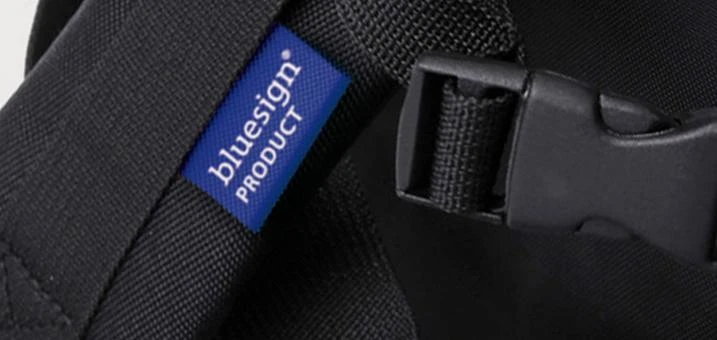 This can be either the label bluesign® approved fabric (textile approved by the bluesign® standard), or bluesign® product (product approved by the bluesign® standard). In the first case, it concerns a standard for textiles used in product manufacturing. Ninety percent of textiles must comply with bluesign® standards. The remaining ten percent must not come into direct contact with the skin and must not contain elements that are not in accordance with the bluesign® standard approved substances list (BSSL). In the case of the bluesign® product label, you can be sure that such substances will not exceed 5%. Furthermore, these substances must also comply with the aforementioned BSSL list and must pass laboratory tests. The bluesign® product standard also applies to prints, patches, buckles, straps, and all other accessories. These elements must meet the standard by at least 30%.
  The first company to receive bluesign® certification was Granger’s, which manufactures impregnation and cleaning products. Its products bear the label bluesign® approved. However, it is evident that an already strict and complex system becomes even more opaque with more complex products. For example, manufacturing a backpack composed of dozens of parts that would meet the requirements of the bluesign® product standard is almost impossible. Nevertheless, more and more manufacturers are striving to implement this standard throughout their supplier chain and achieve complete harmlessness of their products. In addition to Granger’s, you will also find other brands in our assortment that can boast cooperation with the bluesign® system. These are primarily top manufacturers, including The North Face, Patagonia, Burton, Deuter, Salewa, Mammut, Jack Wolfskin, and Vaude. The author of the article is our external colleague Jakub Španihel.


