


Although Romania is not a country with modern infrastructure, we decided to start up our old cars and explore this Eastern European gem. What is worth seeing in Romania? Where might you break your car? And what does it feel like to encounter a bear?
Romania – a land shrouded in prejudice and mystery. A country known for the famous vampire Dracula and his fairy-tale-like, eerie castle somewhere deep in the Carpathians. A land hidden beneath the foothills of two-thousand-meter peaks, the waves of the Black Sea, and rich in pure human stories.
A Cemetery Full of Joy
The first natural stop, about 90 kilometers from the border crossing in the town of Petea, is the Merry Cemetery in Săpânța. Although it is a well-known tourist attraction, the signage is not very good, and you will likely wander around the village for a while. But a moment of confusion is worth it. The cemetery consists of painted wooden tombstones depicting the deceased, usually doing what they loved most or what their profession was.
During the first two days, we found that it is best to avoid cities and larger villages and stick to nature. The cities are worn-out and unkempt, and for someone driving such conspicuous cars, they are somewhat uncomfortable in terms of general attention.
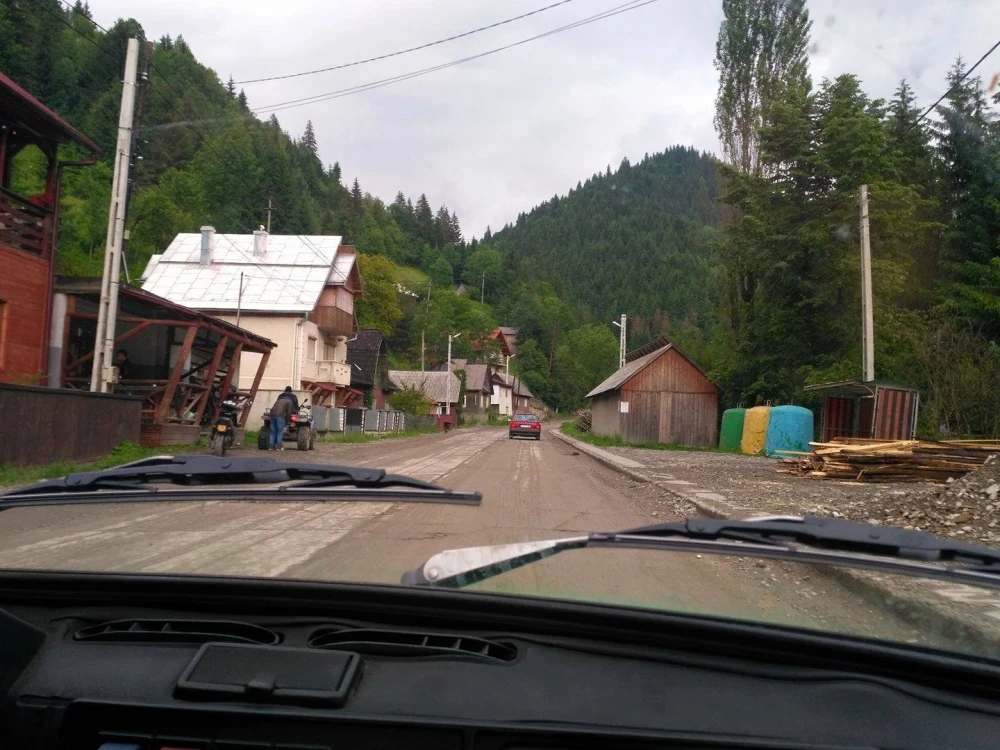
Transfăgărășan – A Legend That Does Not Disappoint
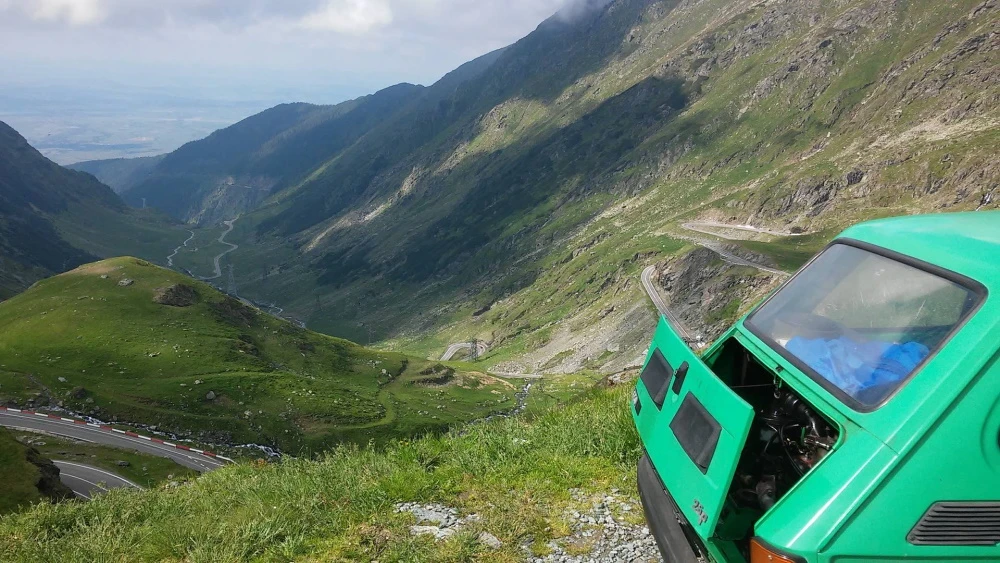
We headed straight for the "Road to the World." It is one of the most picturesque roads in the world – the Transfăgărășan. The mountain pass is about ninety kilometers long, and we joined it in the town of Cârțișoara. Then you just have to sink into your seat and hold your jaw, because many a traveler will definitely be left speechless by the beauty.
Czech Language "Out of Nowhere"
We headed directly east and stopped for one night near Brașov in the town of Bran, from where we had planned a trip to Dracula's Poienari Castle the next day. However, our plans were ruined by a mother bear who had given birth to cubs in the area a few days before our arrival, and the trail through the deep forest was therefore closed. The evening before setting up our tent, the bear family even showed themselves to us; only a meter-wide stream separated us.
There was no other choice, so we decided to head south. To where we could meet Czech natives, where Czech culture has been preserved. We are talking about Banat. The region near the border with Serbia consists of several Czech villages, such as Svatá Helena, Rovensko, or Svatá Alžběta. We stopped in the village of Gerník. Only a forest path, or as they say, a dirt road, led to it, and our not-so-young cars had a hard time with the terrain.
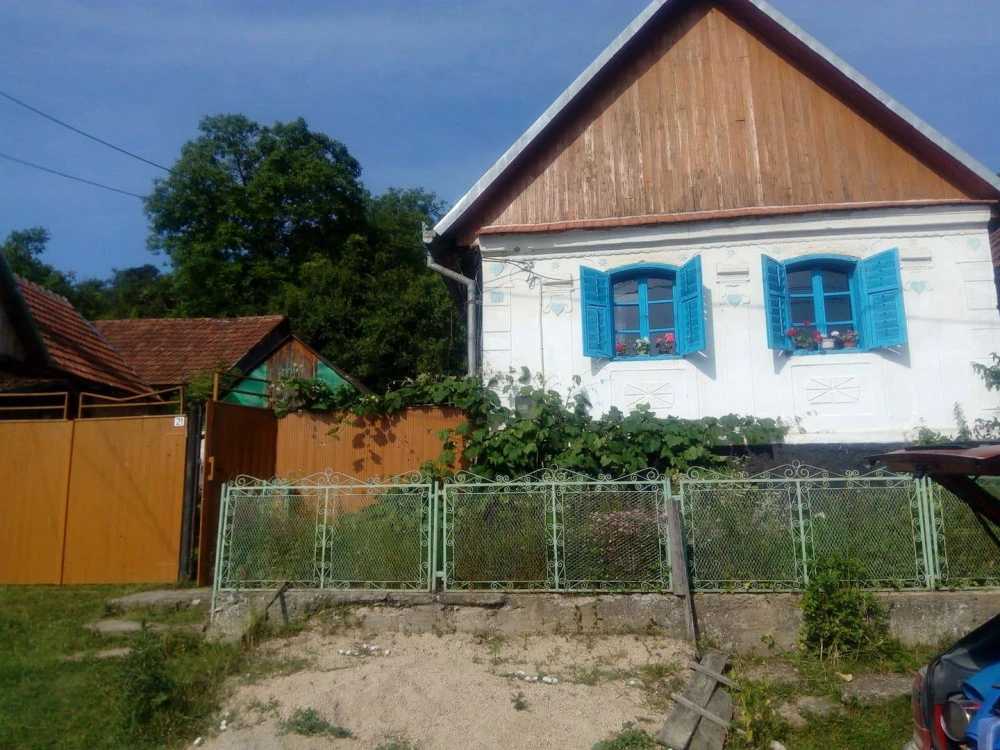
At first glance, we felt like we were in Southern Bohemia, but in the 19th century. That was when the Czechs arrived here looking for fertile land. Gradually, their families followed, and the area expanded into Serbia. Small white houses with colorful window frames, large wooden gates, and cattle pulling carts remained unchanged.
And that is exactly why Banat has its true charm. The locals offer tourists accommodation; you sleep on massive beds under a picture of the Virgin Mary, wash with ice-cold water, and have homemade cheese and milk for breakfast. The surrounding mountains, fertile fields, and livestock are the only livelihood the residents have. Their children are leaving back to the Czech Republic to make a living, so the future of Banat is uncertain and fragile.
An Underrated Natural Finale
With a recommendation from an eighty-year-old grandmother from Gerník and a trunk full of homemade jam, we head back north towards the Hungarian border, but we must not miss the Transalpina. It lies a few dozen kilometers west of the Transfăgărășan and connects the towns of Novaci and Sebeș.
It is a completely different experience than the Transfăgărășan. We spent the previous night in the foothills in tents and set off at six in the morning. And it was the best choice. There was no one on the road, so we had bright green meadows dotted with sheep, fog rising from the forests, and a road winding through magical nature all to ourselves.
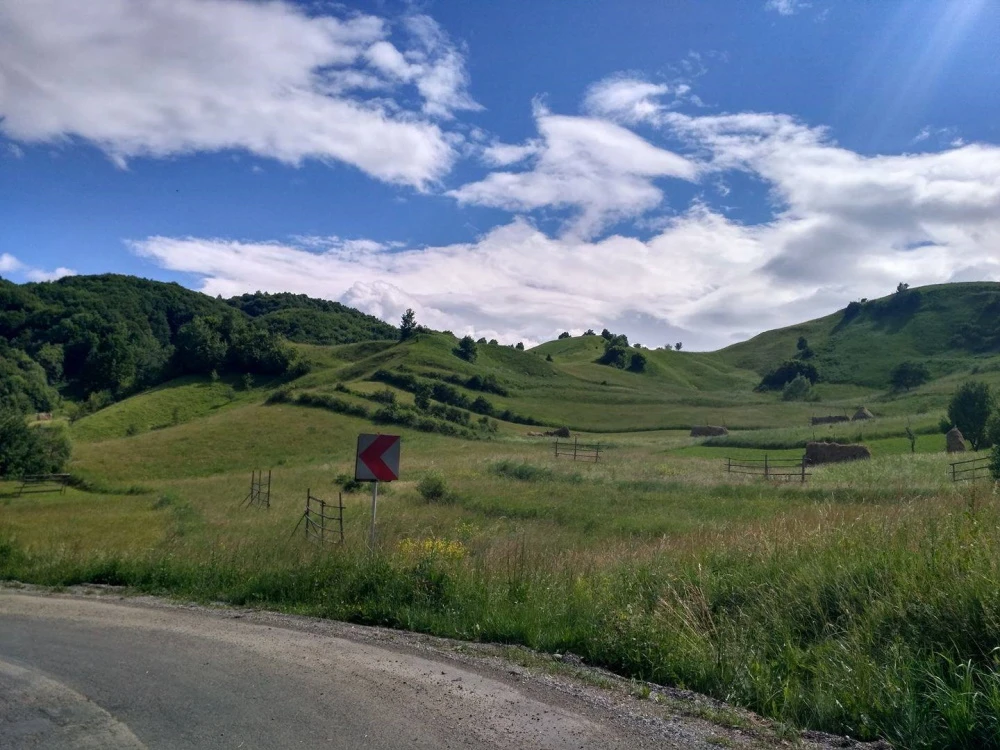
The climb was rather gradual, and the surroundings matched it. Around us, there were no jagged peaks, but green pastures and mountain plains. At the top, at about two thousand meters, the wind was blowing so hard we couldn't even stand. We sat down in the grass and had breakfast with a view of the Romanian Carpathians.
Because our vehicles were not in perfect condition and halfway there a local mechanic was welding a torn shock absorber in his garage (be careful on the roads between Săpânța and Baia Mare, it doesn't pay to be careless), we couldn't make it to the far east of Romania to the Black Sea. But we will head there next time for the empty beaches, shabby hotels, and another side of the famous unknown Romania.
Where to get travel luggage? Head to our e-shop:


